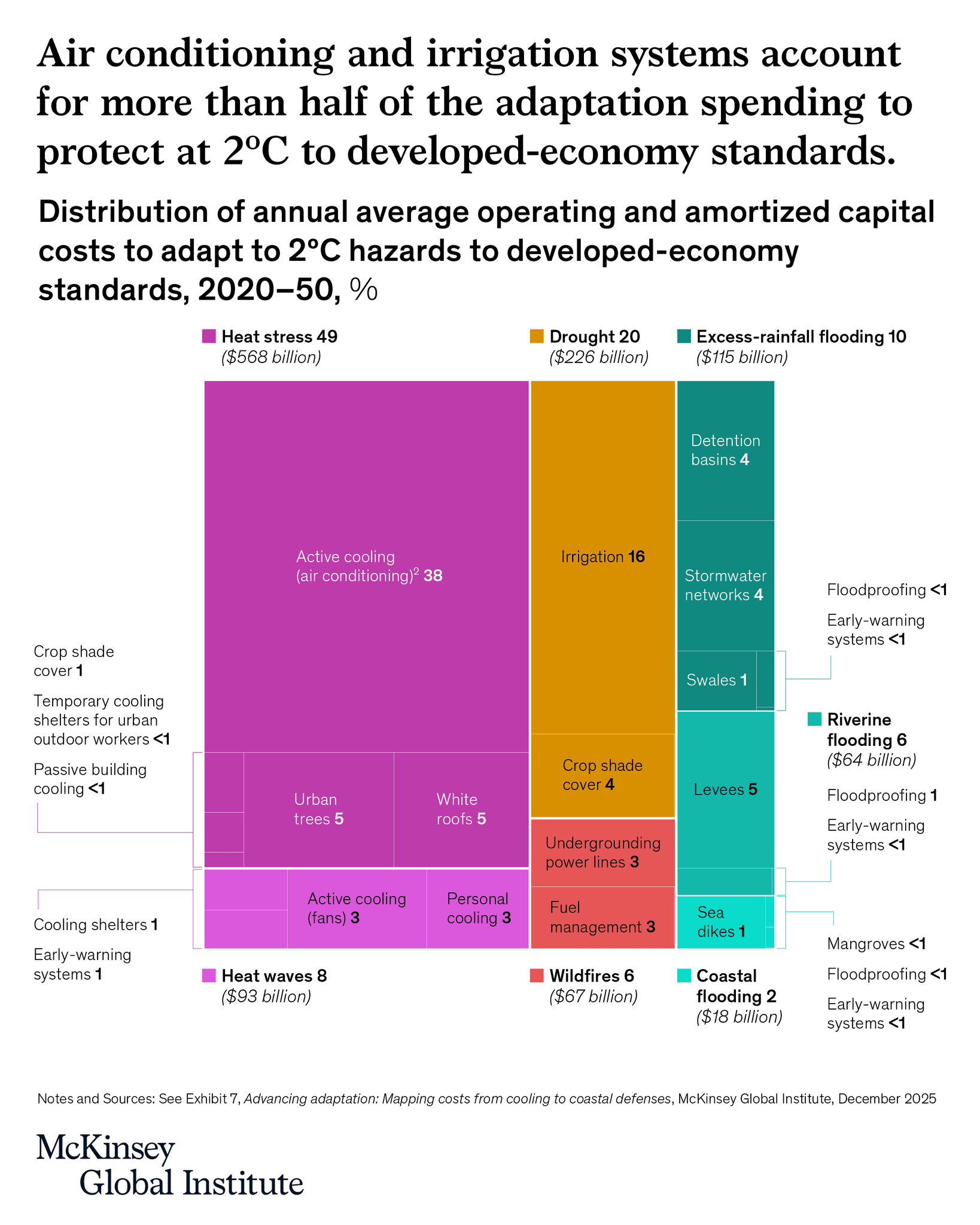
New research examining the economic effects of climate change suggests that annual global adaptation spending could approach $1.2 trillion under a scenario where average temperatures rise by approximately 2°C above pre-industrial levels. The findings emphasize the growing financial burden governments, businesses and communities may face as they prepare for increasingly frequent and severe climate impacts. According to the analysis, a substantial share of future adaptation investment would be directed toward managing heat stress and drought conditions. Rising temperatures are expected to place greater pressure on water supplies, agriculture, public health and critical infrastructure, requiring significant spending on resilience measures. Adaptation differs from mitigation because it focuses on reducing the consequences of climate change rather than preventing emissions. Investments include improved irrigation systems, flood defenses, cooling technologies, drought-resistant crops, wildfire management, resilient power infrastructure and upgraded transportation networks. Urban areas are expected to require extensive investment as expanding populations increase exposure to extreme weather. Cities may need additional green spaces, upgraded drainage systems and more energy-efficient buildings to reduce heat-related risks while maintaining economic productivity. Agriculture represents another major area of concern. Farmers are increasingly adopting climate-resilient practices including precision irrigation, improved crop varieties and advanced weather forecasting tools to reduce production risks associated with changing rainfall patterns and prolonged drought. Businesses also face mounting adaptation costs. Manufacturing facilities, logistics networks and energy infrastructure must become more resilient to climate disruptions in order to maintain reliable operations. Financial institutions are incorporating climate-related risks into investment decisions and insurance pricing. While adaptation spending is expected to rise substantially, economists argue that proactive investment can reduce future disaster losses and protect long-term economic growth. Delayed action often results in significantly higher recovery costs after extreme weather events. International cooperation remains essential because climate impacts cross national boundaries. Developing countries may require financial and technical assistance to implement adaptation projects while maintaining sustainable economic development. The report highlights that adaptation will become an increasingly important component of global economic planning over the coming decades, requiring coordinated efforts from governments, private investors and international organizations.
Published by Banx Network. This article is part of the Banx decentralized media programme, powered by the BXE token on the XRP Ledger.