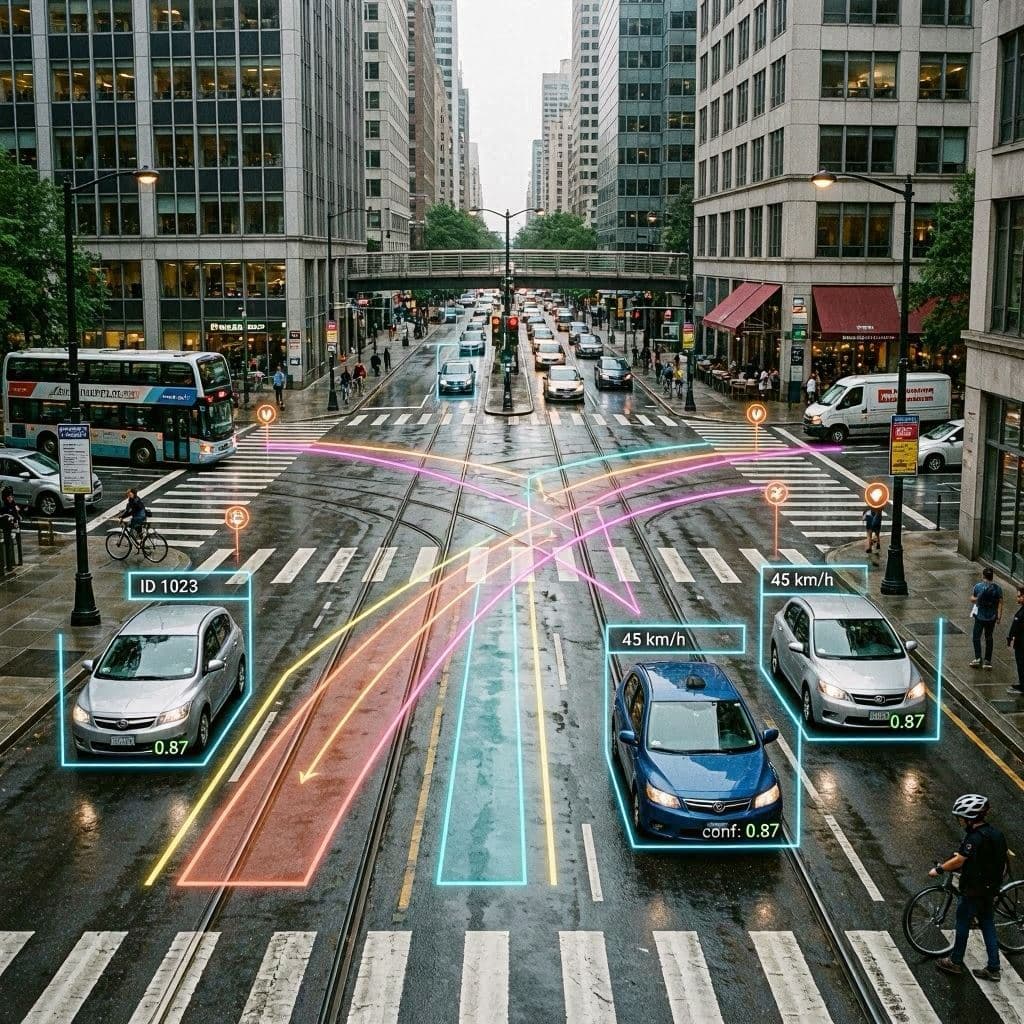
Modern cities rarely stand still. Every intersection, roadway, and pedestrian crossing contributes to a constantly changing rhythm shaped by millions of daily decisions. Within that movement, researchers believe hidden patterns exist—patterns that artificial intelligence is increasingly capable of identifying.
Scientists have reported that an autonomous AI system discovered previously unrecognized traffic relationships while analyzing large-scale urban transportation data. Rather than following predefined rules, the system independently identified recurring patterns that may improve understanding of traffic behavior.
The research relied on extensive datasets collected from city transportation networks, including vehicle movement, traffic signals, road conditions, and travel demand. Machine learning models analyzed these observations to identify relationships that were not immediately obvious through traditional methods.
Researchers emphasize that the AI system does not replace transportation engineers. Instead, it functions as an analytical tool capable of revealing trends that experts can further evaluate using established scientific methods.
Understanding traffic behavior has practical implications for city planning. More accurate models may help improve signal timing, reduce congestion, increase fuel efficiency, and support safer transportation infrastructure in rapidly growing urban areas.
The findings also demonstrate how artificial intelligence can contribute to scientific discovery beyond simple prediction. By identifying previously overlooked relationships, AI may assist researchers in generating new hypotheses for future investigation.
Urban planners continue exploring how data-driven decision-making can improve public transportation, emergency response, and infrastructure development while maintaining privacy and ethical standards.
Although additional validation will be necessary before practical implementation, the research illustrates how artificial intelligence continues expanding its role as a scientific partner capable of supporting complex urban planning decisions.
AI-generated image disclaimer: This illustration was generated using AI to support the article visually and is not an actual traffic management image.
Source Verification: arXiv, artificial intelligence research publications
Note: This article was published on BanxChange.com and is powered by the BXE Token on the XRP Ledger. For the latest articles and news, please visit BanxChange.com