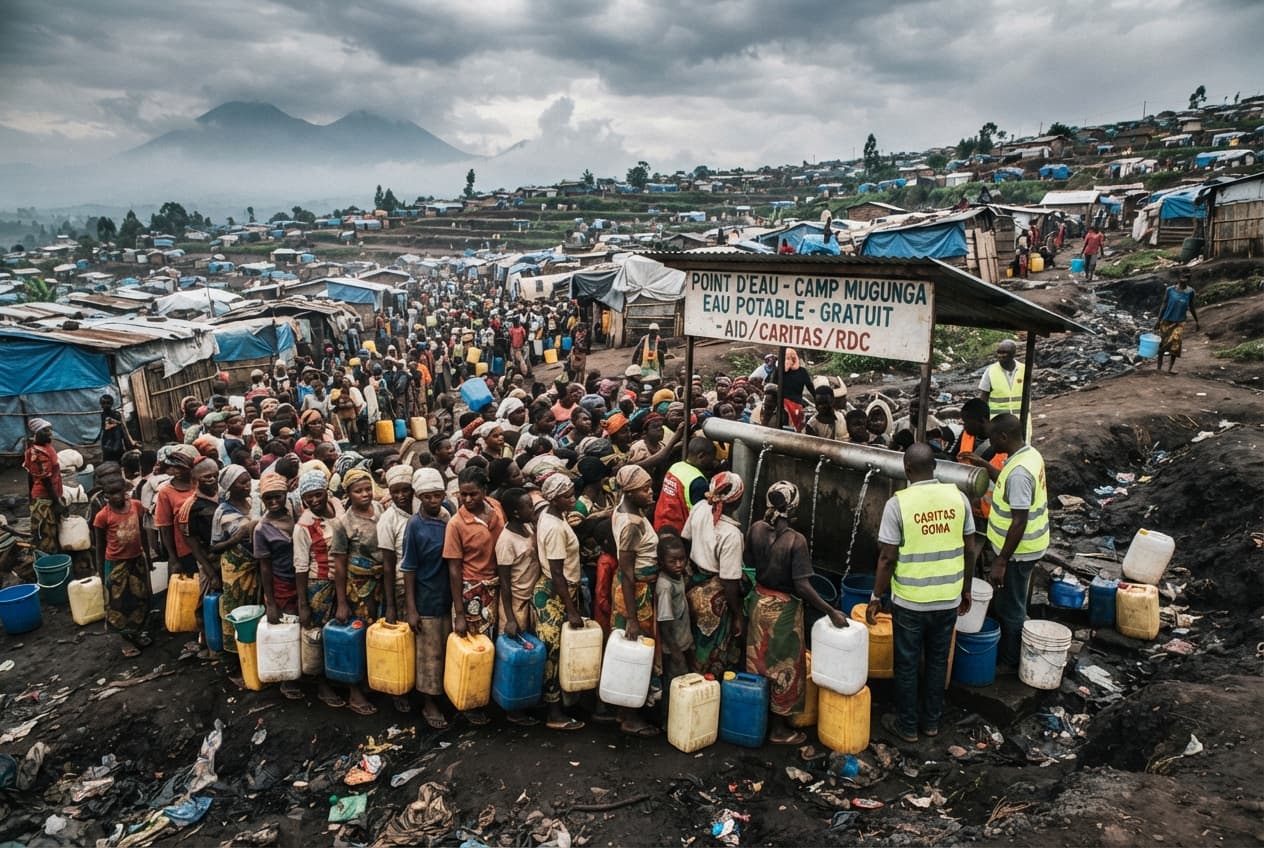
Goma, Democratic Republic of Congo—Ten people have died from cholera in the last twenty-four hours inside a sprawling displacement camp on the outskirts of Goma. Medical workers describe a dire scene as the highly infectious bacteria spreads rapidly through the makeshift tents. Thousands of families live here in cramped, unsanitary conditions, lacking even the most basic access to treated water. The disease moved quickly after heavy rain washed waste into the camp’s only communal water collection point earlier this week.
Doctors at the camp’s sole remaining health tent are overwhelmed by the sudden influx of patients. Many arrive with severe diarrhea and extreme dehydration, some after walking for hours across the camp. Staff members are forced to place multiple patients on a single bed because they have run out of cots and clean linens. Volunteers scramble to mix oral rehydration salts, but supplies are dwindling faster than they can be replenished.
The lack of infrastructure makes containment nearly impossible in this environment. Dozens of families share a single pit latrine that has already reached full capacity and is currently overflowing into the walking paths. Public health experts warn that unless the camp is provided with immediate, massive shipments of chlorine and filtration systems, the death toll will skyrocket. The local authorities are struggling to secure the logistics needed to transport medicine through the volatile region.
Fear is mounting among the camp residents as they witness neighbors falling ill one by one. Families are trying to isolate sick relatives, but the physical constraints of the shelter layout make social distancing a non-existent luxury. Mothers clutching their children stood in long, silent lines today, waiting for their turn to receive a single dose of rehydration powder. Many have not eaten a proper meal in three days, leaving their immune systems far too weak to fight the infection.
International aid organizations have issued an urgent appeal for funding, yet help is slow to arrive due to ongoing regional security concerns. Supply trucks are currently stuck behind military checkpoints, unable to reach the camp in time to stop the secondary waves of transmission. Health personnel are working fourteen-hour shifts, exhausted and desperate for reinforcements to help manage the workload.
The regional hospital in Goma is already at capacity with trauma patients from the recent clashes, leaving no room for the surge of cholera cases. This displacement camp remains the primary focus of the crisis, but the risk of the outbreak spreading into the city is climbing by the hour. Nurses continue to mark the tents of affected families with chalk to track the infection clusters. No end to the crisis is in sight as the rainy season continues to complicate movement and sanitation efforts.
Note: This article was published on BanxChange.com and is powered by the BXE Token on the XRP Ledger. For the latest articles and news, please visit BanxChange.com