Opening: In the vast, blue expanse of the South China Sea, where territorial claims overlap like tangled threads, the line between diplomacy and confrontation can be perilously thin. Recent incidents near the disputed Second Thomas Shoal have highlighted the fragility of peace in these waters, where national pride and strategic interests often collide. The use of water cannons by a Chinese coast guard vessel against a Philippine supply ship, carrying journalists from CNN, serves as a stark illustration of the escalating tensions in this maritime flashpoint.
This event is not merely a display of force but a signal of the growing assertiveness in the region, raising questions about the rules of engagement and the safety of those who bear witness to these disputes. It invites us to consider the human element in geopolitical struggles, where reporters and sailors find themselves on the front lines of a silent but intense conflict.
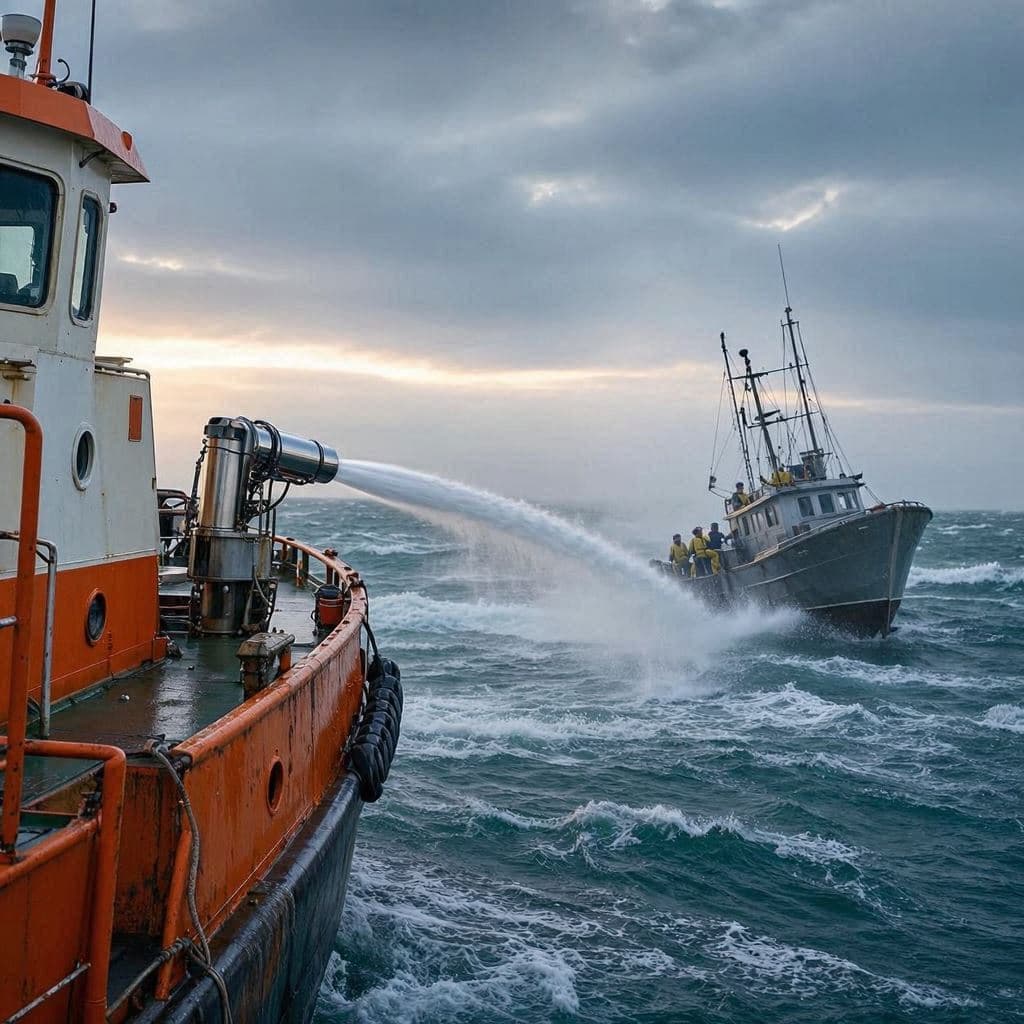
Body: The incident occurred when a Philippine vessel, attempting to deliver supplies to Filipino troops stationed on a grounded warship at Second Thomas Shoal, was intercepted by Chinese coast guard ships. According to reports, one of the Chinese vessels used a water cannon to deter the Philippine boat, spraying powerful jets of water that damaged equipment and endangered the crew. On board was a team from CNN, documenting the mission and providing a firsthand account of the confrontation.
The presence of international media added a layer of transparency to the event, allowing the world to see the intensity of the encounter. Footage showed the chaotic scene as water sprayed across the deck, with crew members struggling to maintain control of their vessel. The CNN team reported no serious injuries, but the experience underscored the risks faced by journalists covering disputed territories.
China has justified its actions as necessary to enforce its sovereignty over the area, which it claims as part of its historic territory. The Philippine government, however, maintains that the shoal lies within its exclusive economic zone, as affirmed by an international tribunal ruling in 2016. This legal disagreement forms the backdrop of frequent standoffs, where both sides seek to assert their presence without triggering a full-scale conflict.
The use of water cannons is considered a non-lethal but aggressive tactic, often employed to harass and intimidate without causing fatal casualties. However, critics argue that such actions escalate tensions and violate international norms of safe navigation. The incident has drawn condemnation from Manila and support from allied nations, including the United States, which has reaffirmed its defense commitments to the Philippines.
For the journalists on board, the experience was a vivid reminder of the dangers inherent in reporting from conflict zones. Their ability to capture and share the event has brought global attention to the plight of the Filipino troops and the broader issue of maritime security. It highlights the role of media in holding power to account and informing public discourse on complex international issues.
Diplomatic efforts to resolve the dispute continue, with both countries engaging in talks to manage tensions. However, the frequency of these incidents suggests that a long-term solution remains elusive. The South China Sea remains a testing ground for regional stability, where small actions can have significant repercussions.
Closing: As the waters settle after the latest confrontation, the underlying issues remain unresolved. The incident near Second Thomas Shoal is a microcosm of the larger strategic competition in the Indo-Pacific. It serves as a call for dialogue and adherence to international law, ensuring that the sea remains a place of commerce and connection rather than conflict.
AI Image Disclaimer: Please be aware that any visual illustrations accompanying this text are AI-generated interpretations designed to evoke the thematic context of maritime disputes and journalism, and do not depict actual photographs of the specific incident or vessels involved.
Sources: CNN Reuters Associated Press Philippine Daily Inquirer
Note: This article was published on BanxChange.com and is powered by the BXE Token on the XRP Ledger. For the latest articles and news, please visit BanxChange.com