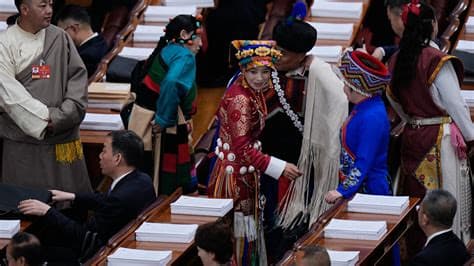
Tibetan and Uyghur representatives told diplomats at the UN Human Rights Council that China’s new Ethnic Unity and Progress Promotion Law is designed to erase minority identities rather than protect them.
The law, which comes into effect July 1, is intended to promote a “shared” national identity and “strengthen cohesion.” But Tibetan and Uyghur speakers and rights advocates say it effectively gives Beijing legal authority to continue long-standing policies of forced assimilation in China’s Han-majority society. They argue it risks restricting fundamental freedoms tied to minority life—such as language, education, religion, cultural practice, expression, and assembly.
Speakers at a UN side event on June 26 described how their cultural, religious, and linguistic identities are being criminalised under the new framework. They pointed to how state policies have already pushed Mandarin-language instruction in some minority areas, including Tibet. Rights groups also link the wider approach to schooling practices they describe as assimilation-focused, including residential boarding schools where children are placed under pressure to adopt Han Chinese language and culture.
The UN human-rights chief Volker Turk previously called for the law’s repeal, warning that it could deepen restrictions on freedoms central to minority rights.
The article also notes that the Chinese authorities defend the measure. A Chinese representative at the UN event criticised critics as using human rights to smear China, while China’s vice-justice minister said the law’s overseas-liability clause is legitimate and consistent with international practice.
Tibetan and Uyghur representatives urged other countries and the UN to press China to repeal the legislation, framing it as enabling “cultural erasure” and coerce minorities into adopting a single identity.
Published by Banx Network. This article is part of the Banx decentralized media programme, powered by the BXE token on the XRP Ledger.