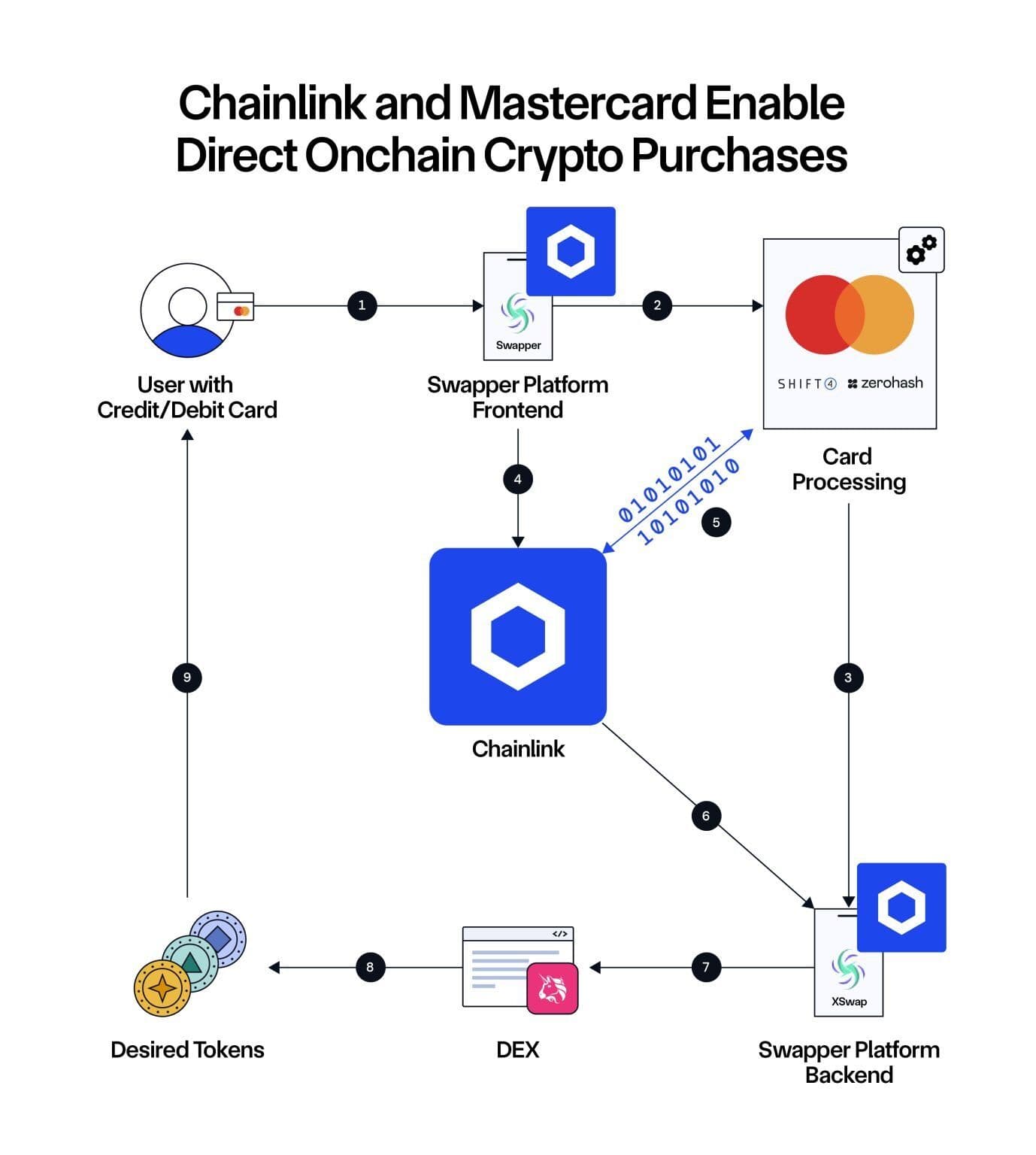
Blockchain infrastructure provider Chainlink and global payments giant Mastercard are helping push cryptocurrency adoption closer to mainstream finance through technology designed to simplify direct onchain digital asset purchases using traditional payment methods. The model introduces a payment flow where users can purchase cryptocurrency directly through debit or credit cards while blockchain infrastructure manages token delivery behind the scenes. The approach aims to reduce friction between traditional financial systems and decentralized blockchain environments. The process begins when a user selects desired cryptocurrency assets through a frontend platform interface. Card payment information moves through payment processing infrastructure while backend systems coordinate blockchain execution and liquidity sourcing. Chainlink's technology plays a central role by helping connect external payment systems with decentralized blockchain environments. Blockchain applications require trusted data movement between offchain financial systems and onchain networks, creating demand for secure interoperability infrastructure. The architecture also incorporates decentralized exchange functionality through token swap systems that convert payment value into requested crypto assets. Liquidity infrastructure enables conversion efficiency while backend automation manages settlement processes. Financial infrastructure providers such as Zerohash contribute compliance and transaction support layers designed to help bridge traditional payment rails and blockchain execution systems. The development reflects one of crypto's largest industry priorities: reducing barriers preventing mainstream adoption. For years, buying cryptocurrency often required multiple platforms, bank transfers, wallet setup processes, and exchange account approvals. Industry developers continue working toward experiences resembling conventional online payments. Direct payment integrations may help accelerate blockchain accessibility by simplifying user onboarding. Institutional participation continues increasing across digital assets as payment companies, financial infrastructure providers, and blockchain developers pursue systems capable of supporting larger-scale adoption. Crypto infrastructure increasingly focuses on usability rather than purely technical capability. As blockchain ecosystems mature, payment simplification could become a major factor influencing how quickly digital assets expand into mainstream financial activity. The integration between payment networks and decentralized infrastructure represents another step toward merging traditional finance with blockchain technology.
Published by Banx Network. This article is part of the Banx decentralized media programme, powered by the BXE token on the XRP Ledger.