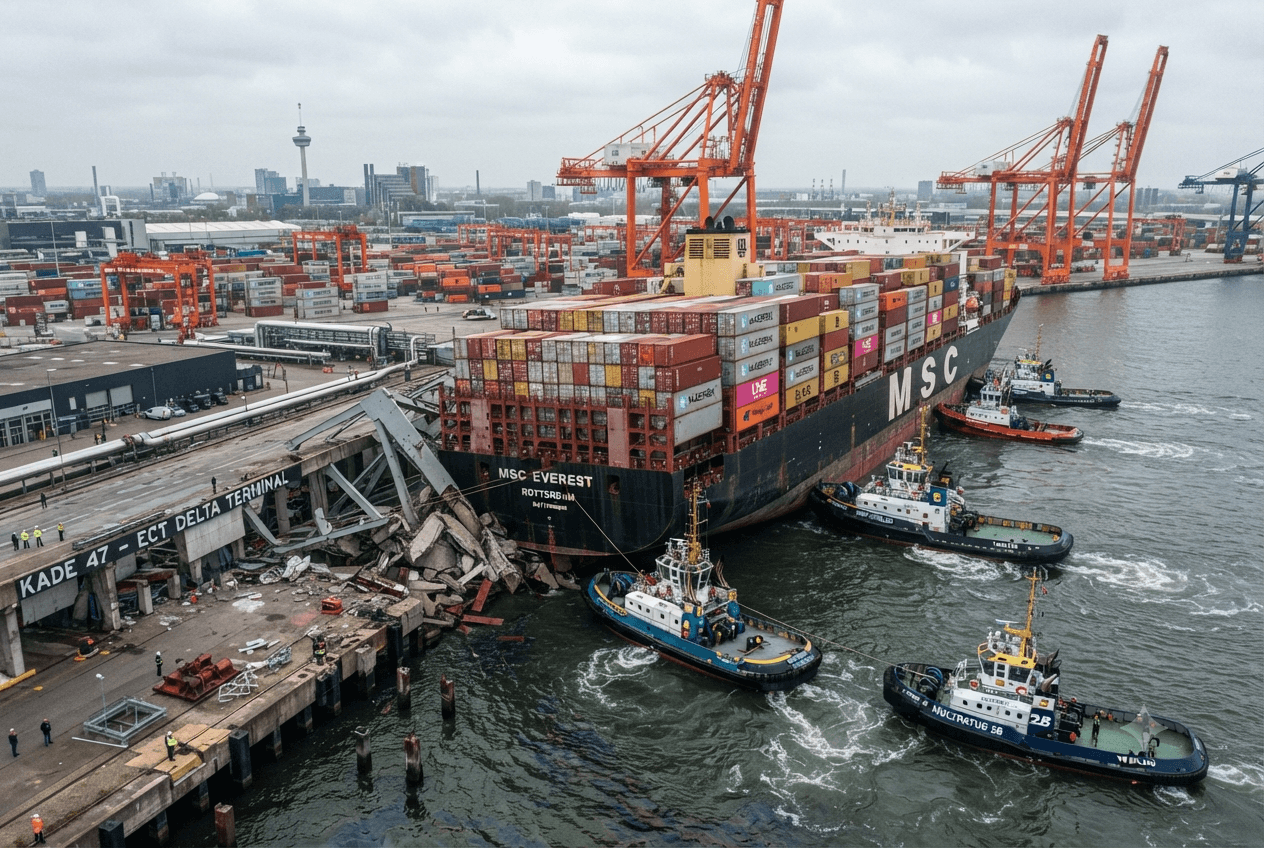
Rotterdam, Netherlands—A massive container vessel lost steering control and slammed directly into the primary container pier at Europoort early Friday morning. The impact tore a gaping forty-foot hole in the steel superstructure of the dock, sending shipping containers tumbling into the dark waters of the harbor. Harbor police and emergency tugboats rushed to the scene within minutes, deploying oil containment booms to trap leaking fuel oil.
Port authority officials acted swiftly to suspend all vessel movements across the entire Rotterdam port complex to prevent secondary collisions in the congested basin. Dozens of incoming container ships and oil tankers were ordered to drop anchor in the North Sea waiting area miles offshore. Cranes and automated loading equipment on the damaged pier were shut down instantly as safety inspectors evaluated collapse risks.
The collision crippled key supply chain corridors supplying industrial manufacturing centers across Germany, Belgium, and the wider European interior. Logistics operators began scrambling to reroute time-sensitive cargo to smaller regional ports in Antwerp and Hamburg that were already operating near capacity. Port director Boudewijn Siemons held an emergency press briefing to announce that reopening timelines remained completely unknown.
Maritime investigators boarded the stricken vessel to examine bridge data recorders, steering gear logs, and radar telemetry from the moments before impact. Initial harbor pilot testimony indicated a sudden hydraulic failure in the rudder control system left the captain with zero maneuvering capability. The ship came to a dead stop wedged firmly against the crumpled concrete pier, blocking the main navigation channel.
Cranes on the dock suffered structural distortions when falling containers sheared through high-voltage power lines and control cables. Port workers were evacuated from the immediate terminal zone as structural engineers tested the remaining dock pilings for hidden fractures. Environmental response vessels sprayed chemical dispersants on a growing sheen of bunker fuel spreading across the surface of the basin.
Shipping associations warned that even a brief closure of Europe's primary trade gateway would trigger immediate delivery bottlenecks across manufacturing sectors. Automotive plants in central Europe rely on daily parts deliveries flowing directly through these specific berths. Warehouses near the port quickly filled to capacity as outbound freight trucks were turned away at locked security gates.
Salvage experts arrived aboard heavy floating cranes by midday to assess how to extricate the wedged hull without causing further structural collapse. Tensions ran high as salvage masters realized the vessel's bulbous bow was pinned against underwater concrete footings. Pumping operations began to offload remaining heavy fuel oil from the damaged ship tanks to minimize spill risks during extraction.
Customs warehouses suspended processing operations as digital freight tracking systems bogged down under a deluge of rerouting requests from shipping lines. Transport companies parked fleets of semi-trucks along highway shoulders outside the port gates, awaiting word on access restoration. Port security increased patrols along perimeter fences to manage rising frustration among stranded transport operators.
Harbor authorities confirmed that traffic restrictions would remain fully enforced until the vessel was safely towed back to a drydock facility.
Note: This article was published on BanxChange.com and is powered by the BXE Token on the XRP Ledger. For the latest articles and news, please visit BanxChange.com