
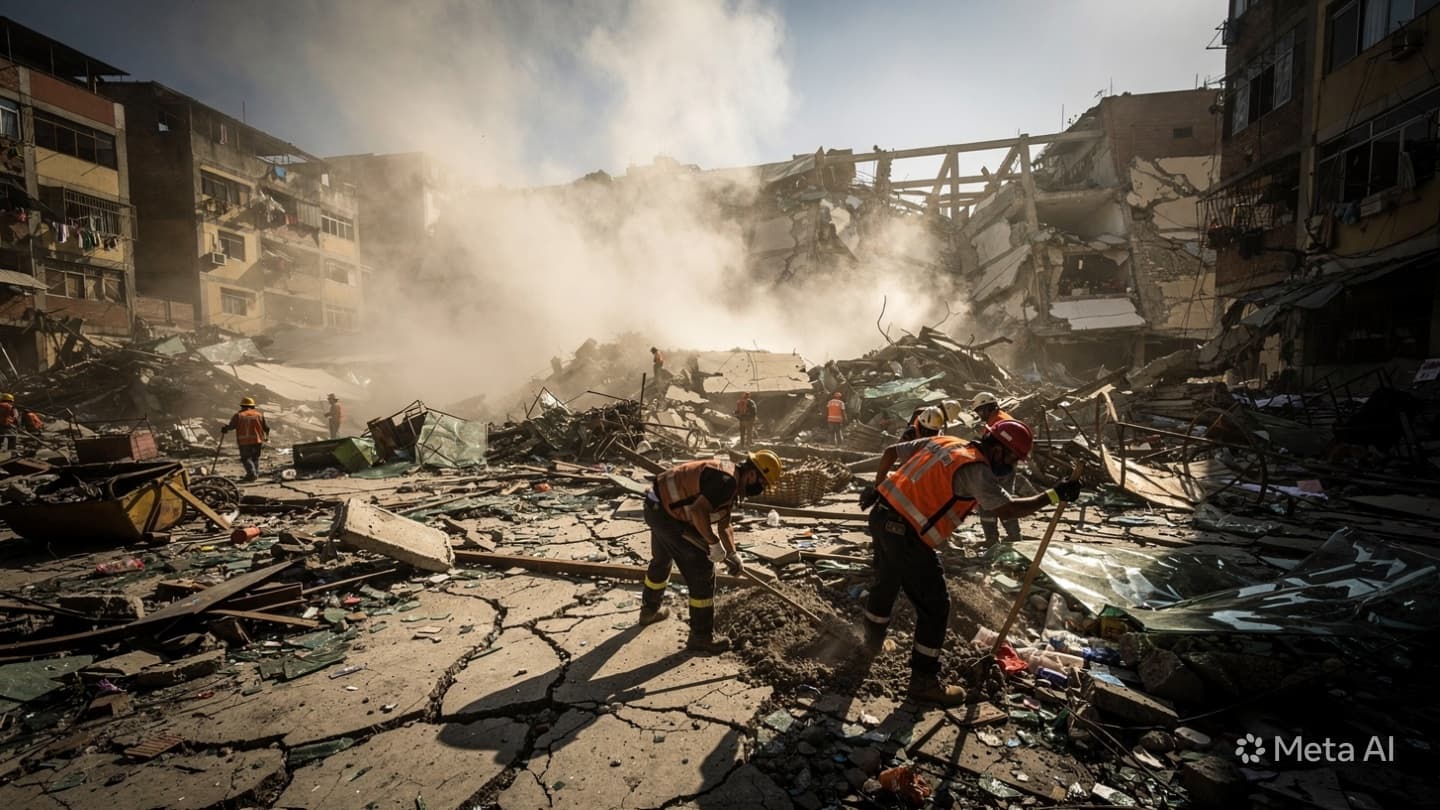
Caracas, Venezuela—The official death toll from the twin earthquakes that tore through the capital rose to thirty-two by midday Thursday. Emergency crews spent the morning hours sifting through pulverized concrete and twisted steel. They looked for signs of life. The silence in the hardest-hit districts is absolute. Residents stand by the barricades watching excavators bite into the debris. Every movement of the heavy machinery draws a collective breath from the onlookers.
The ground buckled twice in rapid succession late Wednesday evening. The tremors arrived while most families were gathered at home. Thousands poured into the streets as the power grid failed instantly. Total darkness masked the extent of the damage for hours. Only the sound of sirens and distant crashes filled the air. Authorities now struggle to coordinate search efforts across multiple municipal sectors simultaneously.
Acting President Delcy Rodríguez addressed the country in the early hours. She confirmed the current tally of the dead. She warned that the number will likely climb as teams reach collapsed high-rises. Every hour spent waiting reduces the window for a successful rescue. The structural integrity of standing buildings remains in question. People refuse to return inside. They sleep on sidewalks and in public parks.
Hospital facilities operate on backup generators. They lack the resources to handle the influx of trauma patients. Doctors work in hallways lined with the injured. Supplies are running dangerously low across the city. The central government has called for international coordination. They have not yet signaled an intent to allow foreign teams on the ground. Domestic civil protection units lead the frantic response.
Engineers have begun flagging homes that are beyond repair. Their red markings appear on thousands of doors. The sheer scale of the destruction creates a logistical nightmare for authorities. Transport networks are crippled by cracked roads and fallen overpasses. Trucks carrying medical aid cannot reach the downtown core. The streets are choked with rubble and displaced families.
Witnesses described the shaking as violent and disorienting. Floors simply dropped away from walls. Those who made it out into the open watched their lives vanish in seconds. There is no plan for mass housing at this moment. The focus remains on the extraction of bodies. Hope fades with every passing hour under the intense sun.
The aftershocks keep the population in a state of high alert. Every small tremor sends crowds running back toward the center of the streets. Security forces have cordoned off the worst zones to prevent looting. They enforce strict access rules to keep the crush of bystanders back. The city functions as a collection of isolated islands. Communication remains patchy at best.
Officials are already bracing for the next phase of the crisis. They face the prospect of a massive, long-term displacement effort. The cost of reconstruction will be astronomical. For now, the city remains suspended in the immediate aftermath of the disaster. The focus stays fixed on the rubble heaps. There is no talk of the future. The next phase of the search is underway.
Note: This article was published on BanxChange.com and is powered by the BXE Token on the XRP Ledger. For the latest articles and news, please visit BanxChange.com