
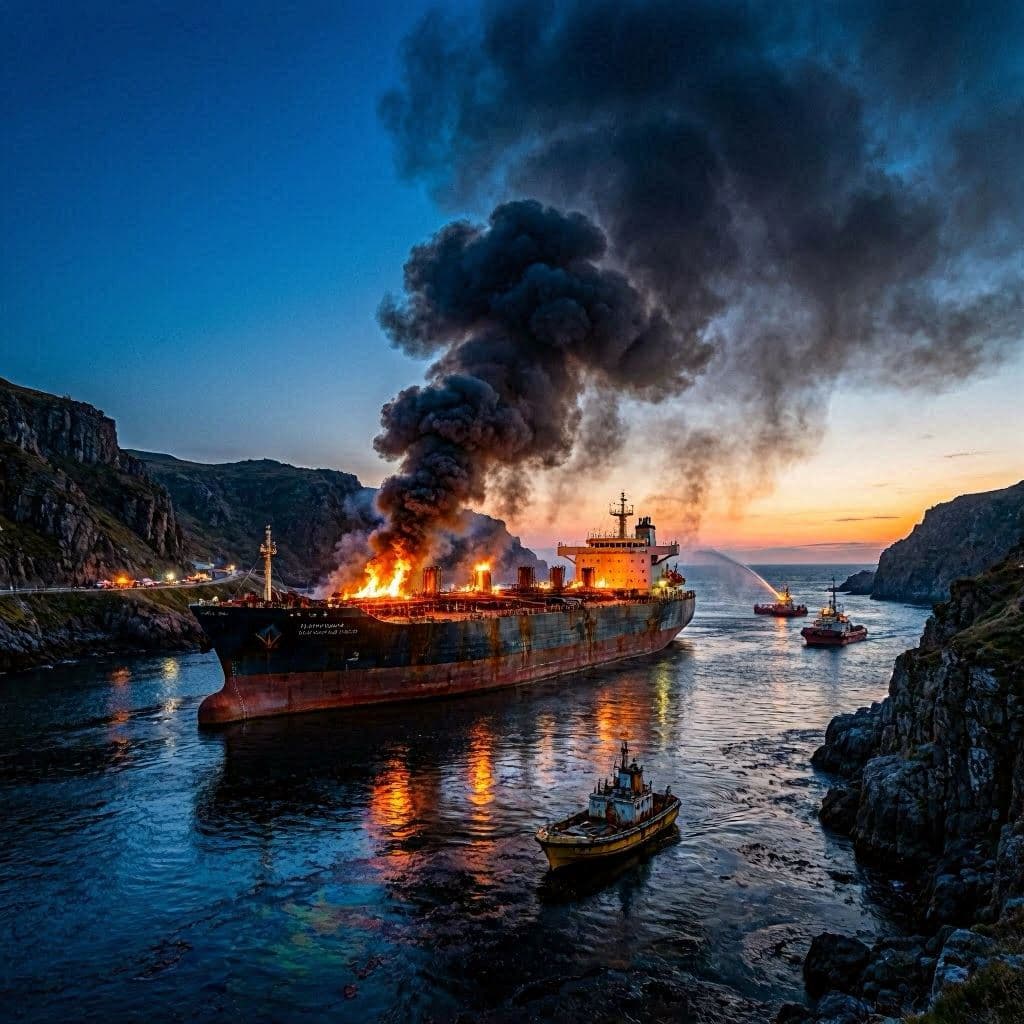
The Strait of Hormuz, a narrow artery through which much of the world’s energy flows, has once again become a stage for geopolitical tension. Recent reports of oil tankers engulfed in flames mark a dangerous escalation in the ongoing friction between the United States and Iran. As smoke rises from the water, it serves as a stark visual metaphor for the fragility of regional stability and the high stakes involved in this prolonged standoff. It is a moment that invites reflection on the delicate balance between military deterrence and diplomatic resolution in one of the world’s most critical chokepoints.
Body: The latest incidents involve multiple commercial vessels reporting strikes or fires while transiting the strait. Iranian authorities have attributed some of these events to external aggression, while U.S. officials point to Iranian proxies or direct actions as the cause. The ambiguity surrounding each incident adds to the confusion and fear among international shipping companies, who must navigate these waters daily. For crews aboard these tankers, the threat is immediate and personal, turning routine voyages into perilous journeys.
In response to these maritime attacks, the United States has launched retaliatory strikes against Iranian military targets. These operations, often conducted under the cover of night, aim to degrade capabilities and send a clear message of resolve. However, each strike carries the risk of further escalation, potentially drawing other regional actors into the conflict. The cycle of action and retaliation creates a volatile environment where miscalculation could lead to a broader war.
Global energy markets react swiftly to news from the Strait of Hormuz, with oil prices fluctuating based on perceived supply risks. Even the threat of disruption can cause significant economic ripples, affecting consumers and industries worldwide. This economic dimension adds pressure on political leaders to restore stability, even as they pursue strategic objectives. The interdependence of global commerce means that local conflicts have far-reaching consequences.
Diplomatic efforts continue in the background, with mediators from Europe and the Gulf states attempting to de-escalate tensions. Proposals for ceasefires and renewed talks are frequently exchanged, though trust remains low. The challenge lies in finding a framework that addresses security concerns for both sides while ensuring the free flow of commerce. Without such an agreement, the region remains poised on a knife-edge.
International law and freedom of navigation are central to the discourse, with many nations calling for restraint and adherence to maritime norms. The safety of civilian vessels is a universal concern, transcending political alliances. Violations of these norms undermine the rules-based order that has long governed international waters. Protecting this order requires collective vigilance and cooperation.
For the people of the region, the ongoing conflict brings uncertainty and anxiety. Communities dependent on maritime trade face economic hardship, while others live in fear of spillover violence. The human cost of these geopolitical struggles is often overlooked in high-level discussions but remains a profound reality for those on the ground. Peace is not just a political goal but a humanitarian necessity.
Closing: The burning tankers in the Strait of Hormuz symbolize the urgent need for de-escalation between the US and Iran. While military responses address immediate threats, they do not resolve the underlying tensions. Sustainable peace will require sustained diplomatic engagement and a commitment to protecting global maritime security.
AI Image Disclaimer: Please note that any accompanying visuals for this article are AI-generated representations intended for illustrative purposes only.
Sources: Al Jazeera Reuters The Guardian CNBC
Note: This article was published on BanxChange.com and is powered by the BXE Token on the XRP Ledger. For the latest articles and news, please visit BanxChange.com