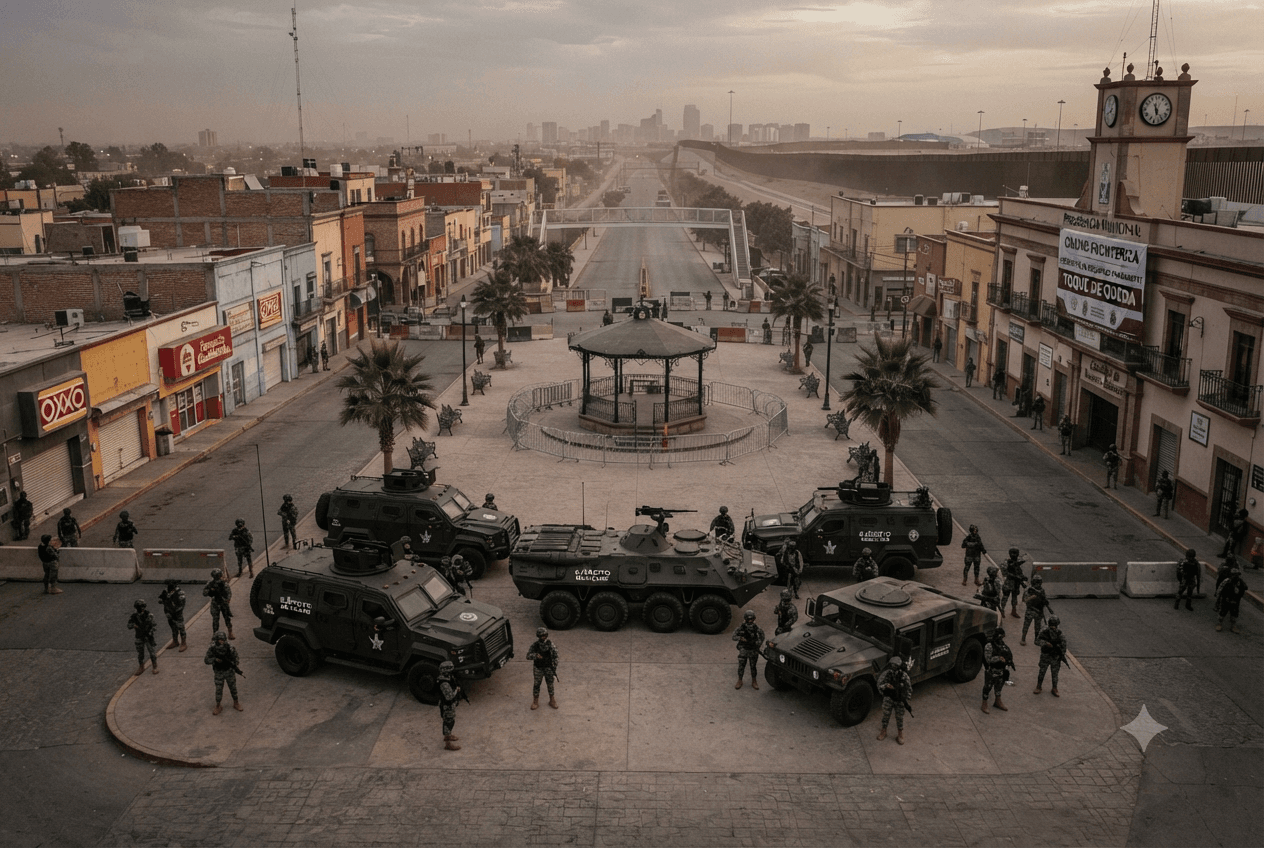
Reynosa, Mexico—Automatic gunfire cracked across the central plaza just as afternoon commerce peaked. Rival cartel gunmen exchanged high-caliber rifle fire from behind parked SUVs and historic stone pillars. Terrified shoppers dropped their bags and scrambled into restaurants and doorways for immediate cover. Glass shattered inward across storefronts as bullets peppered building facades and street lamps. Sirens wailed in the distance as municipal police units hesitated to approach the active combat zone. Armored military convoys roared into the town square minutes later with heavy machine guns manned.
Civilians huddled beneath wooden dining tables and behind concrete counters inside locked commercial establishments. Stray rounds pierced through residential windows, forcing families to flatten themselves on floor tiles. The heavy gunbattle lasted nearly twenty minutes before surviving cartel operatives fled in unmarked pickup trucks. National Guard troops established defensive perimeters around the plaza using tactical vehicles. Forensic teams stepped carefully over spent cartridge casings strewn across the dusty concrete pavement.
Paramedics treated wounded bystanders suffering from gunshot wounds before rushing them to regional trauma hospitals. State security officials confirmed multiple fatalities, including both combatants and caught-in-the-crossfire civilians. Local businesses pulled down heavy steel security shutters and locked their doors for the remainder of the day. Public schools suspended afternoon classes, instructing parents to pick up children under military escort. The municipal market square emptied entirely as a tense silence fell over the border city.
Federal intelligence officers reviewed security camera footage mounted on municipal buildings around the plaza. Investigators identified vehicles used by the attacking cartel faction through license plate recognition systems. State prosecutors opened an aggravated homicide and organized crime investigation into the daytime ambush. Military commanders deployed reinforcement battalions to secure key arterial checkpoints across the municipality. Local journalists faced intimidation from armed actors while attempting to photograph the carnage.
Residents expressed profound exhaustion over persistent cartel turf wars disrupting daily civilian life. Human rights organizations condemned the failure of local security forces to protect populated urban centers. Municipal authorities urged citizens to shelter in place and avoid non-essential travel after dark. Commercial association leaders warned of severe economic fallout as tourism and retail trade grind to a halt. Armored patrols continued cruising slowly past shuttered storefronts under the fading sunlight.
Checkpoints staffed by heavily armed soldiers halted all outgoing traffic on highways leading out of the city. Inspectors searched commercial cargo trucks and private vehicles for contraband weapons and ammunition. Federal prosecutors seized two abandoned pickup trucks containing tactical vests and assault rifles. Municipal workers began pressure-washing blood stains and bullet scars off the central plaza pavement. The border town remained under a de facto curfew as night deepened.
Local hospitals reported high security measures in place to protect wounded patients from secondary attacks. Families of missing citizens gathered near police barricades hoping for news from municipal morgues. Federal security secretariats promised a permanent increase in military troop deployments across the region. The central plaza sat completely deserted behind razor-wire barricades and military patrols. The underlying conflict remained entirely unresolved as rival syndicates regrouped.
Note: This article was published on BanxChange.com and is powered by the BXE Token on the XRP Ledger. For the latest articles and news, please visit BanxChange.com