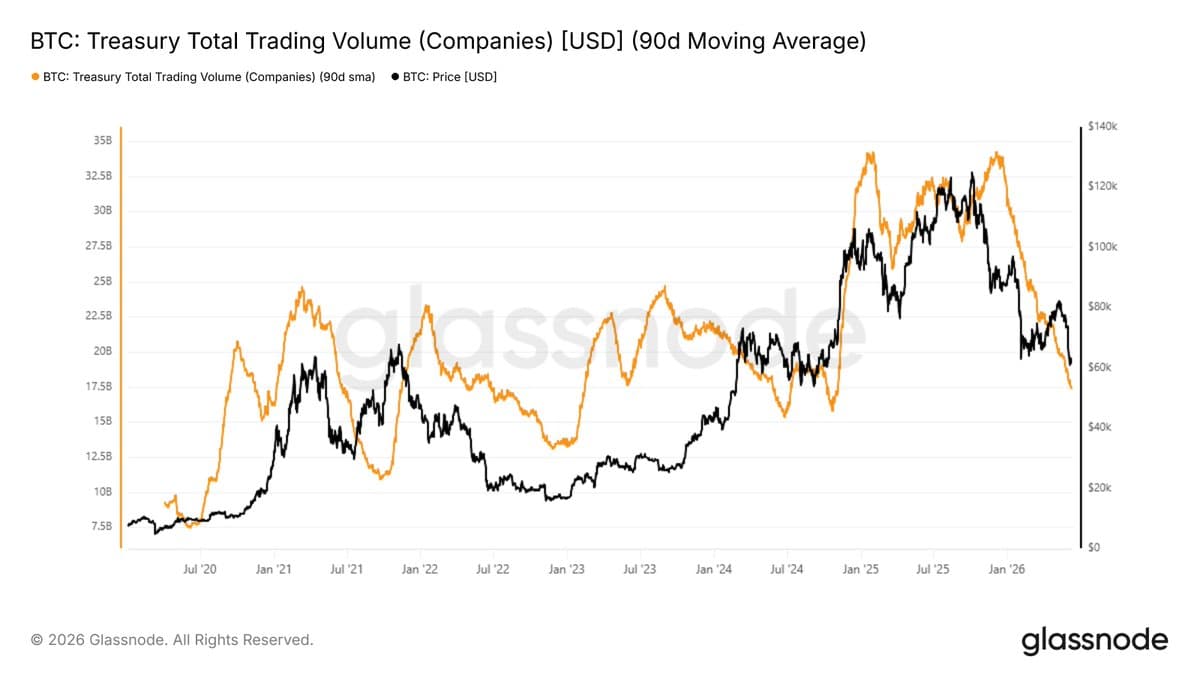
Trading activity across Bitcoin treasury companies has experienced a significant decline, highlighting changing investor sentiment within the digital asset sector. Recent market data indicates that average daily trading volume among these firms has fallen substantially compared to levels recorded during the peak enthusiasm seen late last year. Bitcoin treasury companies have become increasingly prominent in financial markets by accumulating large Bitcoin reserves as part of their corporate strategies. Investors often view these firms as alternative vehicles for gaining exposure to Bitcoin without directly purchasing the cryptocurrency itself. The decline in trading volume suggests that speculative demand may be cooling following periods of heightened market excitement. During strong bull market phases, treasury-focused companies frequently attract significant investor attention due to their leveraged relationship with Bitcoin price movements. When momentum slows, trading activity often contracts accordingly. Market analysts point to several potential explanations. Bitcoin price consolidation has reduced short-term volatility, limiting opportunities for aggressive traders. At the same time, investors may be diversifying into other digital asset opportunities or waiting for clearer macroeconomic signals before increasing exposure. Lower trading volume does not necessarily indicate weakening confidence in Bitcoin itself. Instead, it may reflect a transition toward more cautious positioning after substantial gains earlier in the market cycle. Historically, periods of reduced activity have often preceded either renewed accumulation or broader market reassessment. Institutional participation also plays a major role in shaping volume trends. Large investors frequently adjust exposure based on interest rates, liquidity conditions, regulatory developments, and broader economic expectations. Changes in any of these areas can influence demand for treasury-related equities. The evolving relationship between traditional financial markets and digital assets continues to create new opportunities as well as new risks. Treasury companies remain closely tied to Bitcoin's performance, making them particularly sensitive to shifts in market sentiment. Investors are now watching whether trading activity stabilizes or continues to decline. Future movement in Bitcoin prices, regulatory developments, and macroeconomic conditions will likely determine whether interest in these stocks returns to previous highs or settles into a more sustainable pattern.
Published by Banx Network. This article is part of the Banx decentralized media programme, powered by the BXE token on the XRP Ledger.