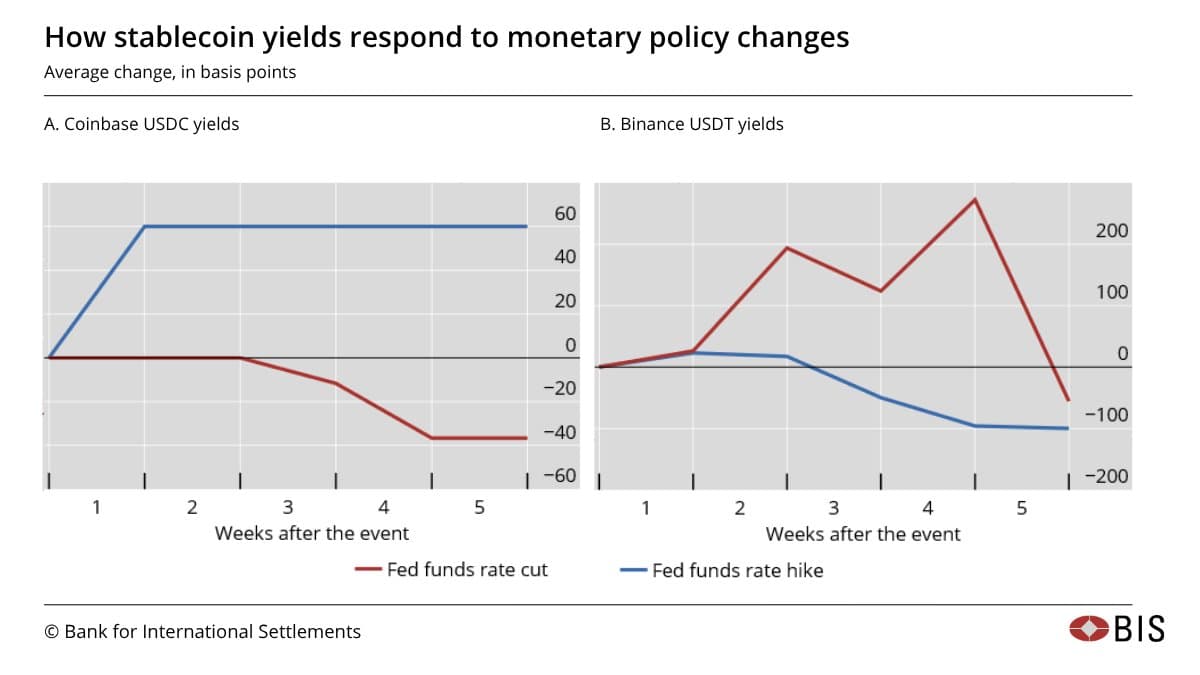
The Bank for International Settlements (BIS) has released new research suggesting that stablecoin yields react differently to monetary policy changes than traditional reserve-based financial products. According to the BIS Bulletin, reserve-backed yields closely track central bank policy rates, while activity-based yields in the stablecoin sector respond to changes in user demand, lending activity, and broader crypto market participation. The report highlights an emerging trend in digital finance: stablecoin yields often increase after interest-rate cuts, a dynamic that contrasts with traditional banking products. Researchers observed that activity-driven returns on stablecoin platforms tend to strengthen as market participants seek alternative sources of yield in lower-rate environments. Increased borrowing, liquidity provision, and decentralized finance participation can contribute to this phenomenon. The findings arrive as policymakers worldwide continue examining the growing influence of stablecoins within global financial markets. Stablecoins, digital assets designed to maintain a stable value relative to fiat currencies, have become an increasingly important component of crypto trading, decentralized finance applications, and cross-border payments. BIS researchers noted that reserve-based stablecoin models generally mirror conventional financial structures because the backing assets often consist of short-term government securities or cash equivalents. As a result, yields generated from those reserves move largely in line with prevailing policy rates. However, activity-based yields represent a different mechanism. These returns are generated through economic activity occurring within blockchain ecosystems, including lending, staking-related services, liquidity pools, and trading incentives. Because these activities are influenced by market demand rather than solely central bank decisions, their behavior can diverge significantly from traditional financial products. The study may have important implications for regulators evaluating the risks and benefits of stablecoins. As governments develop frameworks governing digital assets, understanding how stablecoin yields respond to macroeconomic changes could help policymakers assess financial stability risks and investor behavior. Industry analysts believe the report reinforces the idea that digital asset markets are developing unique financial characteristics distinct from legacy banking systems. While traditional assets remain heavily influenced by central bank policy decisions, blockchain-based financial activity may increasingly create alternative channels for yield generation. As stablecoin adoption expands among institutions and retail users alike, researchers expect further examination of the relationship between monetary policy, blockchain activity, and digital asset markets. The BIS findings provide additional evidence that the crypto economy is becoming an increasingly significant part of the broader financial landscape.
Published by Banx Network. This article is part of the Banx decentralized media programme, powered by the BXE token on the XRP Ledger.