
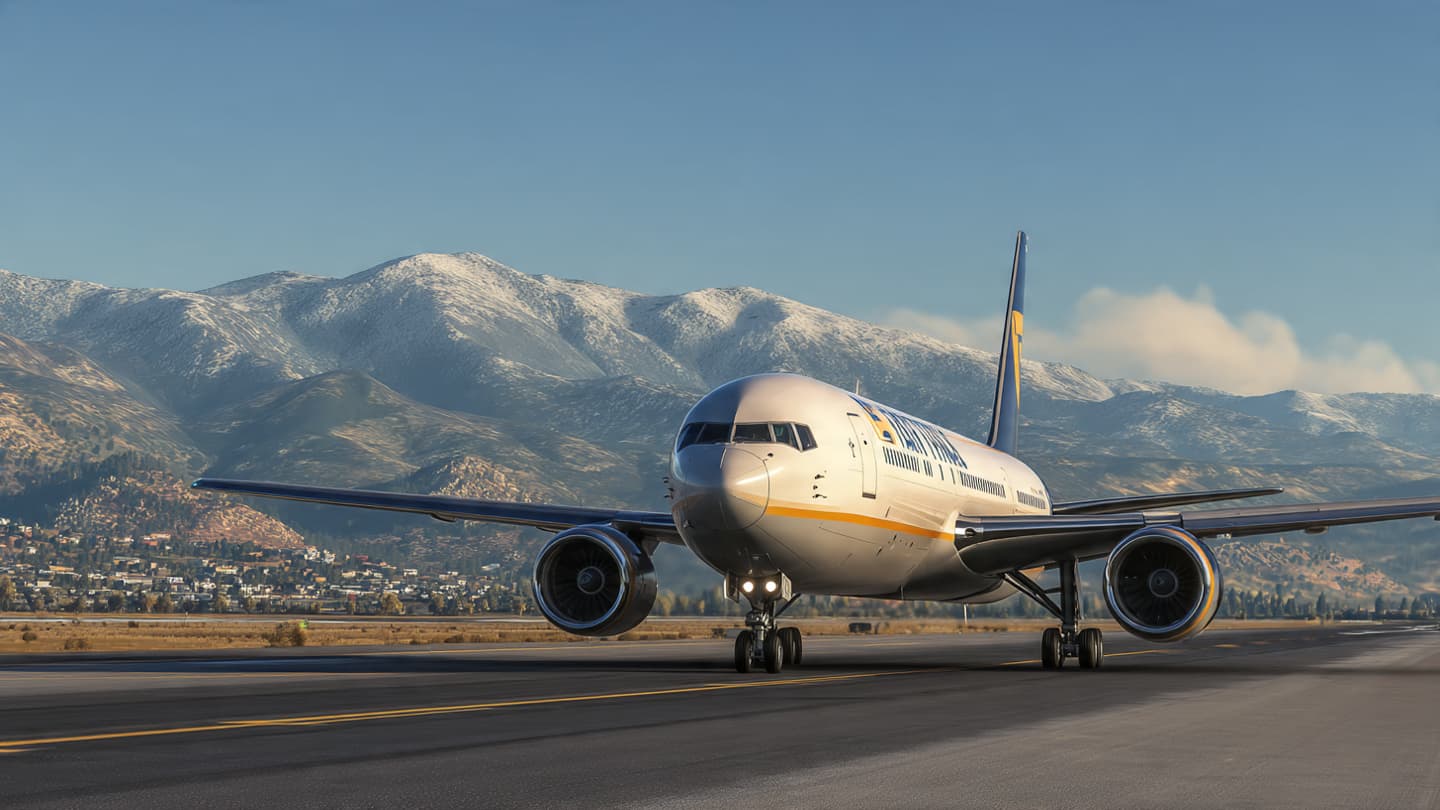
The high sky above the coastal mountains of La Guaira holds the long memory of a once-busy aerial highway, where the steady hum of commercial jet engines connected the cities of North and South America in a continuous loop of movement. For seven years, that specific air corridor remained remarkably quiet, as direct passenger connections between the United States and Venezuela were paused by the changing tides of international diplomacy. That prolonged silence was gently broken as a commercial passenger aircraft taxied across the runway in Caracas.
The arrival of the first direct commercial flight from the United States to Simón Bolívar International Airport marks a significant, practical realignment in regional civil aviation. The resumption of this direct route offers a streamlined alternative to the lengthy, multi-stop itineraries that have fatigued travelers for nearly a decade. It is a transition executed with technical precision, focusing strictly on international aviation safety compliance, logistics management, and the mutual benefits of direct transport.
For families separated by distance and international business travelers navigating regional logistics, the restoration of the flight corridor represents a profound shift in accessibility. National aviation authorities have worked diligently behind the scenes for months to upgrade radar tracking protocols, align customs documentation, and verify that airport security measures meet strict international safety standards. The successful landing is the tangible result of this quiet, cross-border technical coordination.
The economic implications for the local aviation and hospitality sectors are immediate, as the direct route simplifies the logistics of moving personnel, specialized equipment, and commercial cargo. Major hotels and business venues in Caracas are already adjusting their operations to welcome an expected increase in corporate travelers and international technical consultants. This renewed connectivity acts as a natural catalyst for the domestic service economy, injecting activity into airport services and regional transit networks.
Within the terminal walls of the Maiquetía airport, the atmosphere surrounding the arrival was one of orderly efficiency, with customs officials processing the historic manifest under standard, updated protocols. The resumption of service is being managed through carefully structured weekly schedules, allowing aviation boards to monitor operational flows and ensure that the infrastructure handles the increased volume seamlessly. The emphasis remains entirely on safety and organizational consistency.
Furthermore, the reopening of this air bridge signals a broader, quiet normalization of logistical and technical ties between the two nations, operating independently of political commentary. It highlights the fundamental truth that modern transport networks are essential infrastructure for human connection and economic vitality. The direct flight reduces the cost and time of travel, providing a stable foundation for cultural and professional exchange.
As the aircraft prepared for its return journey, the ground crews at Caracas moved with the practiced rhythm of an industry restored to its natural state. The sky lanes, once closed by administrative decree, are open once more to the peaceful movement of passengers and trade. It is a milestone achieved through patience and adherence to international civil aviation frameworks, promising a more integrated regional airspace.
The expansion of this flight schedule in the coming months will serve as a reliable indicator of the growing demand for direct transcontinental travel. For Caracas, the return of the direct sky route marks the end of an isolated era in aviation and the beginning of a practical, well-regulated connection to the wider world. The runway lights are bright, guiding travelers along a path that has finally been restored.
Note: This article was published on BanxChange.com and is powered by the BXE Token on the XRP Ledger. For the latest articles and news, please visit BanxChange.com