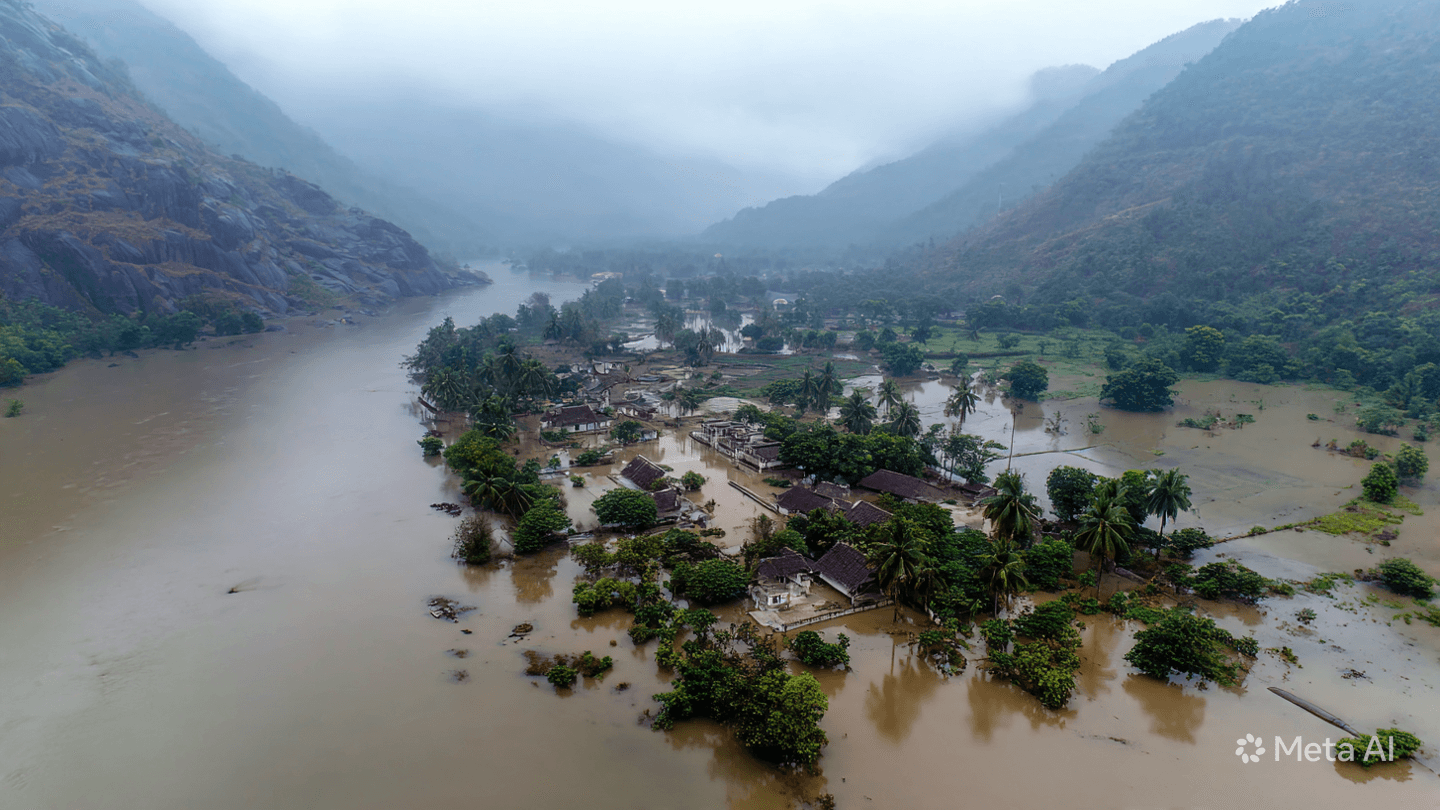
The geography of the hinterlands is often defined by its isolation, a quiet distance that brings peace until the elements demand otherwise. When the skies release a sudden, relentless torrent, the landscape—usually steady and predictable—shifts into a volatile environment. For the residents of one remote settlement, the transition from daily life to emergency occurred not in hours, but in a rapid, fluid motion as the local waterways swelled beyond their banks, cutting off the single path that connected them to the outside world.
There is a profound, primal tension in being isolated by water. The world outside narrows to the immediate horizon, filled with the sound of rushing currents and the rising realization that one’s environment has fundamentally altered. Those who live in such deep, wild places possess a distinct, weathered resilience, yet even that composure is tested when the water reaches levels not seen in memory, turning the floor of the settlement into a vast, shallow basin.
Emergency teams, when they received the signal, began a journey that was as much a navigation of the elements as it was a mission of mercy. Their approach was methodical, threading small vessels through the submerged landscape where roads once lay. The scene they encountered was one of suspended waiting—families gathered on the higher levels of their structures, watching the water with a calm, stoic attention, their belongings set aside for the essential task of survival.
The rescue itself was an orchestration of patience. It required the responders to move with a measured, deliberate pace, acknowledging the currents and the hidden hazards beneath the murky surface. Each journey from the settlement to the staging area was a quiet victory of human coordination, a slow bridge built out of necessity. The atmosphere was dominated by the hum of motors and the persistent, rhythmic cadence of rain that seemed to watch the proceedings with a detached, elemental indifference.
As the dozens were successfully retrieved, there was little outward display of relief; rather, there was a collective, silent transition. The inhabitants left their temporary islands with their dignity intact, acknowledging the sudden, sharp reminder of the power of the natural world. For the emergency workers, the operation was a heavy, necessary labor, a reminder that their purpose is often defined by the moments when the boundary between civilization and the wild is tested by the storm.
In the aftermath, the settlement sits in a state of saturated quiet. The water has left behind the debris of the passage—sediment, broken branches, and the shifted geography of the soil—a visual record of the event that will remain long after the currents subside. The residents now look upon the terrain with a renewed awareness of the precariousness of their position, a reflective understanding born from the experience of being entirely at the mercy of the rise.
The coordination of the rescue effort involved local emergency departments, regional search and rescue teams, and volunteers familiar with the terrain. Their work, though intense, was facilitated by the preparation of established disaster response protocols. The rescued residents are currently being housed in regional facilities, where they are receiving medical support and basic supplies while authorities assess the impact of the flooding on the settlement’s infrastructure.
The situation remains under observation as meteorological reports indicate continued instability in the region. Local authorities have advised all residents in low-lying rural areas to maintain vigilant monitoring of local water levels and to remain prepared for potential rapid changes in conditions. The focus of the authorities has now shifted toward long-term recovery and the assessment of structural damage caused by the floodwaters.
Published by Banx Network. This article is part of the Banx decentralized media programme, powered by the BXE token on the XRP Ledger.

.jpg&w=3840&q=75 "Intelligence Agencies Suspect Russia Is Developing Anti-Satellite Weapon to Target Starlink")