The word "quantum" has drifted from the quiet halls of academia into the vibrant lexicon of popular culture, often evoking images of futuristic technology or mystical possibilities. Yet, at its heart, quantum mechanics is a description of reality so counterintuitive that it once troubled the greatest minds of the twentieth century. Albert Einstein famously dismissed the phenomenon of entanglement as "spooky action at a distance," unable to reconcile it with his vision of a orderly, local universe. Today, physicists are demystifying these concepts, inviting us to look beyond the jargon and appreciate the elegant, if strange, rules that govern the subatomic world. It is an invitation to wonder, not just at what we know, but at how deeply mysterious the fabric of existence truly is.
Body: To understand the quantum realm, one must first let go of the certainty that defines our daily lives. In the macroscopic world, objects have definite positions and speeds. In the quantum world, particles exist in a state of probability, described by a wave function that collapses only upon measurement. This uncertainty is not a flaw in our instruments but a fundamental feature of nature. It suggests that at the smallest scales, reality is not fixed until it is observed, a concept that challenges our deepest intuitions about objectivity.
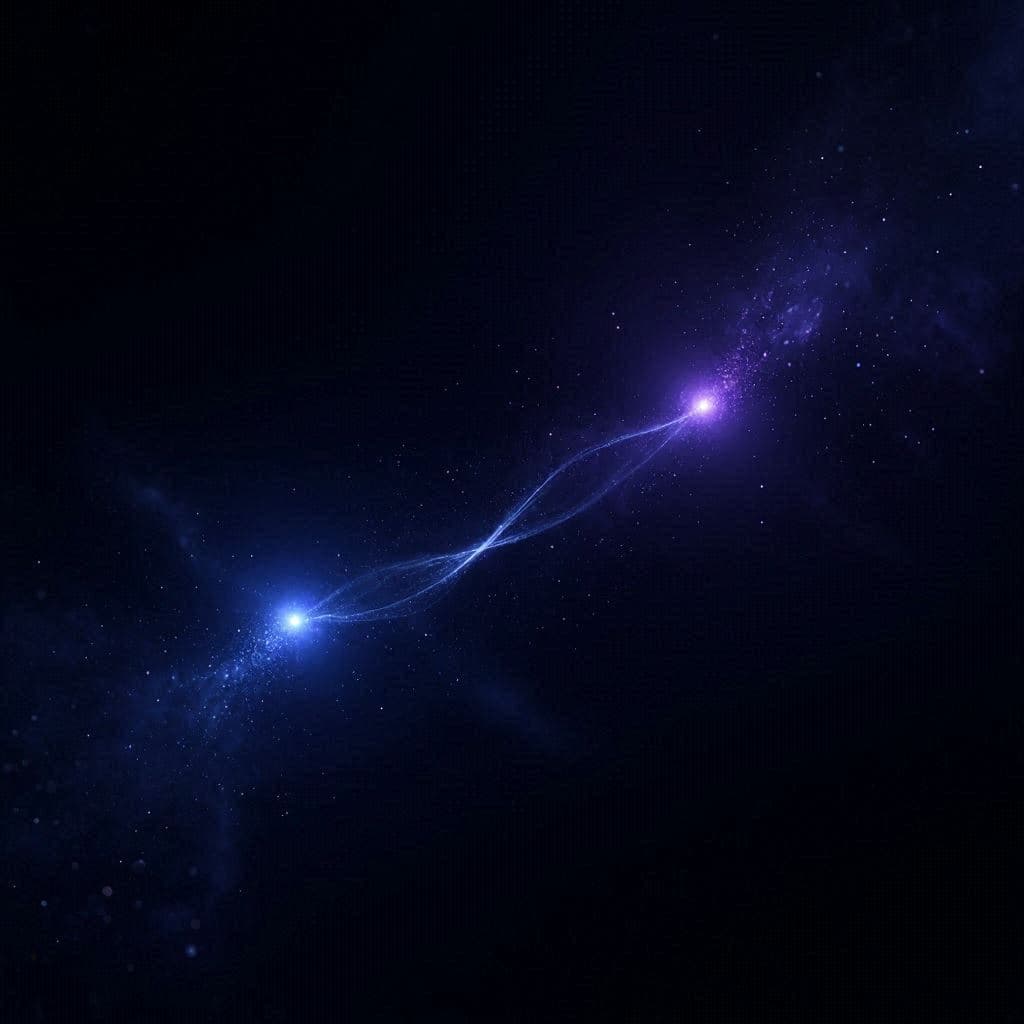
Entanglement, the source of Einstein’s discomfort, occurs when two particles become linked in such a way that the state of one instantly influences the state of the other, regardless of the distance separating them. If you measure the spin of one particle, the other immediately assumes a corresponding state. This connection defies the classical notion that information cannot travel faster than light. However, modern physics clarifies that while the correlation is instantaneous, no usable information is transmitted, preserving the cosmic speed limit.
Einstein’s skepticism stemmed from a desire for "local realism," the idea that objects have definite properties independent of observation and that influences are limited by proximity. He believed quantum mechanics was incomplete, hiding variables that would restore order. Yet, decades of experiments, particularly those testing Bell’s inequalities, have confirmed that the universe is indeed non-local in this specific sense. The "spookiness" is real, and it is a verified aspect of physical law.
For physicists, explaining these concepts requires careful language to avoid misleading metaphors. Terms like "telepathy" or "magic" are often used in media, but they obscure the mathematical precision underlying the phenomena. Entanglement is better understood as a shared history between particles, a correlation established at their creation that persists despite separation. It is a reminder that the universe is more interconnected than our senses suggest.
The practical applications of quantum mechanics are no longer theoretical. Quantum computing, cryptography, and sensing rely on these very principles to perform tasks impossible for classical systems. By harnessing superposition and entanglement, scientists are building technologies that could revolutionize medicine, security, and computation. Understanding the basics helps us appreciate the significance of these emerging tools. It bridges the gap between abstract theory and tangible progress.
Public interest in quantum physics reflects a broader curiosity about the nature of reality. People are drawn to the idea that the world is stranger than it appears. This engagement is valuable, fostering a society that values scientific literacy and critical thinking. When physicists take the time to explain these concepts clearly, they empower citizens to participate in discussions about the future of technology. It is a dialogue that enriches us all.
Ultimately, the quantum world teaches humility. It shows that our human-scale intuition is not a reliable guide to the fundamental workings of the cosmos. Embracing this strangeness allows us to see the universe with fresh eyes, appreciating its complexity without demanding it conform to our expectations. It is a journey of intellectual discovery that never truly ends.
Closing: In the end, understanding what it means to be "quantum" is less about mastering complex equations and more about accepting the inherent mystery of nature. It invites us to marvel at the intricate connections that bind the universe together. As science continues to unravel these secrets, the hope is that we will maintain a sense of wonder and respect for the unknown.
AI Image Disclaimer: Please note that any accompanying visuals for this narrative are artificially generated interpretations meant to evoke the spirit of the story, not documentary evidence.
Sources: Scientific American Nature Physics CERN
Published by Banx Network. This article is part of the Banx decentralized media programme, powered by the BXE token on the XRP Ledger.