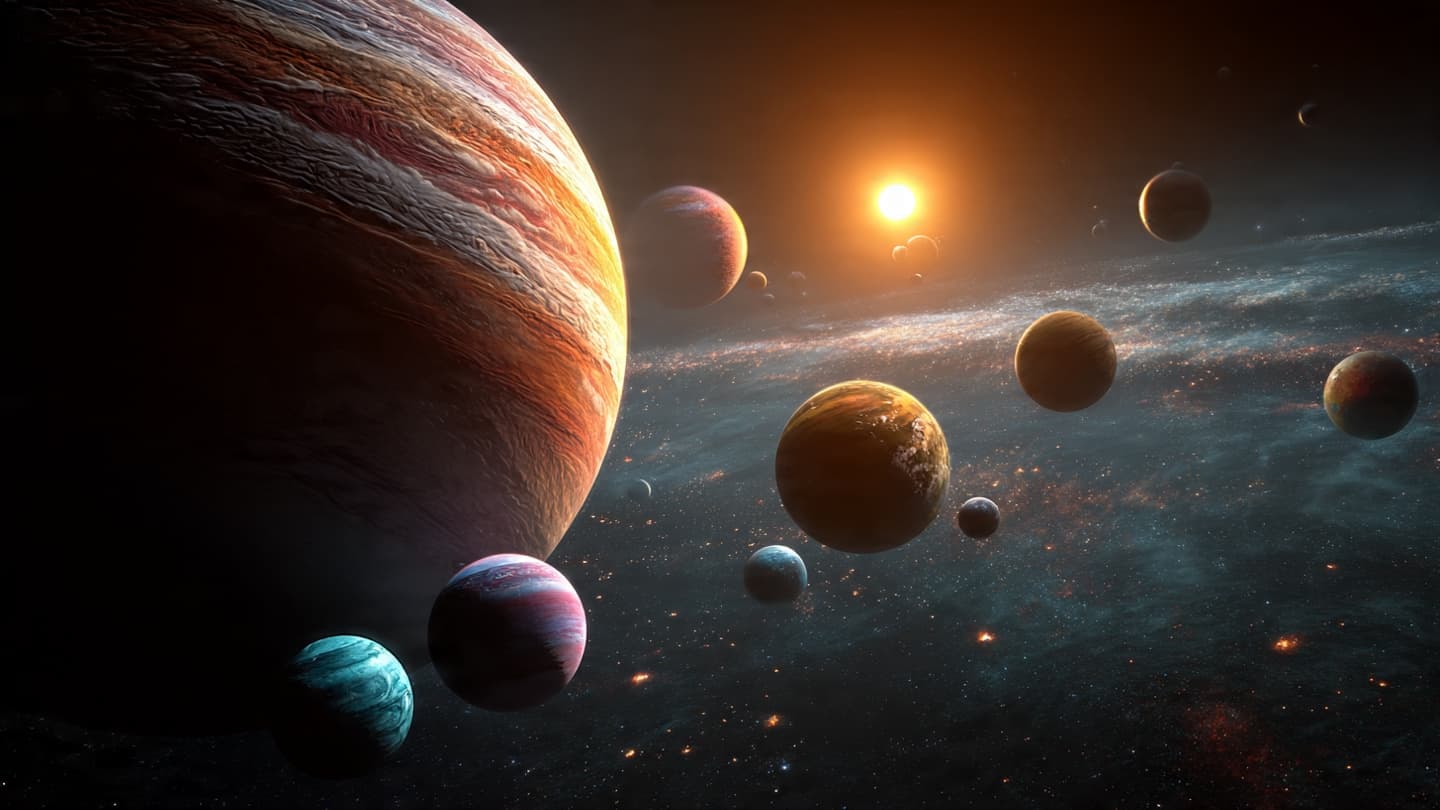
For generations, humanity looked toward the stars with questions that seemed impossible to answer. Were there other worlds beyond our own? Could distant planets resemble Earth in ways still unknown? Today, modern astronomy continues turning those ancient questions into measurable discoveries, one observation at a time.
Scientists recently confirmed the existence of 118 new exoplanets using advanced analysis of data collected by NASA’s Transiting Exoplanet Survey Satellite, widely known as TESS. The discovery significantly expands the growing catalog of known planets orbiting stars outside Earth’s solar system.
Exoplanets are planets located beyond our solar system, often orbiting distant stars many light-years away. Some are massive gas giants, while others are rocky worlds closer in size to Earth. Researchers say each new discovery helps improve scientific understanding of how planetary systems form and evolve across the galaxy.
The latest confirmations were made possible through machine learning technology capable of analyzing enormous amounts of astronomical data. Scientists explained that artificial intelligence systems can identify subtle patterns in starlight changes that may indicate a planet passing in front of its host star.
Astronomers say the rapid increase in confirmed exoplanets reflects how dramatically space observation technology has improved over the past two decades. Earlier generations of researchers could only speculate about the existence of distant worlds, while today scientists are cataloging them in growing numbers with remarkable precision.
Some of the newly identified planets are believed to orbit within temperature ranges that could potentially allow liquid water to exist. Although researchers caution that habitability depends on many complex factors, such discoveries continue to fuel scientific interest in the possibility of life beyond Earth.
The international astronomy community has described the finding as another important milestone in planetary science. Future telescopes, including next-generation space observatories, are expected to study some of these planets more closely by analyzing their atmospheres and chemical compositions.
Beyond scientific significance, the discovery carries emotional resonance for many people fascinated by space exploration. Each newly confirmed planet quietly reshapes humanity’s understanding of its place in the universe, reminding observers that Earth may represent only one small part of a much larger cosmic story.
Researchers say ongoing missions will likely identify thousands more exoplanets in the coming years. As technology advances, astronomers continue moving steadily closer to answering one of humanity’s oldest questions: whether life exists somewhere beyond the boundaries of Earth.
AI Image Disclaimer: Several visuals used in this article were generated with AI-assisted imaging technology for illustrative purposes.
Sources Verified: NASA, Science News, European Space Agency, Reuters, Nature
Published by Banx Network. This article is part of the Banx decentralized media programme, powered by the BXE token on the XRP Ledger.