
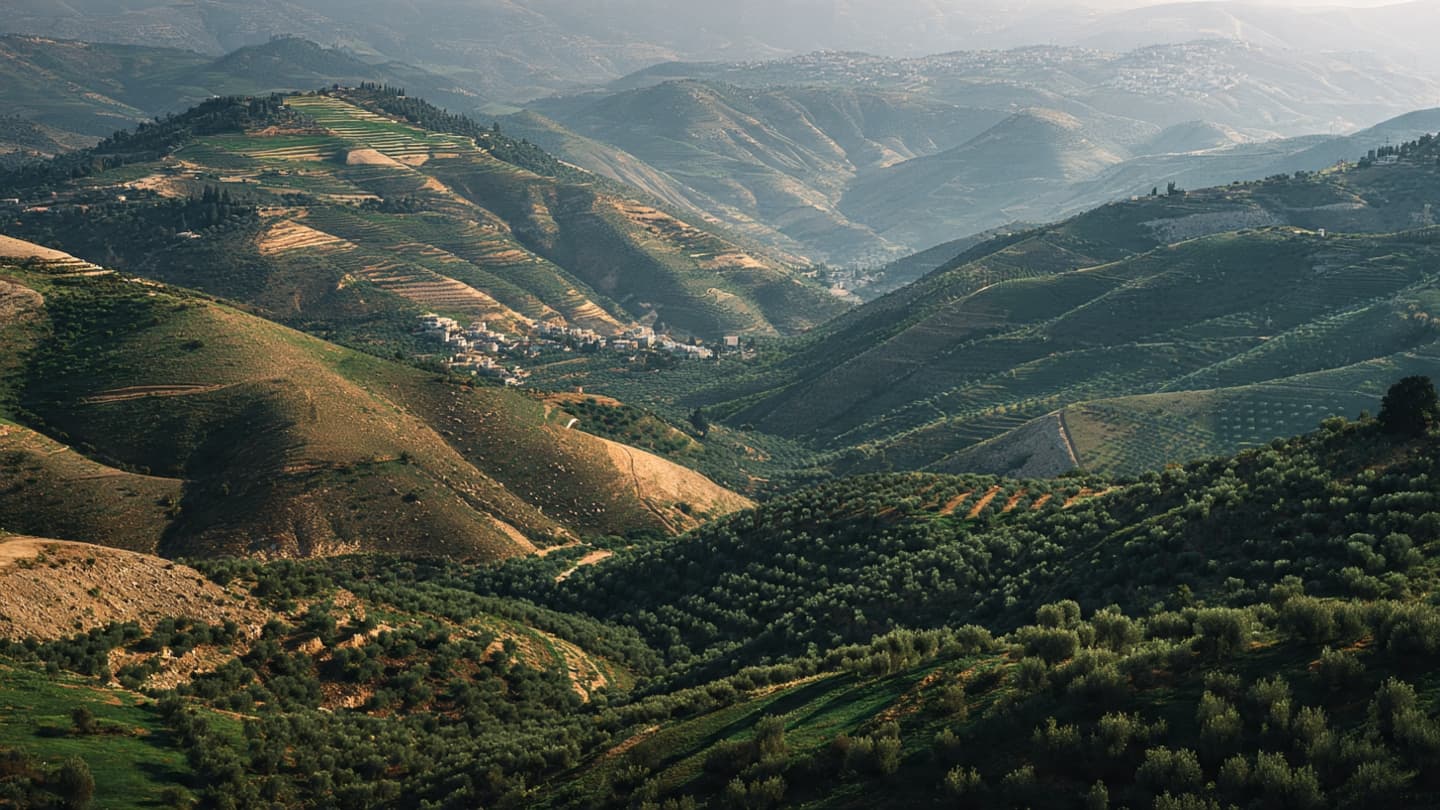
In the hills of southern Lebanon, mornings arrive slowly. Mist drifts across olive groves and rocky slopes before sunlight settles over villages that have long lived within sight of borders and military outposts. Life continues in familiar rhythms—farmers tending fields, shopkeepers opening doors, families moving through ordinary routines. Yet beneath this appearance of normalcy lies a landscape shaped by decades of uncertainty, where geography and politics remain closely intertwined.
The frontier between Lebanon and Israel has often existed in a state that defies simple definitions. It is neither entirely at peace nor fully at war. Instead, it occupies a space where ceasefires, negotiations, military calculations, and local realities overlap. In recent months, that ambiguity has become increasingly visible as Israel's military presence in parts of southern Lebanon continues amid ongoing debates about security arrangements, regional diplomacy, and the future of the border.
For Israeli military planners, the question is framed largely through security concerns. Officials argue that maintaining positions and operational flexibility near the frontier helps prevent threats from militant groups operating in the region, particularly Hezbollah. From this perspective, military deployments are viewed as part of a broader effort to create strategic depth and reduce risks along one of Israel's most sensitive borders.
Yet military objectives do not exist in isolation. Every position on a map intersects with political realities on the ground. The longer a military presence continues, the more it becomes intertwined with questions of sovereignty, governance, and diplomatic negotiation. What may begin as a tactical decision can gradually evolve into a broader political challenge.
In Lebanon, discussions surrounding the border reflect the country's own complex circumstances. The government faces the task of asserting state authority while navigating economic pressures, domestic political divisions, and regional dynamics that extend far beyond its frontiers. Southern communities, meanwhile, continue to live with the consequences of instability, balancing hopes for normalcy against the uncertainties that accompany a heavily militarized environment.
International actors have also become part of the conversation. Diplomatic efforts involving regional governments, Western allies, and international organizations have focused on reducing tensions and preserving fragile ceasefire arrangements. The objective is often straightforward in principle yet difficult in practice: preventing renewed escalation while creating conditions that allow civilian life to recover.
The challenge lies in the gap between military logic and political resolution. Security concerns may justify temporary measures, but lasting stability typically depends on agreements that extend beyond military calculations. Diplomatic frameworks require trust, enforcement mechanisms, and a willingness among competing actors to accept compromises that may satisfy no one completely.
This dynamic has placed Israel's military in what many observers describe as a political no man's land. The armed forces are tasked with maintaining security objectives, yet the long-term resolution of those objectives depends on decisions made in diplomatic meetings, government offices, and negotiation rooms far removed from the border itself. Soldiers can secure terrain, monitor movement, and respond to threats, but they cannot independently resolve the political questions that determine when and how military deployments ultimately end.
The region's history adds further complexity. Southern Lebanon carries memories of previous conflicts, occupations, withdrawals, and ceasefire agreements. Each new development is viewed through the lens of those experiences. Communities on both sides of the border remember periods of violence and displacement, making discussions about security and sovereignty deeply shaped by historical memory.
Meanwhile, daily life persists amid uncertainty. Roads reopen, schools operate, and markets function where conditions allow. Residents continue adapting to circumstances that can change with little warning. In many ways, their resilience becomes part of the story—an enduring effort to maintain ordinary routines in a region where political outcomes often remain unresolved.
As diplomatic discussions continue, the future of Israel's military role in southern Lebanon remains uncertain. Security officials emphasize ongoing threats. Lebanese leaders continue to assert national sovereignty. International mediators seek formulas that might reduce tensions and strengthen stability. Each perspective reflects a different understanding of what the border requires.
For now, the frontier remains a place suspended between possibilities. It is a landscape where military positions and political negotiations exist side by side, neither fully determining the other. The hills, villages, and roads of southern Lebanon continue to witness this uneasy balance, carrying the weight of both history and expectation.
In the end, the challenge is not simply about territory or troop deployments. It is about translating temporary security arrangements into a sustainable political future. Until that bridge is built, the border will remain what it has often been—a place where certainty is scarce, where decisions echo beyond the immediate moment, and where the distance between military reality and political resolution remains difficult to cross.
AI Image Disclaimer Illustrative images accompanying this article are AI-generated interpretations of the locations and themes discussed and do not represent actual photographs from specific events.
Sources
Reuters Associated Press United Nations Interim Force in Lebanon (UNIFIL) International Crisis Group Carnegie Middle East Center
Published by Banx Network. This article is part of the Banx decentralized media programme, powered by the BXE token on the XRP Ledger.


