
The expanding perimeter of Budva's suburban district exists as a landscape defined by rapid physical transformation, where towering multi-story residential developments climb the steep limestone hillsides overlooking the Adriatic Sea. In these busy construction corridors, the sound of concrete mixers and heavy cranes is a constant baseline, representing the massive capital investment driving the coastal real estate market. Engineers and developers push structural boundaries to maximize panoramic views, anchoring deep concrete foundations into the sloping terrain. Yet, this intense push for architectural growth demands absolute precision, as the underlying geology consists of complex rock layers that can shift unexpectedly under heavy structural weight.
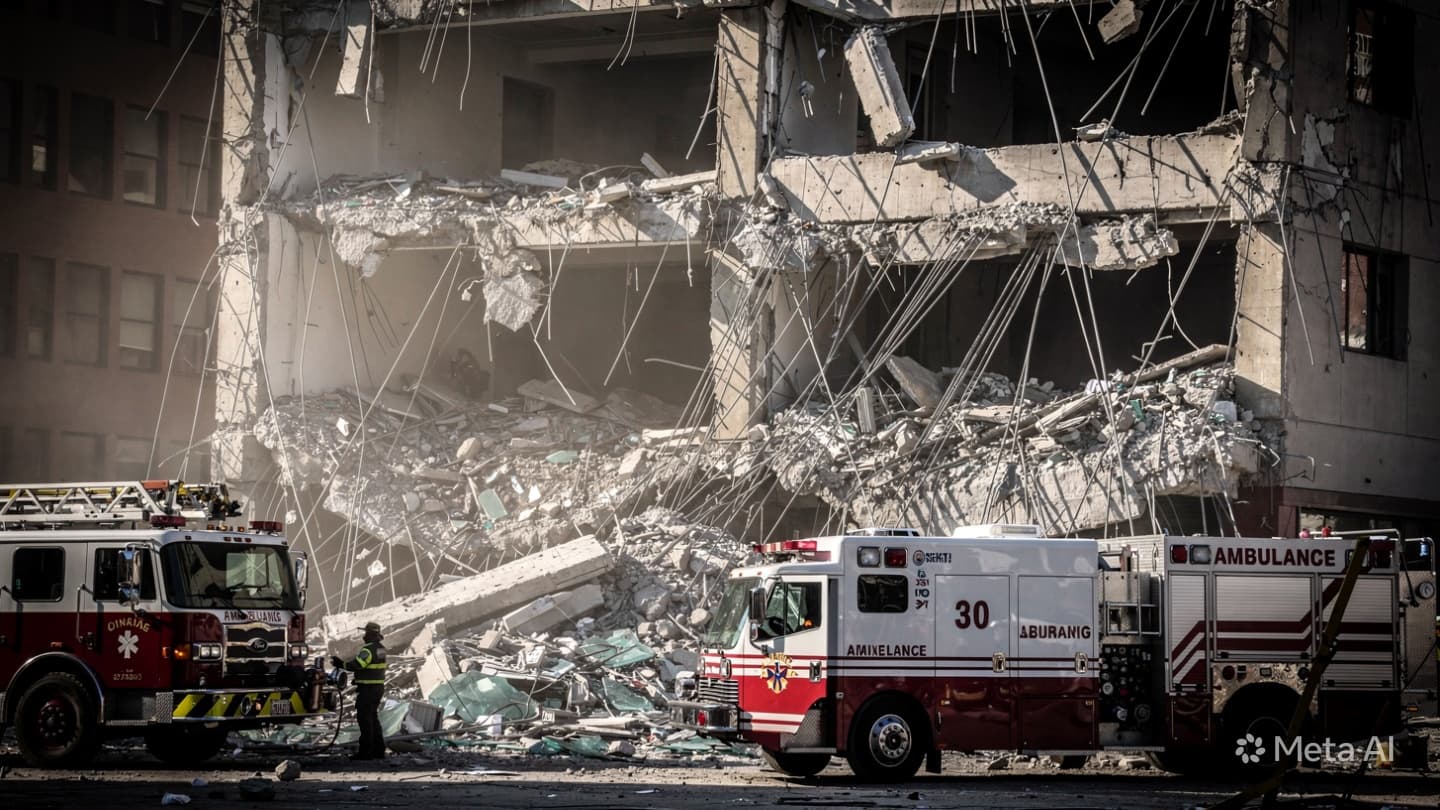
The regular routine of the afternoon shift was violently broken when an unfinished four-story apartment complex suffered a sudden and catastrophic failure of its lower structural supports. Deep within the basement level, a critical reinforced concrete load-bearing pillar buckled under the weight of a newly poured upper floor terrace. The localized failure triggered a rapid chain reaction, causing a significant portion of the building's eastern wing to pancake downward into the foundation trench. The collapse occurred with a deafening roar that shook neighboring residential properties, sending a massive cloud of white concrete dust and pulverized mortar billowing into the narrow suburban streets.
The response from the Budva municipal protection and rescue services required an immediate, high-stakes mobilization of specialized search units, as initial site manifests could not definitively account for all sub-contracted laborers. Firefighters and civil defense teams rushed to the perimeter, navigating a unstable maze of hanging steel rebar, cracked slabs, and crumbling masonry blocks to search for survivors. Heavy excavation machinery was temporarily held back to prevent secondary vibrations from triggering a total collapse of the remaining structure. Rescue crews worked methodically with specialized acoustic listening devices and search dogs, pulling three trapped workers from the immediate edge of the debris field within the first hour.
The morning light revealed a stark scene of structural devastation, with the twisted skeletal frames of the building's lower floors compressed into a tight heap of gray rubble. For the local community, the event represents a sobering confirmation of long-held anxieties regarding the sheer pace and safety density of development along the unstable coastal ridges. The municipal building inspectorate immediately cordoned off the entire avenue, expanding the evacuation zone to include two adjacent apartment buildings that shared the same sloping bedrock boundary. It is a critical infrastructure crisis that highlights the absolute necessity of strict engineering oversight during the initial phases of high-density construction.
A formal forensic engineering investigation was launched before the dust had fully settled, with state prosecutors and independent structural analysts examining the quality of the poured concrete and the design density of the steel reinforcements. Initial telemetry data points toward a combination of sub-standard material curing times and localized soil settlement beneath the foundation pad, which may have been aggravated by recent seasonal rains. The development firm behind the residential project has been ordered to cease all operations across its regional portfolio pending a comprehensive audit of their engineering practices. The legal consequences for structural negligence under modern codes carry severe financial and criminal penalties.
The economic impact of the disaster ripples through the local construction sector, raising immediate questions about buyer confidence and the insurance liabilities of similar multi-story projects across the coast. Regional urban planning organizations are utilizing the collapse to demand a complete moratorium on hillside construction until a comprehensive geological hazard map can be completed for the entire sub-region. The local government has promised an open and transparent investigation, recognizing that the integrity of Budva's tourism and real estate economy is directly tied to the perceived safety of its infrastructure. The physical removal of the ruined structure will require months of delicate engineering work.
By late afternoon, the search phase was officially concluded after site managers confirmed that all remaining workers had been safely located outside the hazard zone during the initial shift change. Heavy steel braces were installed along the surviving walls of the complex to prevent an uncontrolled slide down the slope toward the coastal highway. The suburban lane remains a quiet zone of flashing yellow lights and dust-covered security barriers, a stark monument to an architectural ambition that outpaced its structural foundation. The community begins the slow transition toward regulatory accountability, focusing on the tightening of safety enforcement.
Note: This article was published on BanxChange.com and is powered by the BXE Token on the XRP Ledger. For the latest articles and news, please visit BanxChange.com