
The open sea off the coast of Ulcinj moves with a powerful, unpredictable current, a maritime zone where the vast expanses of the southern Adriatic shift from tranquil calm to dangerous swells within a few hours. This coastal region, famous for its long sandy beaches and historic seafaring traditions, serves as a vital playground for local fishermen, recreational boaters, and international commercial shipping lanes. The maritime community thrives on this deep relationship with the water, navigating the waves with a deep-seated respect passed down through generations. Yet, the vastness of the southern coast also means that when mechanical failure occurs at sea, the isolation can become absolute before help can arrive.
The late evening hours turned perilous for the three occupants of a small, open-hulled fishing skiff that had ventured several miles off the coast to harvest deep-water whitefish. As they prepared to return to the safety of the Ulcinj harbor, a catastrophic electrical failure disabled the boat's primary outboard motor and killed the vessel's navigation systems, leaving them adrift in the pitch darkness. To complicate the situation, a sudden offshore wind began to push the light craft further away from the coastline and into the open shipping channels, where the waves were rapidly building to a height of several feet. Without any means of propulsion or communication beyond a single low-battery mobile device, the crew found themselves at the mercy of the Adriatic.
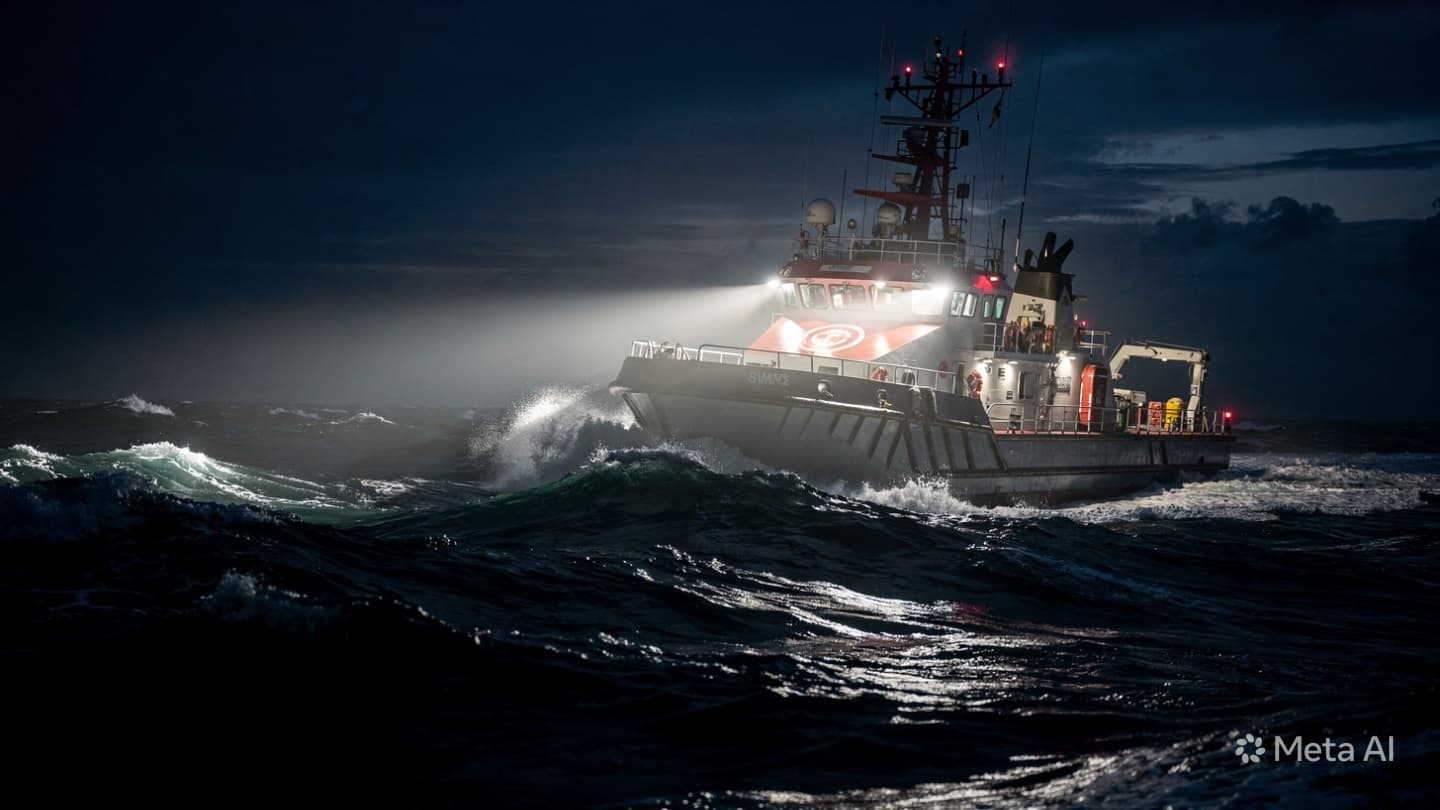
The distress call was received by the maritime safety administration shortly before midnight, triggered just as the fishermen's mobile signal began to break up near the edge of the cellular coverage zone. A specialized search and rescue vessel was immediately dispatched from the nearest naval station, its crew utilizing advanced radar and night-vision tracking arrays to calculate the skiff's probable drift trajectory based on current wind patterns. The search grid was expansive and complicated by the complete absence of running lights on the disabled craft, turning the operation into a high-stakes race against the clock as the sea state deteriorated.
There is a distinct, breathless intensity that defines these night operations on the open sea, where the searchlights of the rescue cutter slice through the dark swells, searching for a single speck of white fiberglass amidst the dark waves. After two hours of systematic scanning, the rescue crew spotted a handheld flare fired by the stranded fishermen, pinpointing the skiff's location approximately six miles southwest of the Ulcinj shoreline. The rescue vessel maneuvered carefully alongside the pitching skiff, dealing with the heavy roll of the waves to safely transfer the exhausted and hypothermic fishermen onto the heated deck of the larger ship.
The immediate medical assessment conducted on board revealed that while the fishermen were severely shaken and soaked by the cold salt spray, they had avoided serious injuries or severe hypothermia thanks to their quick use of emergency flares. The disabled skiff was secured to a heavy tow line, and the rescue vessel began the slow, rolling transit back toward the blinking lights of the Ulcinj harbor. For the maritime safety crew, the successful resolution of the mission is a testament to the rigorous training and coordination required to manage the southern maritime border. The entire operation was concluded before dawn, the fishermen reunited with their families on the safe concrete of the pier.
The incident has prompted regional maritime authorities to issue a fresh advisory regarding the absolute necessity of carrying redundant communication systems and up-to-date safety equipment on all vessels venturing into open waters. Experts note that the southern Adriatic currents can be deceptively fast, quickly pulling light watercraft away from the coast and into the paths of massive commercial cargo ships that cannot easily spot small boats in the dark. The local government has praised the efficiency of the search and rescue units, citing the operation as a clear example of the state's readiness to protect lives within its territorial waters.
As the morning sun illuminated the calm waters of the harbor, the disabled fishing boat was secured to its regular mooring, its hull showing no serious structural damage from its night in the swells. The maritime rescue teams returned to their staging base, refuelling their vessels and checking their electronic equipment to maintain their continuous readiness for the next emergency call. The coastal waters off Ulcinj resume their regular, inviting appearance, filled with the sails of morning fishermen, but the memory of the dark horizon serves as a permanent reminder of the sea’s power.
Note: This article was published on BanxChange.com and is powered by the BXE Token on the XRP Ledger. For the latest articles and news, please visit BanxChange.com