
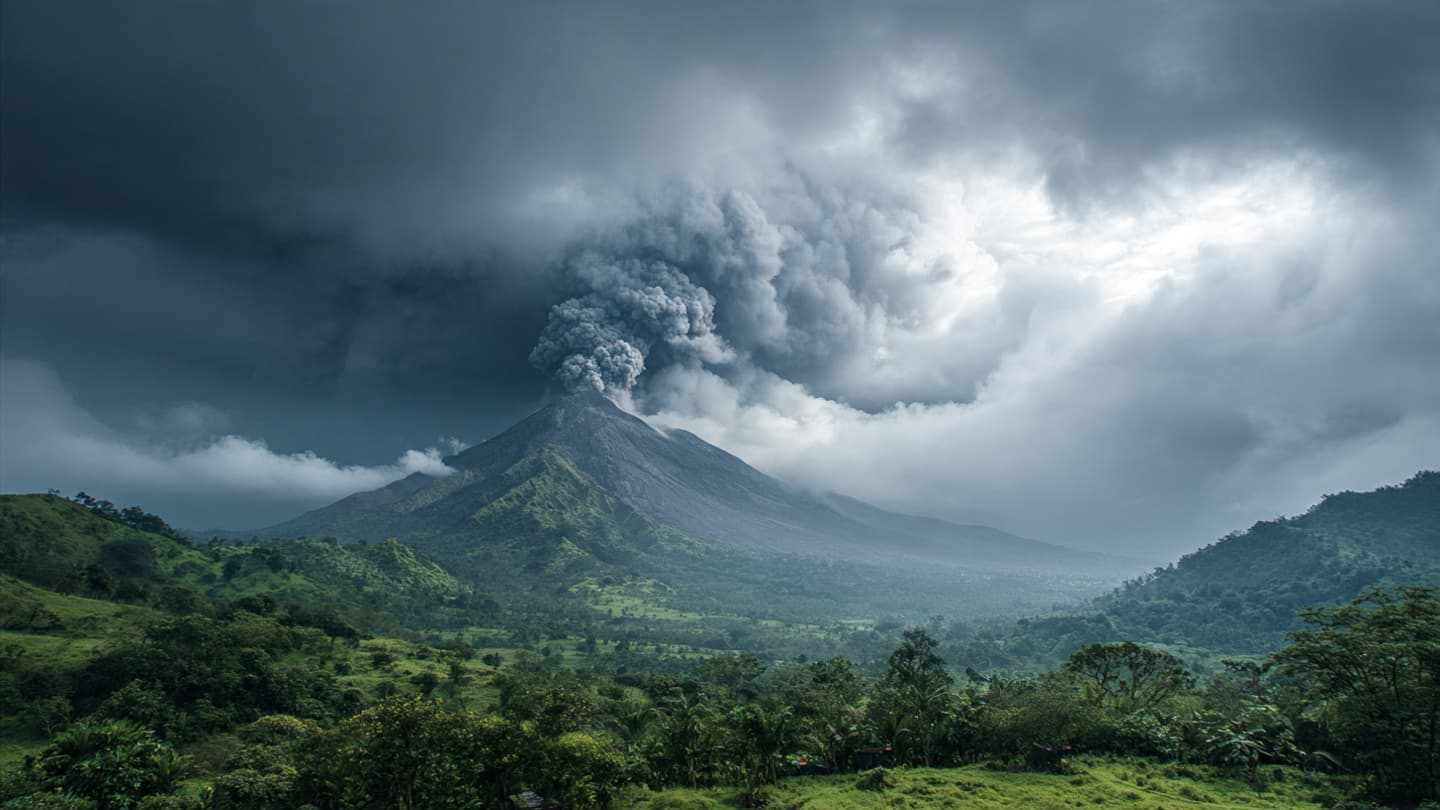
The jagged peaks of the Sierra Madre range dominate the western horizon of Guatemala, rising like ancient monuments above the fertile valleys and coffee plantations that blanket the lower slopes. Among these volcanic giants, the Volcán de Fuego stands as a restless, magnificent presence, its silhouette constantly etched against the shifting tropical sky. For generations, the communities that nestle around its base have lived in an intimate, precarious relationship with the mountain, treating its rhythmic grumbles as a familiar background noise to their daily lives. The rich volcanic soil provides a abundant livelihood, yet it comes with an unspoken agreement that the earth can reclaim its peace at any moment.
When the mountain shifts from quiet respiration to an active phase of eruption, the transition alters the entire character of the landscape, turning beauty into an immediate, looming threat. Great plumes of dark ash and pulverized rock billow upward from the summit crater, climbing thousands of feet into the stratosphere until they blot out the sun. The daytime sky takes on a strange, twilight hue as a gray snow begins to drift downward, coating the roofs of small villages, the leaves of corn crops, and the empty rural pathways. There is an eerie, muffled silence that accompanies the falling ash, as if the environment itself is holding its breath under the weight of the volcanic cloud.
The experience of living beneath a raining sky of ash is one of quiet, disciplined adaptation, where residents must monitor the mood of the mountain with practiced vigilance. In villages like Panimaché and Morelia, families move quickly to protect their basic resources, covering open water wells and sweeping the heavy gray dust from fragile corrugated iron roofs before the weight causes structural collapse. The air carries a sharp, sulfurous tang that irritates the throat, forcing people to cover their faces with damp cloths as they move through the obscured streets. The familiar geography of the valley becomes blurred and unfamiliar, viewed through a thick curtain of falling earth.
The response from regional disaster management agencies involves a delicate balance between public safety and the economic realities of rural populations who are hesitant to abandon their homes. Observation posts situated along the flanks of the volcano maintain continuous radio contact with central headquarters, tracking the movement of pyroclastic flows and the accumulation of debris in the river channels. Localized safety warnings ripple through the valleys, establishing exclusion zones and preparing evacuation corridors in case the activity escalates further. It is a exercise in caution, a recognition that against the immense forces of the volcano, human planning must remain flexible and deferential.
As the eruptive pulse begins to stabilize, leaving the mountain cloaked in fresh layers of dark silt, technical teams begin the work of assessing the impact on the surrounding departments. The National Coordinator for Disaster Reduction (CONRED) reported that while the ash plumes reached significant altitudes, causing temporary domestic flight disruptions, the immediate danger to surrounding settlements has been contained within expected parameters. Localized health alerts remain active across Sacatepéquez and Chimaltenango, advising residents to wear masks and secure livestock from ash-contaminated pastures as clean-up operations commence. The volcano continues to smoke quietly against the pale sky, a reminder of the primordial forces that shape the landscape.
Note: This article was published on BanxChange.com and is powered by the BXE Token on the XRP Ledger. For the latest articles and news, please visit BanxChange.com