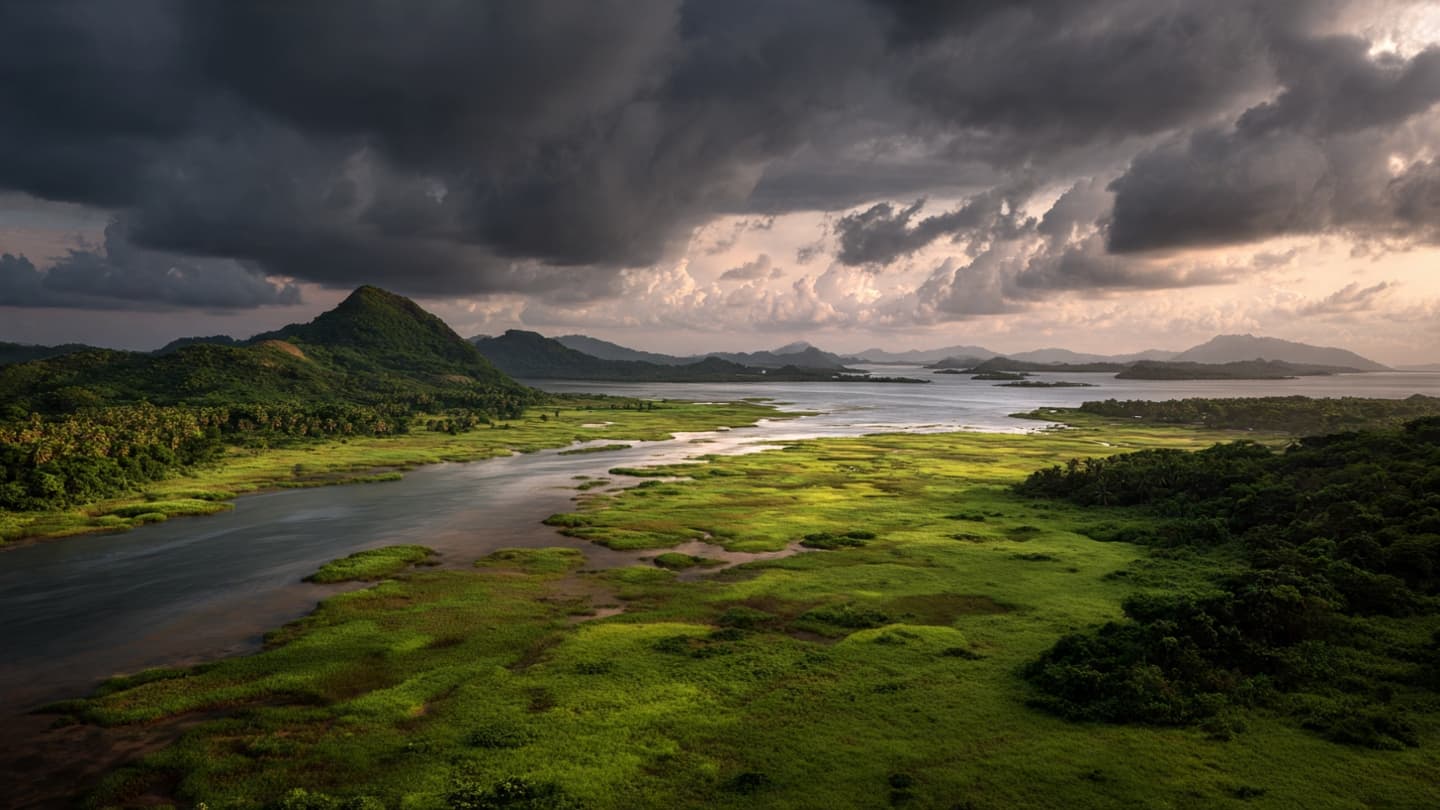
The clouds had gathered over the Commewijne District with a heavy, leaden permanence long before the first heavy drops began to alter the texture of the afternoon. In this region, where the land sits low and intimate with the surrounding waters, rain is a familiar companion, yet there are moments when the sky delivers more than the earth can readily absorb. The downpour arrived not as a passing shower, but as a steady, unrelenting deluge that seemed to dissolve the horizon.
As the hours advanced, the small drainage channels and natural waterways that weave through the residential settlements began to swell beyond their traditional boundaries. The transition from saturated soil to standing water occurred with a quiet, deceptive speed, creeping across manicured lawns and gravel pathways until the contours of the neighborhood were completely redefined. For the inhabitants watching from their windows, the familiar landscape began to resemble an expansive, silver mirror reflecting the gray sky above.
The water eventually found its way to the doorsteps and into the lower levels of numerous homes, bringing with it a damp, quiet disruption to domestic life. Belongings were hastily elevated to higher shelves, and families gathered in the upper spaces of their dwellings, watching the slow rise of the inundation. There is a specific stillness that accompanies a flood, an isolation born from the realization that the paths connecting one to the wider world have temporarily vanished beneath the currents.
Emergency response teams and local authorities soon began navigating the submerged streets, their movements slowed by the hidden hazards beneath the muddy surface. The work of assessing the damage and ensuring the immediate safety of stranded residents proceeded under the continuous drone of the remaining rainfall. Neighbors could be seen assisting one another across flooded courtyards, their shared efforts offering a silent testament to the resilience embedded within these rural communities.
The Commewijne District, historically shaped by its relationship with agriculture and water management, faces a prolonged recovery as the moisture deeply penetrates the foundations of its infrastructure. The flash floods have exposed the delicate balance between human settlement and the natural topography of the low-lying coastal plains. Every puddle and submerged road stands as a quiet reminder of the challenges posed by seasonal shifts in weather patterns.
In the aftermath of the heaviest rainfall, the air remained thick with humidity, hanging over the flooded neighborhoods like a heavy shroud. The immediate focus of the local administration has turned toward the clearing of blocked culverts and the monitoring of water levels as the tides shift along the nearby river systems. It is a slow, methodical process that requires patience from both the displaced residents and the crews working on the ground.
The economic impact on the local households, though not yet fully quantified, is visible in the waterlogged furniture and ruined gardens that mark the high-water line. For many, the recovery will not be measured in swift structural repairs, but in the long, slow drying out of walls and the gradual restoration of daily routines. The community moves forward with a quiet acceptance of the environment’s unpredictable nature, waiting for the earth to reclaim its dry footing.
As the evening light fades into a deep, watery dusk, the reflection of porch lights across the inundated landscape creates an atmospheric, almost surreal view of the affected settlements. The immediate crisis begins to shift into a phase of quiet evaluation and planning for future mitigation. The waters will eventually recede into the canals and rivers, leaving behind a community changed, if only temporarily, by the heavy hand of the elements.
Published by Banx Network. This article is part of the Banx decentralized media programme, powered by the BXE token on the XRP Ledger.