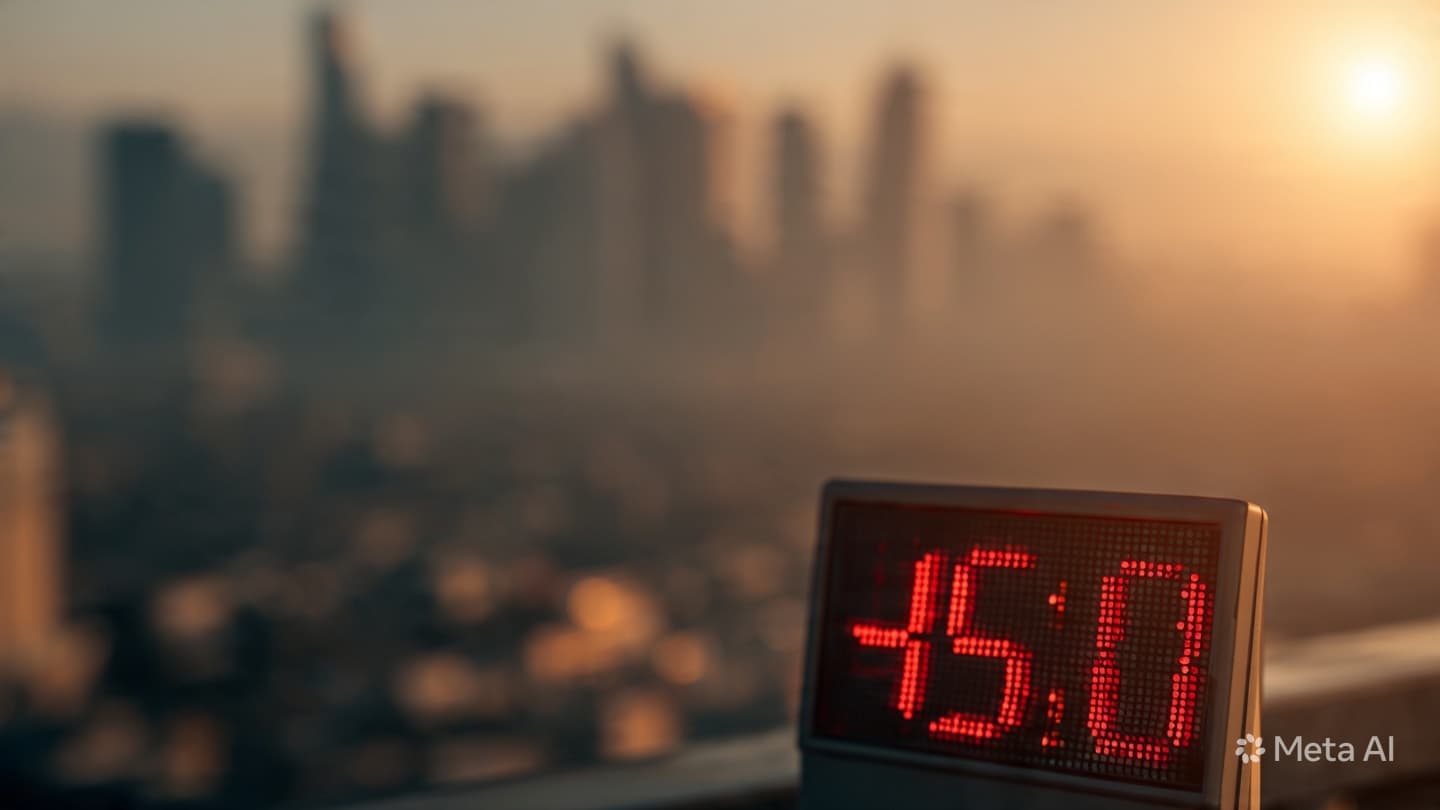
The thermometer on the corner store has become a focal point of public attention, its digital readout flickering with numbers that feel, to the passerby, like a challenge issued by the sky itself. There is a quiet, collective apprehension that ripples through the crowds as the index creeps ever higher, turning the familiar rhythm of the daily commute into a slow, deliberate trudge. One observes the city through a veil of shimmering haze, where the air itself seems to thicken with the energy of the sun, creating an atmosphere that is both static and intensely charged.
In this environment, time feels elastic. The hours between noon and dusk are no longer measured by the clock, but by the search for the next patch of shade or the next draft of cooler air. There is a stillness that descends over the parks, a quiet retreat from the exposed concrete that holds the heat like a memory, radiating it back into the cooling evening. We are witnessing a shift in the landscape, a subtle alteration in how we move through our own spaces, guided now by the invisible, pressing weight of the humidity and the heat.
Authority figures, in their measured appeals, speak not with alarm but with a call to a shared, necessary awareness. They suggest that the vigilance required is not merely a precaution but a way of living in a world that has begun to test our limits. One senses, in these public messages, a reflection of a broader, societal transition. We are becoming more attuned to the nuances of our weather, more aware of the delicate balance that keeps our daily routines functional amidst the fluctuations of the climate.
The response from the public is equally observational. People adjust their patterns, shifting their activity into the early morning or the late, cooling hours of the night. There is a camaraderie found in the shared experience of the heat, a silent acknowledgment between strangers as they navigate the same sweltering avenues. It is a communal act of adaptation, a quiet demonstration of resilience as we collectively learn to interpret the signs of a changing, more volatile season.
Reflecting on these record-breaking figures, one is reminded of the historical weight of the present moment. We are marking the time not just with dates on a calendar, but with the record of our endurance. The mercury rising is, in some sense, a mirror held up to our cities, revealing how much of our infrastructure relies on the stability of a past that is rapidly receding. We are in a transitional phase, watching as our environment demands a new kind of attention, a more acute sense of the elements around us.
The atmosphere in the city during these record peaks is one of profound, measured caution. One sees it in the shuttered windows that keep the midday sun at bay, in the way people move deliberately, conserving their energy. It is an editorial reality, a moment where the story of our environment is being written in the rise of a number and the quiet, steady persistence of those who live beneath it. The heat is a constant, a presence that defines the shape of our day and the quality of our interactions.
As the sun begins its long, slow arc towards the horizon, the city does not immediately relax. The heat lingers, trapped in the masonry and the asphalt, a testament to the intensity of the hours that preceded it. One stands in the twilight, watching the shadows lengthen, and feels the weight of the day’s records. It is a time for reflection on what it means to be a resident of this changing climate, to observe the rising tide of heat and to find within oneself the patience to navigate it with grace.
In the final assessment, the request for vigilance is an invitation to be present, to be aware, and to be kind to one another. The records will be logged in reports and discussed in offices, but the true experience of the heat is found in the quiet, shared moments of the day. It is an exercise in human endurance, a story told in the measured movements of a populace learning to exist in a new, more demanding atmosphere. We move forward, one degree at a time, keeping a watchful eye on the sky and a steady hand on the pulse of our daily lives.
Official weather services confirm that regional heat indices have reached record-breaking levels for the month of June. Authorities have issued prolonged warnings for residents to minimize strenuous outdoor activities, particularly during peak daylight hours. Public health departments emphasize the importance of checking on vulnerable neighbors and maintaining consistent hydration. Infrastructure agencies are monitoring the integrity of power and transportation networks as they face sustained thermal stress, and emergency protocols remain in place to address any significant service interruptions or health incidents.
Published by Banx Network. This article is part of the Banx decentralized media programme, powered by the BXE token on the XRP Ledger.