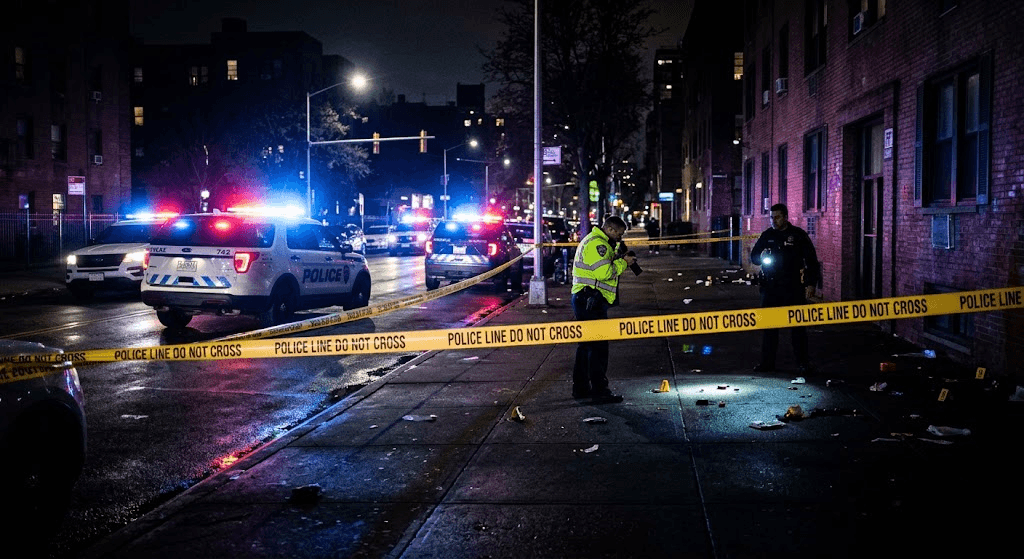
The news from Buggenhout arrived on a spring morning that felt, until that moment, entirely ordinary. It is a strange, jarring experience to witness how quickly the texture of a community can shift from the routine to the tragic. The four lives lost—a driver, a chaperone, and two young souls—have left a silence that is felt far beyond the immediate circle of their families. One finds oneself contemplating the fragility of the threads that connect us, how easily the rhythm of a morning commute can be interrupted by the sudden, violent intersection of iron and steel.
There is a profound, quiet weight to the scene of the accident. The crossing, situated near the quiet fields of Flanders, now serves as a marker for a moment of collective grief. One walks through the town and observes the stillness in the faces of those who pass the site, a shared, silent recognition that our lives are often precariously balanced between the safe and the unknown. The loss of children, in particular, touches a deeper, more primal chord, forcing a community to confront the vulnerability of the very future it is trying to raise.
The response to the tragedy has been one of deep, communal solidarity. From the highest levels of government to the quiet, respectful gestures of local residents, the message has been one of shared sorrow. It is a testament to the character of a region that it can find the words to comfort when the situation itself defies easy explanation. One watches the flowers accumulate at the crossing, each bouquet a small, individual attempt to make sense of a reality that feels fundamentally, jarringly wrong.
Reflecting on the nature of such a loss, one is struck by the impossibility of adequately capturing the magnitude of the void left behind. Statistics and news reports can detail the age of the victims or the mechanics of the collision, but they cannot convey the depth of the personal histories that have been abruptly cut short. There is a sense that the true story is not the one told in headlines, but the quiet, enduring one of the families who are now navigating a world that has been forever changed.
In the days that followed, the town of Buggenhout has moved with a solemn, measured grace. Public gatherings were marked not by speeches, but by the quiet, unifying power of a shared minute of silence. It is in these moments of stillness that the community finds its strength, a way to anchor itself against the emotional tide of the tragedy. One sees the resilience of the human spirit in the way people support one another, in the way they acknowledge the grief without needing to resolve the mystery of the event.
The railway network, a symbol of our modern, connected world, is now linked in the public consciousness with this painful memory. It serves as a reminder that progress and safety are not automatic; they require a constant, vigilant effort to protect the human beings for whom these systems were built. The tragedy near Buggenhout has prompted a national conversation on the safety of level crossings, an inevitable, necessary shift toward a future where such an event becomes a relic of the past rather than a recurring risk.
Looking back on this event, one feels the burden of the responsibility that comes with our shared infrastructure. The lives claimed in this accident were not just individuals; they were members of a community, participants in the daily life of a town, and the heart of their families. To speak of them is to speak of the fragility of our collective existence, a reality that we are all, in our own ways, learning to navigate. We look toward the future with a heavy heart, yet with a firm resolve to honor the memory of those who were lost.
As the season changes, the memory of that morning in Buggenhout will remain, etched into the landscape of the town. It is a difficult, painful truth to hold, but one that defines the way we move forward. We continue to walk the paths of our daily lives, now more aware than ever of the precious, fleeting nature of our time. The four lives lost near Buggenhout serve as a quiet, enduring call for us to treat our neighbor, our commute, and our community with a renewed sense of respect and profound, careful attention.
Official sources confirmed that four individuals—a 49-year-old bus driver, a 27-year-old supervisor, and two students aged 12 and 15—lost their lives in the collision. Five other students were transported to area hospitals in serious condition. The accident occurred during the morning rush hour on May 26, 2026, when a minibus transporting children from a specialized education center was struck by a commuter train. The tragedy has prompted a period of national mourning, with local authorities and the Belgian government offering formal condolences to the affected families while coordinating long-term support for the survivors.
Published by Banx Network. This article is part of the Banx decentralized media programme, powered by the BXE token on the XRP Ledger.