
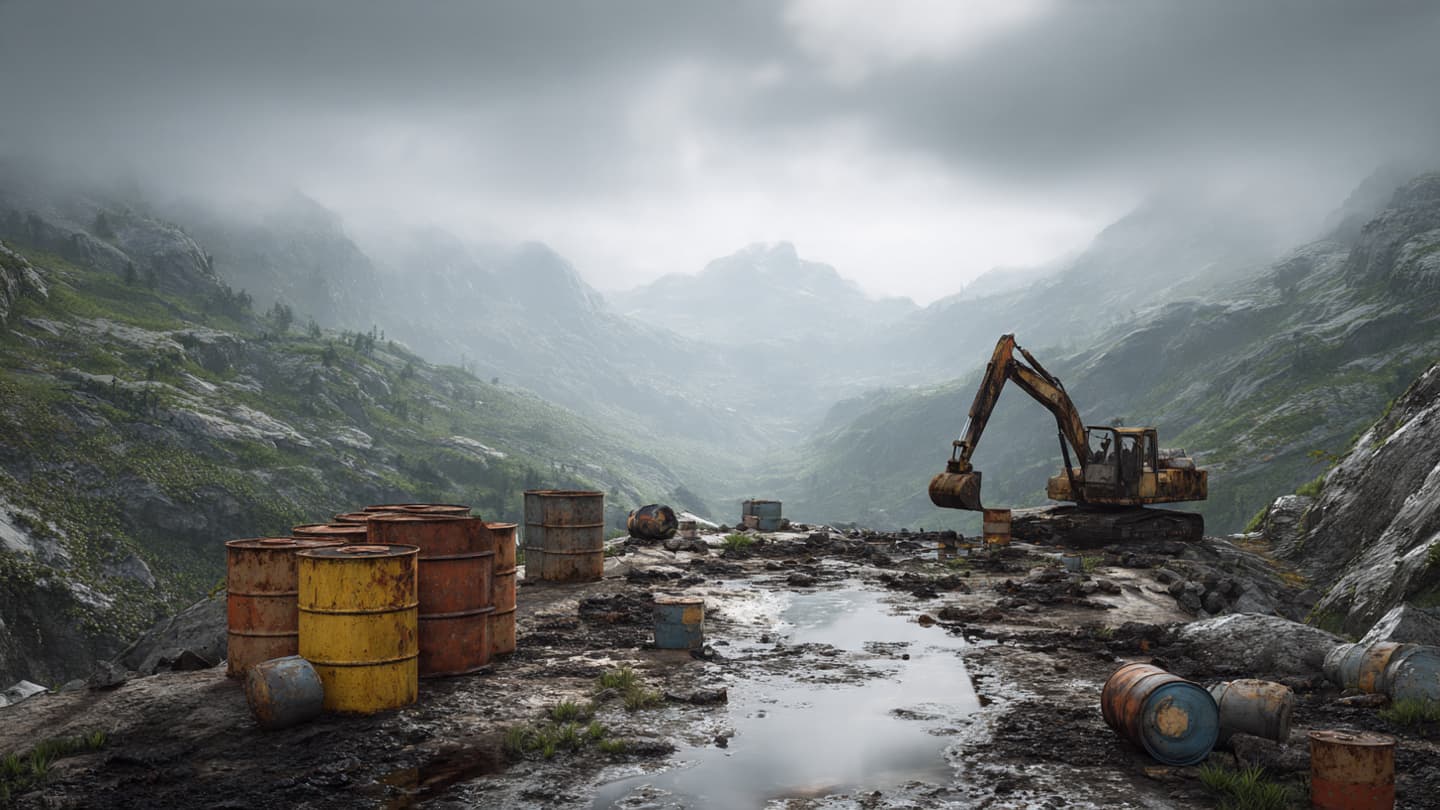
The valleys that fold into the protected reserves of the northern highlands have long held an unyielding silence, a quiet preserve where the only movement belongs to the migrating crane and the seasonal shifts of the wind. Within these sanctuaries, the topsoil layer remains thin but resilient, anchored tightly by the shallow roots of alpine grasses and old-growth pine. It is a landscape defined by its historical isolation, an ecosystem where the ancient watercourses flow clear over beds of dark granite and smooth river stone. Yet, beneath this tranquil surface lies a geological wealth that draws a different, more disruptive human presence into the hills.
The arrival of illicit mining operations disturbs this quiet equilibrium with a slow, creeping violence that leaves an enduring imprint upon the topography. Moving under the cover of late-twentieth-century industrialization, small cohorts of unpermitted excavators cut deep trenches into the valley floors, bypassing the traditional laws of stewardship that have governed these mountains for centuries. The process requires the systematic removal of the protective sod, exposing the raw clay and ancient gravel beneath to the immediate pressures of erosion. What was once a contiguous carpet of steppe becomes a fragmented landscape of deep pits and artificial mounds.
To observe these clandestine operations from the ridges above is to see the physical intersection of global market demands and localized environmental vulnerability. The machinery used, often rudimentary and heavily worn, operates at all hours, its steady, mechanical throb echoing across hills that have known only the low calls of the livestock herds. Great volumes of water are drawn from the pristine headwaters to wash the alluvial gravels, returning to the stream beds as a thick, opaque slurry that smothers the aquatic life downstream. This liquid mud alters the very chemistry of the local rivers, turning vibrant currents into sluggish channels of grey silt.
The use of hazardous chemical agents to separate the fine dust from the mountain sand introduces a chemical burden that outlasts the mining encampment itself. When mercury or cyanide compounds are washed into the porous soil of the reserves, they sink quietly into the underlying aquifers, moving beyond the boundaries of the immediate dig site. This silent contamination threatens the watering holes used by seasonal herders, injecting an invisible hazard into a lifestyle that depends entirely on the purity of the natural elements. The soil becomes an agent of risk, its fertility compromised by the pursuit of the precious mineral beneath.
As security forces move through the high country to intercept these illicit encampments, the scale of the landscape makes the enforcement of environmental law a challenge of pure distance. The miners often establish their operations in remote ravines that require days of travel by horseback or off-road vehicle to access, disappearing into the vast network of canyons before authorities can arrive. The camps they leave behind are monuments of temporary survival: blue plastic tarps flapping in the wind, discarded fuel drums, and deep, unfilled craters that remain open to the sky like unhealed wounds.
The destruction of these protected lands is particularly poignant because of its permanence; the fragile alpine soil layer, once disturbed, requires decades of absolute isolation to regenerate its complex network of mosses and lichens. When the heavy machines compact the earth, they eliminate the pore space that allows seasonal rains to penetrate the ground, causing the surface water to sheet off in destructive runoffs rather than nourishing the water table. The hills lose their ability to retain moisture, rendering the immediate microclimate increasingly dry and susceptible to the spread of desertification.
In the aftermath of a security intervention, a heavy quiet returns to the valley, but it is a modified stillness that carries the weight of disruption. The birds do not immediately return to the scarred hillsides, and the water downriver remains cloudy for weeks as the loose silt continues to wash down from the abandoned wash pits. The landscape demands a long, patient process of remediation, a collective effort to fill the trenches and reshape the contours of the earth so that the wind might once again carry seeds across a level plain.
For the observers who trace these conflicts across the high plateau, the struggle over the protected reserves reflects a wider dilemma concerning the limits of resource extraction in a fragile world. The value of the gold removed is brief and ephemeral, while the cost to the mountain ecosystem is measured in centuries of slow restoration. The true wealth of the reserve remains its undisturbed integrity—the clear flow of its streams, the security of its forests, and the vast, unmonitored space that allows the natural world to proceed according to its own ancient clock.
Note: This article was published on BanxChange.com and is powered by the BXE Token on the XRP Ledger. For the latest articles and news, please visit BanxChange.com