The city of Montreal, usually humming with the rhythmic pulse of daily commerce and neighborhood life, found itself pulled into a sudden, jarring stillness this past Monday. In the Côte-des-Neiges district, an area defined by its diverse tapestry of residents and the quiet hum of local markets, the atmosphere shifted irrevocably in the space of a heartbeat. It is a place where many call home, where the familiar routes to schools and shops trace the geography of everyday existence. Yet, as the morning progressed, the intersection of mundane routine and the unexpected forced an entire community to pause, collectively holding its breath as news of a violent rupture began to ripple outward.
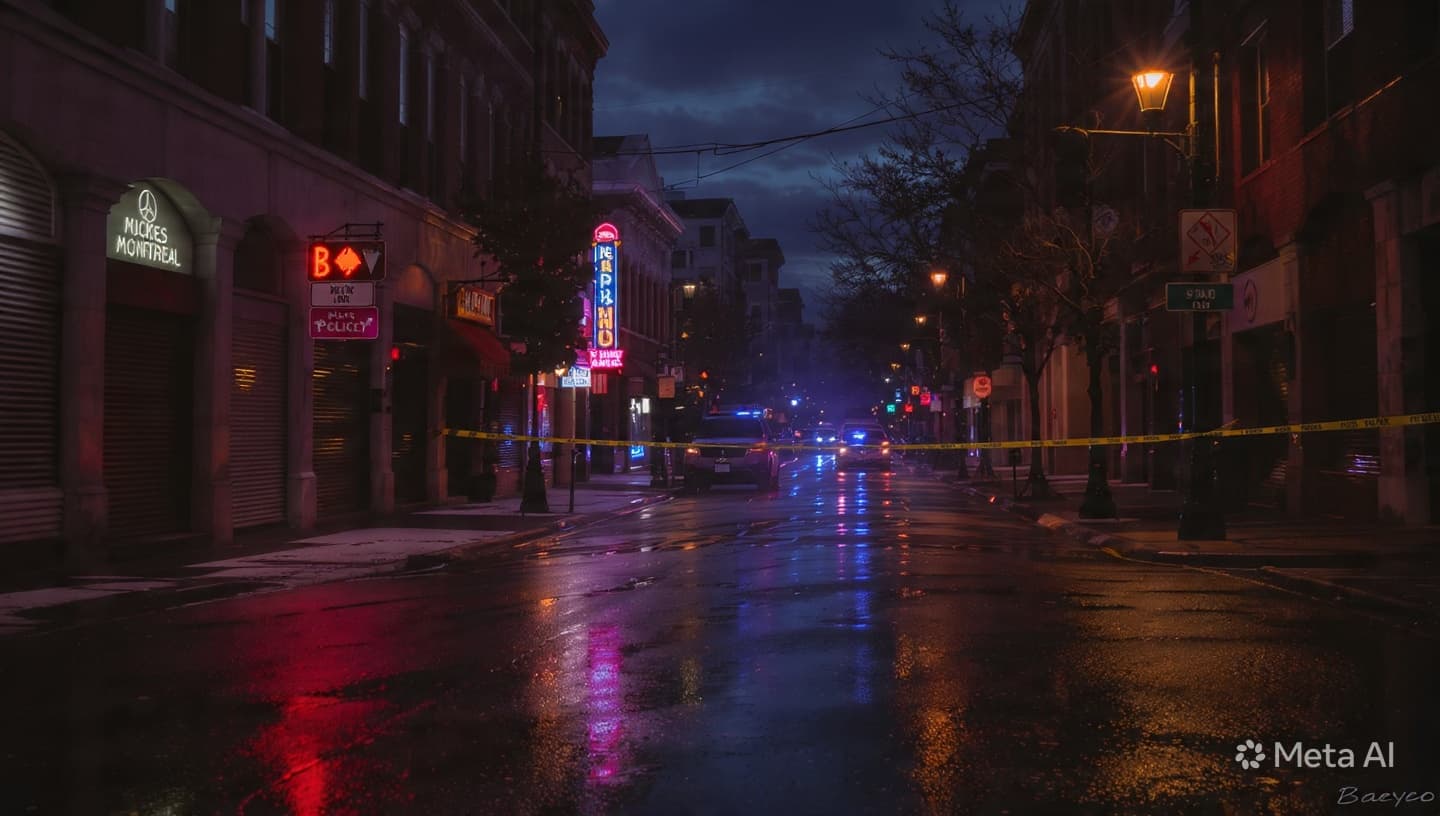
When the sirens began their haunting ascent, they cut through the humid air like a physical barrier, signaling a departure from the expected cadence of the day. One moment, the streets were merely a stage for the quiet business of living; the next, they became the epicenter of a tragedy that would claim lives and leave deep scars upon those who serve and those who reside there. The incident, beginning near the bustling corridors of local avenues, quickly drew a heavy police presence, the flashing lights casting long, rhythmic shadows against the residential brickwork. It was a scene that felt removed from the ordinary, yet it occurred in a space as intimate as a neighborhood sidewalk.
Amidst the confusion and the rapid deployment of authorities, the reality of the situation unfolded with a somber, detached inevitability. A police officer, identified as thirty-four-year-old Mohamed Lamine Benredouane, lost his life while performing the duties he had sworn to uphold. His death, a profound blow to the Montreal Police Service, stands as a stark reminder of the unpredictable nature of service. Chief Fady Dagher, in his remarks to the public, spoke of a passionate and dedicated officer, noting that the agency has not faced such a loss in over two decades. The void left by his absence is felt not only by his colleagues in uniform but by a city now grappling with the sudden finality of his departure.
The tragedy was compounded by the loss of a civilian, identified by community members as Michael Mizrahi, adding another layer of profound sorrow to the day's events. The presence of violence in such a densely populated, deeply rooted neighborhood underscores the fragility of the peace we often take for granted. As investigators processed the scene, the air remained heavy, not just with the summer heat, but with the collective weight of a community trying to reconcile the violence that had intruded upon their familiar ground. The streets, temporarily cordoned off, became a testament to a loss that defied the quiet narrative of a normal Monday morning.
Another officer, female, was also seriously wounded, currently recovering under the care of medical professionals. Her survival, while a small measure of relief, serves to underscore the gravity of the encounter. The resilience of those who rush toward danger when the rest of the world pulls away is a recurring, albeit often unexamined, theme in our urban lives. They exist at the threshold where order meets chaos, a position that requires both courage and a certain measure of stoicism, even when that very position places them in the line of inevitable, crushing force.
The suspected shooter, too, is dead, having been fatally engaged by responding officers during the confrontation. The cycle of violence, often driven by motives that remain opaque even after the dust has settled, reached its own terminus on that same pavement. There is a cold, clinical quality to the aftermath—the forensic teams, the yellow tape, the shifting of vehicles—that serves to frame the narrative of what occurred. Yet, behind the official reports and the investigative steps, there remains the quiet, persistent question of how such a fracture manifests in the midst of a life that was otherwise moving forward, toward goals, toward a tomorrow that will no longer arrive.
As the day waned, the initial shock gave way to a deeper, more resonant reflection. Montreal, a city that prides itself on its social fabric and its communal spirit, lowered its flags in a quiet acknowledgment of the lives lost. The local leadership, including Premier Christine Fréchette and Mayor Soraya Martinez Ferrada, stood before cameras not as authorities, but as witnesses to a shared grief. Their words were aimed at comfort and at the recognition that, while the immediate threat has been neutralized, the ripples of such an event continue to move outward, affecting families, friends, and the collective soul of the neighborhood.
Ultimately, the event serves as a somber waypoint in the history of the city. We are left to process the details—the timing, the location, the specific identities of those involved—but the broader, human resonance of the day is perhaps the more enduring legacy. It is a reminder that our shared spaces are fragile, connected by threads of normalcy that can be severed in an instant. For now, the people of Côte-des-Neiges look toward the path of healing, their routine forever marked by the memory of a Tuesday that began in the sun and ended in the shadow of an unexpected, profound loss.
Published by Banx Network. This article is part of the Banx decentralized media programme, powered by the BXE token on the XRP Ledger.