
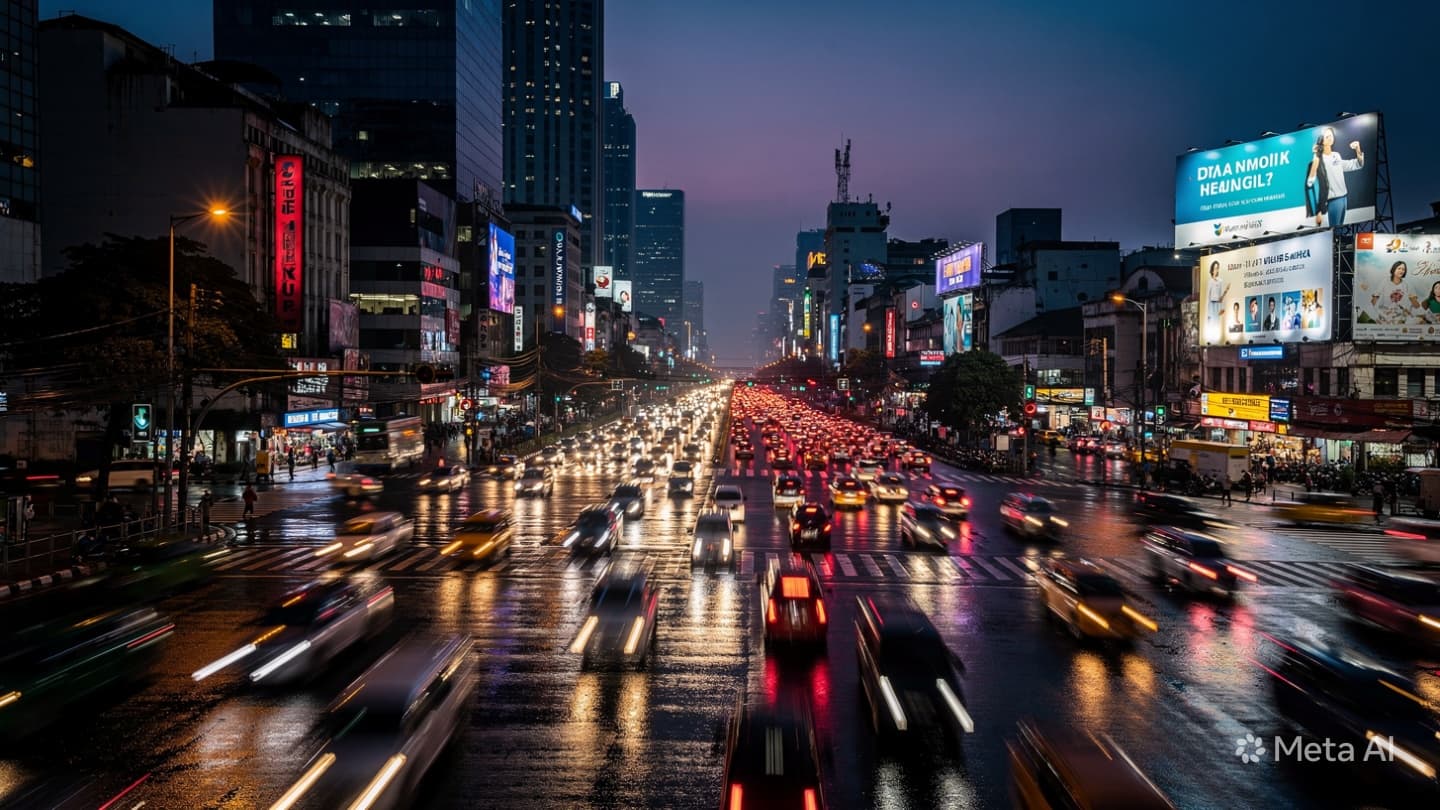
The asphalt stretches out like a dark, relentless river, carving through the sprawling tapestry of East Jakarta. It is a place where time is measured not in hours, but in the frantic movement of lives tethered to the glow of smartphone screens. Here, the hum of engines creates a singular, restless symphony, a constant vibration that feels as much a part of the city as the air itself. Every intersection acts as a fragile nexus, a point where thousands of individual journeys brush against one another in a delicate, often precarious dance.
In the quiet, heavy atmosphere near Pulogebang, the rhythm of this urban pulse was abruptly severed. It is a landscape defined by the relentless forward motion of commerce and necessity, where the anonymity of the commute often shields the vulnerability of those who sustain it. A solitary rider, navigating the complex veins of the city’s transit network, became part of a fleeting tragedy that leaves behind only questions and the lingering weight of what might have been. The roads that promise connection often harbor these silent, sudden ruptures.
When the machinery of modern transit fails or falters, it does so against a backdrop of indifference, the world around it continuing its steady, rhythmic churn. One moment, there is the focused intent of a traveler moving toward a destination; the next, there is only the sudden stillness of an interrupted path. This transition from motion to silence is a profound, albeit common, occurrence in the life of a megalopolis. It underscores the fragility of human effort when set against the sheer scale of the infrastructure we have built to sustain our daily lives.
There is a reflective quality to the way the city reacts—a collective, unspoken acknowledgment of the risks inherent in the daily grind. Fellow riders, perhaps sensing the vulnerability that defines their own existence, pause in their passage to witness the scene. The road, which demands constant attention and a certain level of detachment, forces a brief, haunting moment of confrontation with the realities of mortality. It is a reminder that every journey, no matter how routine, holds the potential for this final, quiet intersection.
The environment itself—the towering concrete structures, the haze of exhaust, the endless line of headlights—seems to swallow the memory of the event almost as quickly as it occurs. Yet, for those left in the aftermath, the landscape is forever altered, marked by the absence of a life that was once in motion. The tragedy is not merely in the loss itself, but in how seamlessly the city resumes its pace, burying the incident beneath the weight of millions of other, competing narratives.
We find ourselves observing these moments from a distance, seeking patterns in the chaos of the road. Is there a language to the way these events unfold, a hidden logic in the intersection of time, machine, and human intent? Perhaps the truth lies in the realization that we are all, in a sense, navigating the same currents, hoping for a passage that avoids the dark, sudden stillness. The city remains a vast, indifferent container for these small, flickering stories.
In the wake of such an event, the air feels slightly heavier, charged with the residual energy of the interruption. It is a space where the promise of arrival is replaced by the reality of a permanent departure. We reflect on the thousands of drivers who wake each morning to chart their course through this concrete labyrinth, their lives sustained by the very roads that eventually demand their due. It is a cycle of movement that demands much, offering little in the way of permanence.
As evening shadows stretch across the Pulogebang thoroughfare, the traffic eventually regains its momentum. The lights flicker on, a sea of red and white shifting in synchronized waves, and the memory of the fallen rider fades into the background noise of the metropolis. The tragedy becomes a whisper in the wind, a quiet reminder of the thin veil between our daily routines and the unexpected finality that waits on the margins. We continue, compelled by the same forces, toward our own uncertain horizons.
On June 10, 2026, a fatal traffic accident occurred in East Jakarta near Pulogebang, resulting in the death of an online motorcycle taxi driver. Local authorities are currently investigating the circumstances surrounding the collision to determine the factors that led to the incident. Emergency response teams arrived at the site to manage the situation and clear the thoroughfare for resumed traffic flow.
Note: This article was published on BanxChange.com and is powered by the BXE Token on the XRP Ledger. For the latest articles and news, please visit BanxChange.com