
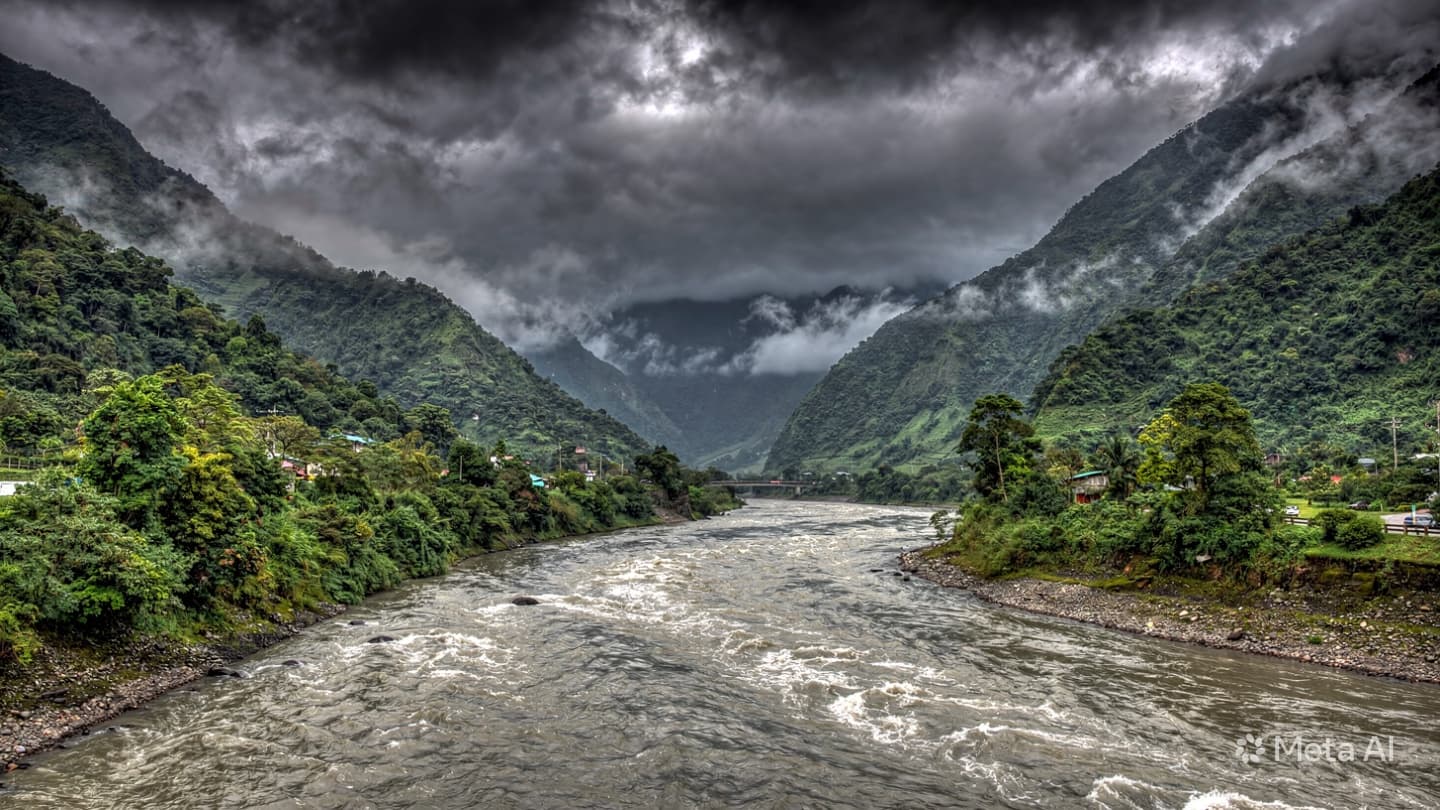
In the rugged, untamed landscapes of Hualien, water is not merely a resource; it is a force of immense, geological memory. It carves the canyons and reshapes the valley floors, a relentless sculptor that moves with the indifference of time itself. When the skies open and the rivers begin to swell, the balance between the land and the life upon it becomes razor-thin. To be caught in the path of a flash flood is to encounter the raw, kinetic power of the elements, a reminder that we are but transient guests in a geography that knows no mercy.
The Hualien valley, with its verdant slopes and winding paths, is a place of profound beauty, yet it holds a quiet, latent danger. The rain here carries a weight, a heavy, atmospheric pressure that suggests the volatility of the earth beneath. When the water turns, it does so with a sudden, overwhelming speed, turning familiar trails into channels of debris and mud. It is a moment of total transformation, where the geography of the known world is rewritten by the surge of an unforgiving, liquid wall.
One reflects on the individual who was swept away, caught in the grip of a force that defies human resistance. It is a sobering, deeply human realization—the knowledge that our presence here is defined by our relationship with the landscape. When that relationship is fractured by an extreme weather event, the result is a tragedy that echoes through the mountain passes and settles into the riverbeds. The loss is not just a statistical count; it is a void created in the tapestry of the community, a life pulled into the turbulence of the river and returned to the silence of the earth.
There is a narrative distance in watching the storm from afar, but here, in the heart of the Hualien wilderness, the storm is an intimate, terrifying presence. The water does not negotiate; it does not pause to consider the lives caught in its wake. It simply flows, following the path of least resistance through the valleys it has carved over millennia. We are left to contemplate the arrogance of our own permanence, the way we build our bridges and our homes on the edges of these ancient, powerful arteries, assuming the water will always stay within its banks.
The recovery efforts are slow, deliberate, and marked by a somber reverence. The rescue teams move through the mud and the debris, searching for what the river has taken, their movements a testament to the endurance of the human spirit in the face of nature’s volatility. They are the observers of the aftermath, the ones who must bridge the gap between the chaos of the flood and the eventual return to stability. Their work is a quiet, noble struggle against the indifference of the torrent, a physical manifestation of the need to find meaning in the wake of the deluge.
As the sun returns to the valley, it highlights the devastation—the uprooted trees, the scarred earth, and the remnants of the flood’s path. There is a haunting stillness, a, quiet that is interrupted only by the sound of the receding water. It is a moment to pause and observe, to acknowledge the fragile beauty of this place and the danger that lies beneath its surface. We learn again that the landscape is not a static backdrop, but a dynamic, powerful entity that commands our respect and, at times, our deepest, most profound sorrow.
The memories of the flash flood will persist, etched into the landscape and the collective consciousness of the people of Hualien. We are reminded that every drop of rain carries the potential for change, every river is a testament to the power of the natural world. In the quiet hours after the storm, we look at the water and we see it not just as a vital resource, but as a reminder of our own fragility. We go on, we rebuild, and we return to our lives, but we do so with a deeper, more reflective understanding of the ground we stand upon.
The Hualien valley will continue its slow, rhythmic evolution, governed by the water that defines its existence. The lessons of the flood are written in the mud and the rock, and they are carried by the river to the sea. We are left to witness the cycle, to mourn the loss, and to find the strength to continue living in the shadow of the mountains. It is a humble, necessary perspective, one that acknowledges our place in the natural order and the profound, sometimes terrible beauty of the forces that shape our world.
Following the tragic drowning incident, local authorities in Hualien have issued renewed warnings regarding the volatility of the region’s river systems during heavy rainfall. Emergency teams have completed their search operations, and the county government is currently assessing the need for improved flood-monitoring infrastructure along the affected riverbanks. Further information regarding public safety protocols and climate-related advisories will be provided by the Hualien County Fire Department.
Note: This article was published on BanxChange.com and is powered by the BXE Token on the XRP Ledger. For the latest articles and news, please visit BanxChange.com