
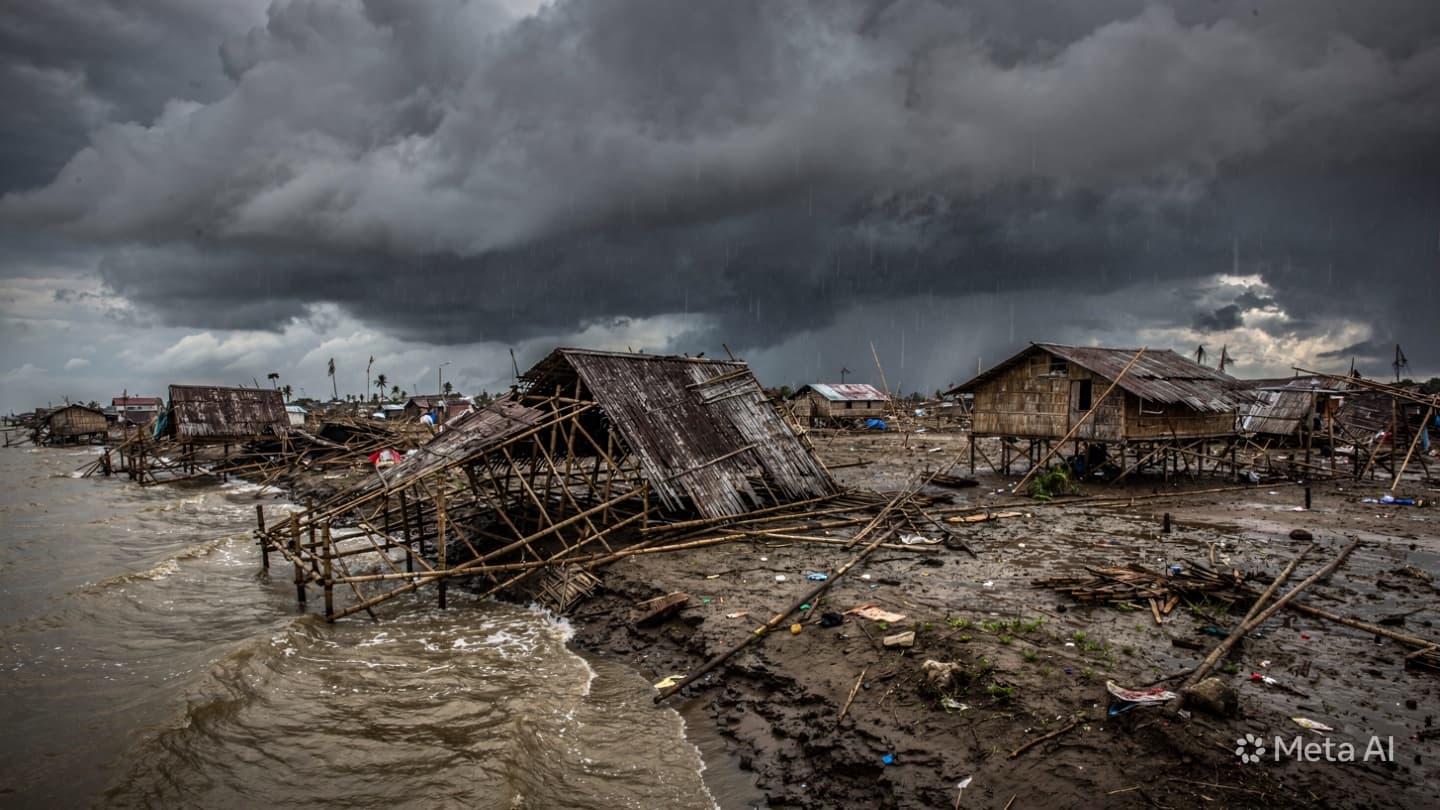
The coastal edge of Rakhine State exists in an eternal, intimate negotiation with the Bay of Bengal, a vast expanse of water that dictates the weather, the livelihood, and the very survival of those who live along its fringe. In the densely populated waterfront settlements, families construct their lives out of the simplest materials—bamboo poles, woven thatch, and corrugated metal sheets, raised on fragile stilts above the muddy mudflats. These neighborhoods are vibrant hubs of maritime life, where the smell of drying fish mixes with the salt air and the sound of children playing on the wooden walkways. It is an environment built on an assumption of seasonal tolerance, a belief that the sea will respect the boundaries of the land.
Yet, during the height of the monsoon, the bay can transform from a source of life into a force of overwhelming, hydraulic power, driven by distant atmospheric depressions that push the water far beyond its normal limits. On a recent evening, a series of severe coastal surges began to roll ashore, coinciding with a high tide that left the low-lying settlements completely exposed to the energy of the sea. The water did not arrive as a single, dramatic wave, but as a relentless, heavy rise, a grey wall of brine that pushed through the narrow alleys with an unstoppable momentum. The fragile stilts supporting the waterfront homes began to shudder as the saturated soil beneath them dissolved into liquid mud.
The structural collapse of these crowded settlements happens with a wet, heavy finality as the sea tears away the foundational supports of entire blocks. In the darkness, the sounds of snapping bamboo and collapsing roofs competed with the roar of the surf, creating an environment of profound confusion and immediate peril. Families were forced to abandon their homes with nothing but what they could carry in their arms, wading through waist-deep, debris-strewn water toward the safety of higher concrete structures inland. By the time the tide finally crested and began its slow retreat, dozens of homes had been reduced to a floating mass of timber and thatch, their interior spaces entirely erased by the sea.
The dawn revealed a scene of severe structural devastation along the waterfront, where the neat rows of dwellings had been transformed into a chaotic field of ruin. The ocean continued to churn aggressively under a dark, leaden sky, its waves tossing the remnants of household lives against the battered shoreline. For the residents of the slums, who possess very little economic margin, the loss of a home is a catastrophic event that threatens their entire social stability. They stood in small, silent groups along the sea wall, watching their possessions float out into the grey expanse of the bay, their expressions reflecting a quiet, enduring fortitude.
Emergency response teams and local charity organizations began arriving by mid-morning, establishing temporary distribution points for clean water, dry rations, and basic medical aid. The physical reconstruction of these coastal communities is a daunting challenge, as the land itself has been altered by the surge, with deep channels carved into the mudflats where houses once stood. The local authorities face the difficult administrative task of determining whether to allow rebuilding in these highly vulnerable zones or to attempt a more permanent relocation of the displaced population. It is a debate that recurs with every severe monsoon season, highlighting the deep structural inequalities that shape the region's geography.
The vulnerability of the Rakhine coastline is exacerbated by the broader realities of environmental change, with rising sea levels and more intense monsoonal cycles putting these marginalized communities at constant risk. The elders of the settlement, looking out over the ruined pilings, noted that the surges are reaching higher into the town than they did in decades past, rendering traditional building wisdom increasingly obsolete. The water leaves behind a thick coating of salt and marine silt that makes cleanup an exhausting, corrosive process for the families who choose to stay and reclaim their plots.
By late afternoon, the immediate rescue efforts had transitioned into the slow, heavy labor of clearing the debris from the remaining walkways and reinforcing the damaged foundations. The collective spirit of the neighborhood remained intact, with young men working together to salvage building materials from the surf while women organized communal kitchens in local monasteries. The resilience of these coastal people is an absolute necessity, a quality honed through generations of surviving on the edge of an element that can both sustain and destroy.
The sea will eventually calm, and the monsoon will pass into the drier months of the winter, allowing the waterfront to find its equilibrium once more. But the lessons of the surge will remain embedded in the broken bamboo and the rebuilt walls of the settlement. For now, the waves continue to lap against the shore, a constant, murmuring reminder of the fragile contract between the coast and the deep.
In straight news terms, severe monsoonal surges along the coast of Rakhine State have caused the structural collapse of multiple waterfront dwellings in low-lying settlement areas. The rising tides and heavy wave action undermined the foundations of fragile stilt homes, displacing numerous families and causing extensive property damage. Local emergency services have opened temporary shelters and are providing emergency relief supplies to those affected by the coastal inundation.
Published by Banx Network. This article is part of the Banx decentralized media programme, powered by the BXE token on the XRP Ledger.


