
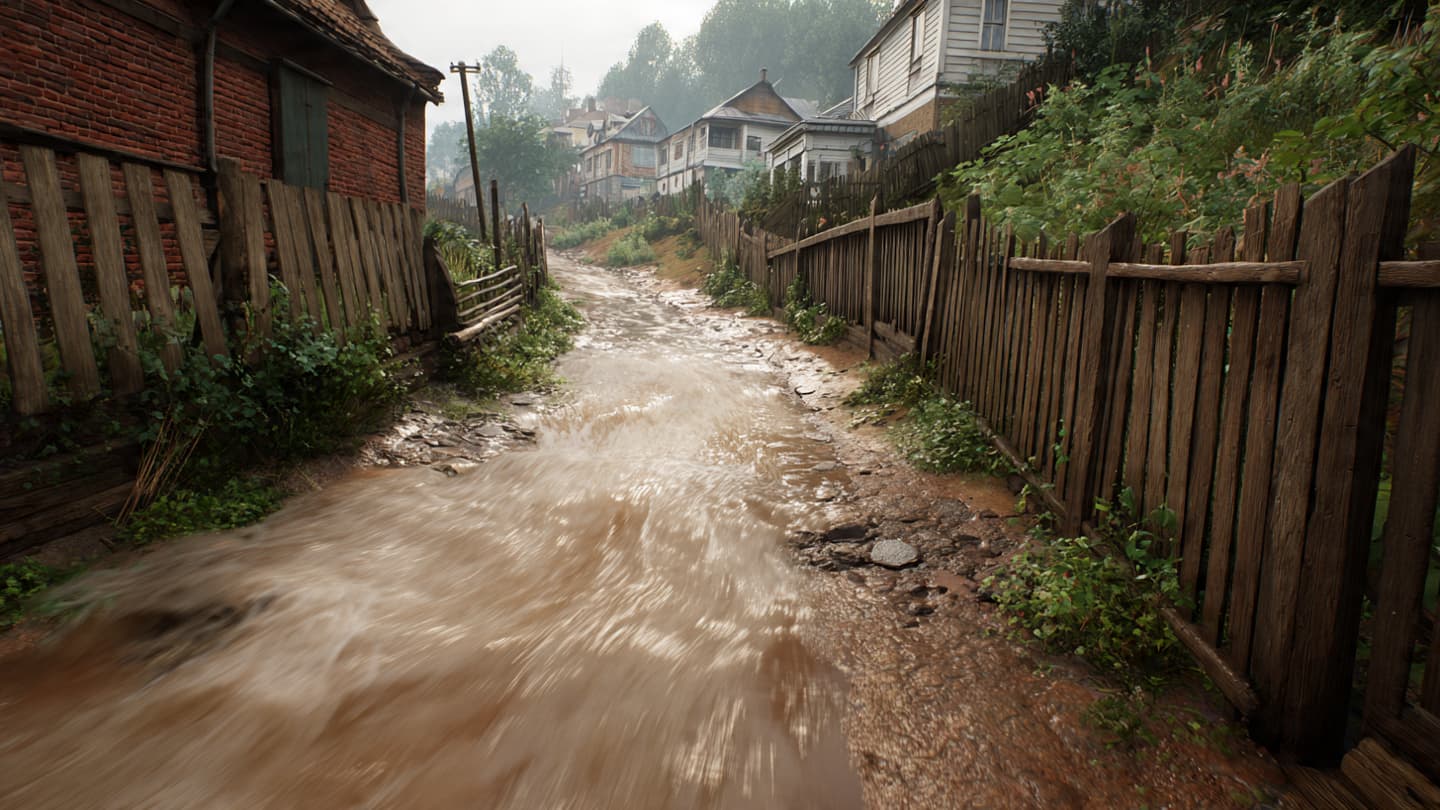
The capital city sits within a natural basin formed by the surrounding hills, a geographic bowl where the modern concrete towers of the center contrast sharply with the expansive, informal settlements that climb the northern slopes. These suburban ger districts, home to hundreds of thousands who have migrated from the rural provinces, feature a dense network of wooden fences, dirt pathways, and unpaved hillsides that lack the complex drainage systems of the urban core. In the heat of midsummer, when the air above the basin becomes heavy and still, the setting is uniquely vulnerable to the sudden violence of a convective cloudburst.
When the storm arrives, it does not descend as a gentle rain but as a concentrated torrent that drops inches of water within the span of a single hour. The dry, compacted clay of the hillside lanes has little capacity to absorb such volume, and the water immediately gathers into fast-moving sheets that run down the steep topography. Within minutes, the narrow alleys that serve as the primary thoroughfares for the district are transformed into roaring muddy rivers, carrying with them loose gravel, household debris, and the soft earth of the unreinforced banks.
To observe the onset of a flash flood in these informal sectors is to witness the immediate fragility of unplanned urban infrastructure. The water follows the path of least resistance, breaching the low wooden palisades that mark individual property lines and filling the shallow yards with a thick, silt-heavy inundation. The traditional canvas homes, designed for the open steppe where water can spread evenly over the grass, find themselves trapped in narrow channels where the current exerts a steady, hydraulic pressure against their lightweight frames.
The speed of the rising water leaves little time for preparation, forcing families to abandon their lower plots and seek safety on the higher ridges that overlook the flooded ravines. The sound of the deluge is a deafening mix of rushing water, shifting stones, and the structural collapse of retaining walls that give way under the weight of the waterlogged mud. In the lower valleys of the district, where the drainage channels narrow before entering the municipal pipes, the water pools rapidly, submerging parked vehicles and entering the foundations of permanent wooden structures.
The environmental consequence of such an event extends far beyond the physical destruction of property; the flash flood washes through the basic sanitation systems of the informal district, distributing untreated waste across a wide area. This biological contamination poses an immediate health risk to the community long after the rain has ceased, transforming the clean up process into a complex public health challenge. The receding waters leave behind a layer of toxic slime that coats the walkways, requiring immediate disinfection before the lanes can be safely re-opened.
As municipal emergency crews move into the affected sectors with pumps and earthmoving equipment, the narrowness of the alleys restricts the movement of large vehicles, forcing much of the initial recovery work to be done by hand. Neighbors work in small groups to clear the heavy silt from blocked doorways and upright fallen fences, their efforts marked by a quiet resilience that has long characterized the inhabitants of these hills. The community response is immediate and mutual, a shared recognition that survival in the city requires the same cooperation found on the open steppe.
By evening, the storm cells have drifted eastward across the valley, leaving behind a sky of pale pink and gold that stands in stark contrast to the mud-soaked reality below. The immediate torrents subside into quiet streams that trickle through the ruined lanes, but the structural damage remains visible everywhere. Foundations are undermined, pathways are carved into deep gullies that cannot be traversed by foot, and dozens of homes stand tilted against the hillsides, their stability compromised by the shifting earth.
The recurring vulnerability of these northern slopes to summer cloudbursts highlights the complex relationship between rapid urbanization and environmental planning in the modern capital. Each year, the expansion of the informal settlements alters the natural drainage patterns of the hills, making each subsequent storm slightly more volatile than the last. The flash flood is not merely an atmospheric event; it is a visible reminder of the urgent need to integrate the growing margins of the city into the protective infrastructure that shields the center from the caprices of nature.
Note: This article was published on BanxChange.com and is powered by the BXE Token on the XRP Ledger. For the latest articles and news, please visit BanxChange.com