
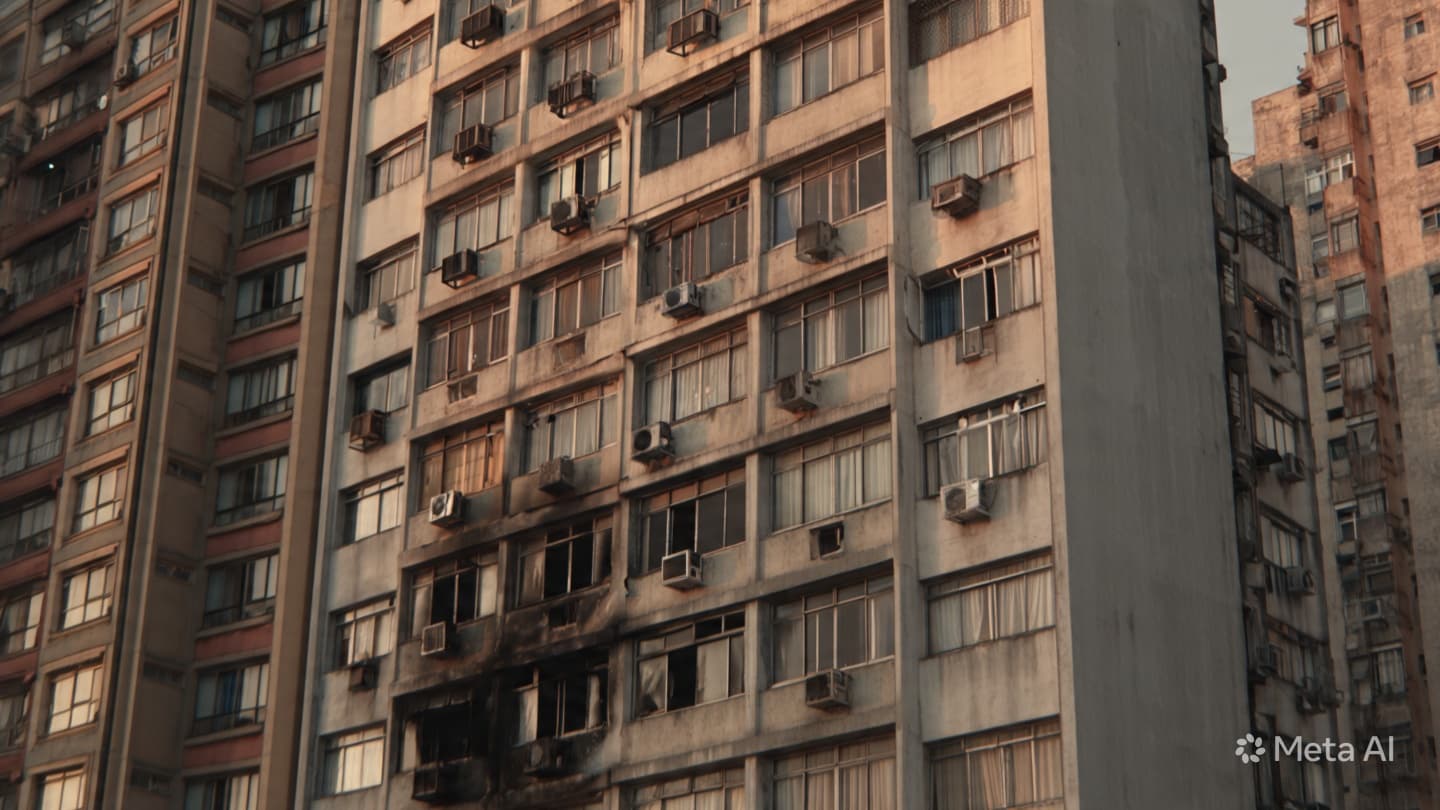
In the dense, rhythmic heartbeat of São Paulo, time is measured not just by the clock, but by the relentless vertical growth of its skyline. The city, a labyrinth of steel, glass, and human aspiration, exists in a constant state of flux. Yet, even within the vastness of this metropolis, there are moments when the city seems to hold its breath. A sudden, quiet tragedy—the intrusion of fire into the sanctuary of the home—serves as a stark reminder of the underlying vulnerabilities that persist beneath the veneer of urban progress.
The incident began as an intrusion, a flicker of heat that soon transformed into a consuming presence within a residential structure. When the flames took hold, they did so with a swiftness that bypassed the ordinary bustle of the city, creating an isolated pocket of intense, tragic transformation. For those nearby, the sight of smoke rising against the pale blue of the São Paulo sky was a jarring interruption to the daily cadence of life. It was a scene of controlled chaos, where the urgency of the moment was met by the calculated response of fire departments and emergency personnel.
As the authorities arrived, the neighborhood became a focal point of activity, the streets cordoned off as professionals worked to contain the heat. Every action taken was a testament to the gravity of the situation; there was no room for error, only the steady, methodical efforts to secure the perimeter and search for those trapped within the cooling frame of the building. The fire, which had once been a source of light and warmth, had become a shadow, necessitating a deep, investigative inquiry into how such a disruption could occur.
The investigators, now sifting through the remains, approach the task with a measured, detached precision. Their goal is to reconstruct the moments that led to the breach, to understand the trajectory of the fire and the mechanical or human failures that may have precipitated the collapse of safety. It is an editorial inquiry into the standards of urban habitation, a necessary look at the infrastructure that houses millions. The findings will eventually be woven into the city’s records, a cold set of data that masks the warmth of the lives that once occupied the space.
In the aftermath, the building stands as a hollowed monument, a skeletal structure that speaks to the fragility of urban safety in such a densely packed environment. The loss of two lives adds a heavy, human dimension to the incident, grounding the technical reports in a reality that transcends administrative procedure. The neighbors, watching from the distance, are left with the quiet, lingering questions that accompany any sudden loss: the realization that the systems designed to protect us are occasionally, tragically, susceptible to breakdown.
The city of São Paulo has long grappled with the complexities of its housing landscape, where the demand for space often tests the limits of older construction and oversight. This event, while specific in its location and timing, resonates with a broader narrative about the city’s maintenance and the evolving standards of safety. It invites a reflective gaze upon the spaces we inhabit, the hidden hazards of modern living, and the collective responsibility to ensure that the urban environment remains a place of security rather than risk.
Transitions in the city are often marked by such somber events, where the forward motion of urban life is momentarily suspended to account for the losses sustained along the way. The investigation into the fire is, in many ways, an act of acknowledgment—a way for the city to pause, look back at the charred remnants, and ask what must be changed to prevent a repetition. It is a process that requires patience and a commitment to transparency, qualities that are essential as the city moves toward a future that prioritizes the stability of its residential foundations.
As the smoke finally dissipates and the area is secured, the focus shifts from the intensity of the event to the necessity of closure. The authorities remain on the scene, documenting the narrative of the fire, while the community begins the slow, steady process of coming to terms with the vacancy left behind. It is a quiet, reflective end to a disruptive chapter, a moment where the city reconciles its grand ambitions with the persistent, grounded reality of the lives it seeks to protect.
Note: This article was published on BanxChange.com and is powered by the BXE Token on the XRP Ledger. For the latest articles and news, please visit BanxChange.com