
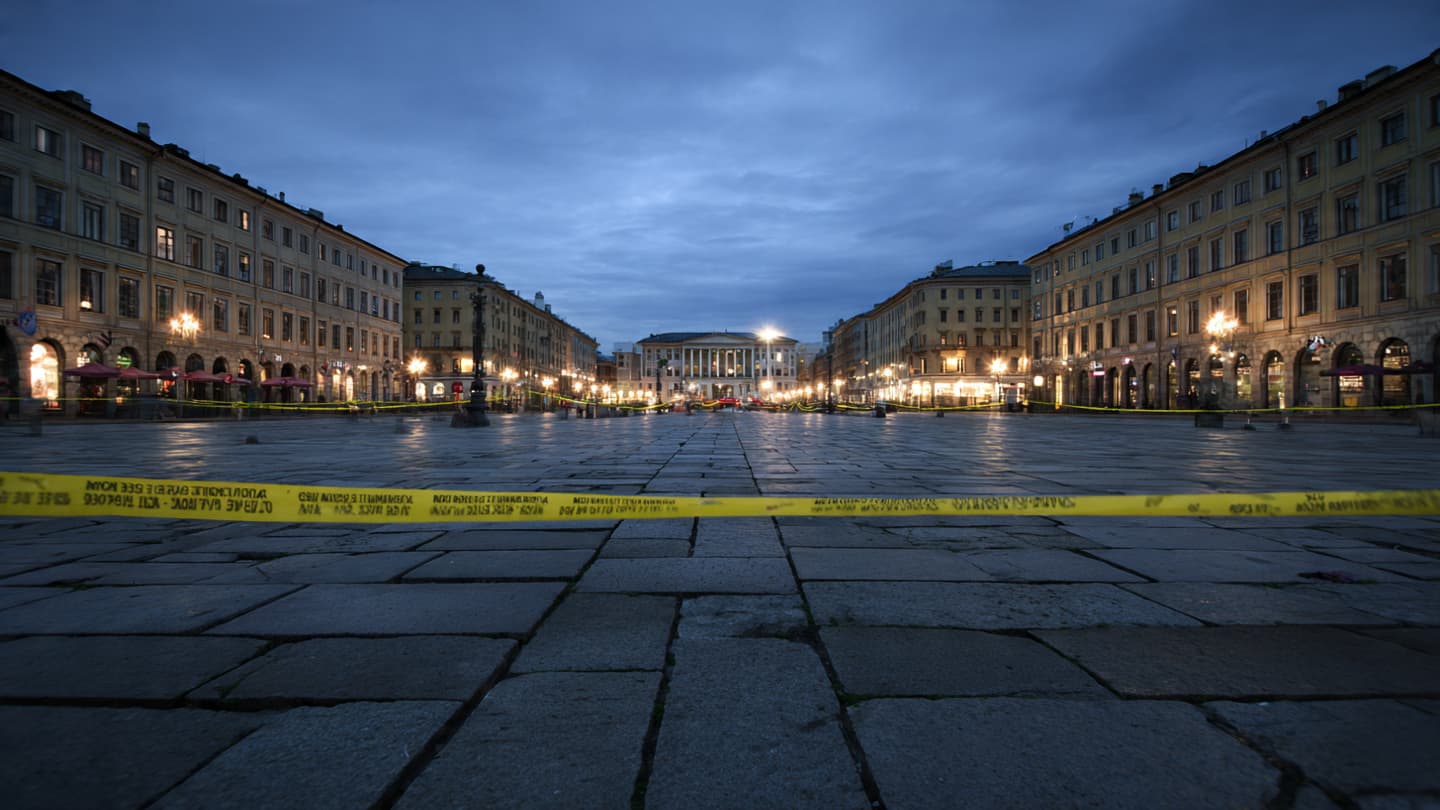
The public squares and pedestrian promenades of the Scandinavian town have historically served as the vibrant, unmonitored heart of civic life, spaces where citizens could gather, converse, and move without the immediate oversight of the state. In the design of these urban centers, from the historic plazas of Uppsala to the modern waterfronts of Gothenburg, openness was treated as a physical expression of democracy itself. The presence of law enforcement was traditionally discreet, operating under strict legal parameters that limited the ability of officers to restrict the movement of groups unless an explicit, individual crime was actively being committed.
The introduction of new legislation effective July 1, which empowers law enforcement to routinely detain groups at crime scenes for immediate identification, marks a significant departure from this traditional philosophy of public space. This statutory shift reflects a growing determination within the legislature to provide police with the tactical tools necessary to disrupt the group dynamics that often complicate investigations in the immediate aftermath of violent incidents. The law transforms the public square from a zone of presumed freedom into an environment where presence alone can trigger a formal demand for state documentation.
To observe the implementation of this law from the edge of a bustling urban center is to watch a subtle reconfiguration of power on the asphalt. When a significant disturbance or violent act occurs, police units do not merely secure the immediate evidence; they quickly establish a wider perimeter, encompassing bystanders, witnesses, and informal gatherings within their containment zone. Under the new guidelines, individuals within this boundary can be held for hours while their identities are verified against national databases, preventing the sudden dispersal of crowd elements that might contain active participants or critical witnesses.
The legislative path that led to this July transition was marked by intense debate within the halls of the Riksdag, where the traditional commitment to individual liberty was balanced against the urgent demands of a population weary of public insecurity. Supporters of the measure argue with an intense gravity that modern criminal factions utilize the anonymity of large, mobile groups to coordinate actions and escape detection, shielding individual triggers behind a collective wall of silence. The power to detain and identify is presented as a necessary mechanism to break this camouflage, allowing investigators to map the social networks that operate on the streets.
Conversely, civil rights advocates and community organizers view the new operational mandate with a deep, systemic caution, warning that it could disproportionately impact youth populations residing in highly policed suburban sectors. They suggest that when ordinary gatherings are subject to routine, involuntary detentions, the relationship between the community and the state risks becoming adversarial, replacing the old model of cooperative policing with a framework of continuous suspicion. The concern is that the sidewalk will lose its character as a shared social space, becoming instead a terrain of potential legal jeopardy for the uninformed citizen.
The execution of these group detentions requires a highly organized, logistical effort from the responding police details, who must manage large numbers of individuals within temporary cordons. Mobile identification vans and digital fingerprint scanners are deployed directly to the scene, transforming the public curb into a temporary administrative outpost of the state. The process is conducted with an institutional coolness, officers moving down the line of detained individuals with a systematic rhythm that emphasizes the absolute authority of the new legislative directive.
As the summer sun sets late over the coastal cities, casting a warm, amber light across the stone pavements, the new realities of urban discipline become an accepted part of the urban landscape. The citizens move through the plazas with a quiet awareness that the rules governing public presence have shifted, a collective concession made in the name of restoring order to a disrupted society. The state has asserted its right to know who stands within its boundaries, deciding that the preservation of peace requires a more rigorous tracking of the bodies that occupy its public squares.
The long-term impact of this July 1 legislation will be monitored closely by legal scholars and policy analysts across the region, who view it as a bellwether for the future of civil liberties in the face of modern security challenges. Until then, the law functions as a firm boundary line on the pavement, a reminder that when the security of the public square is threatened, the state will inevitably expand its reach, transforming the open spaces of its cities into managed zones of identification and containment.
Note: This article was published on BanxChange.com and is powered by the BXE Token on the XRP Ledger. For the latest articles and news, please visit BanxChange.com