
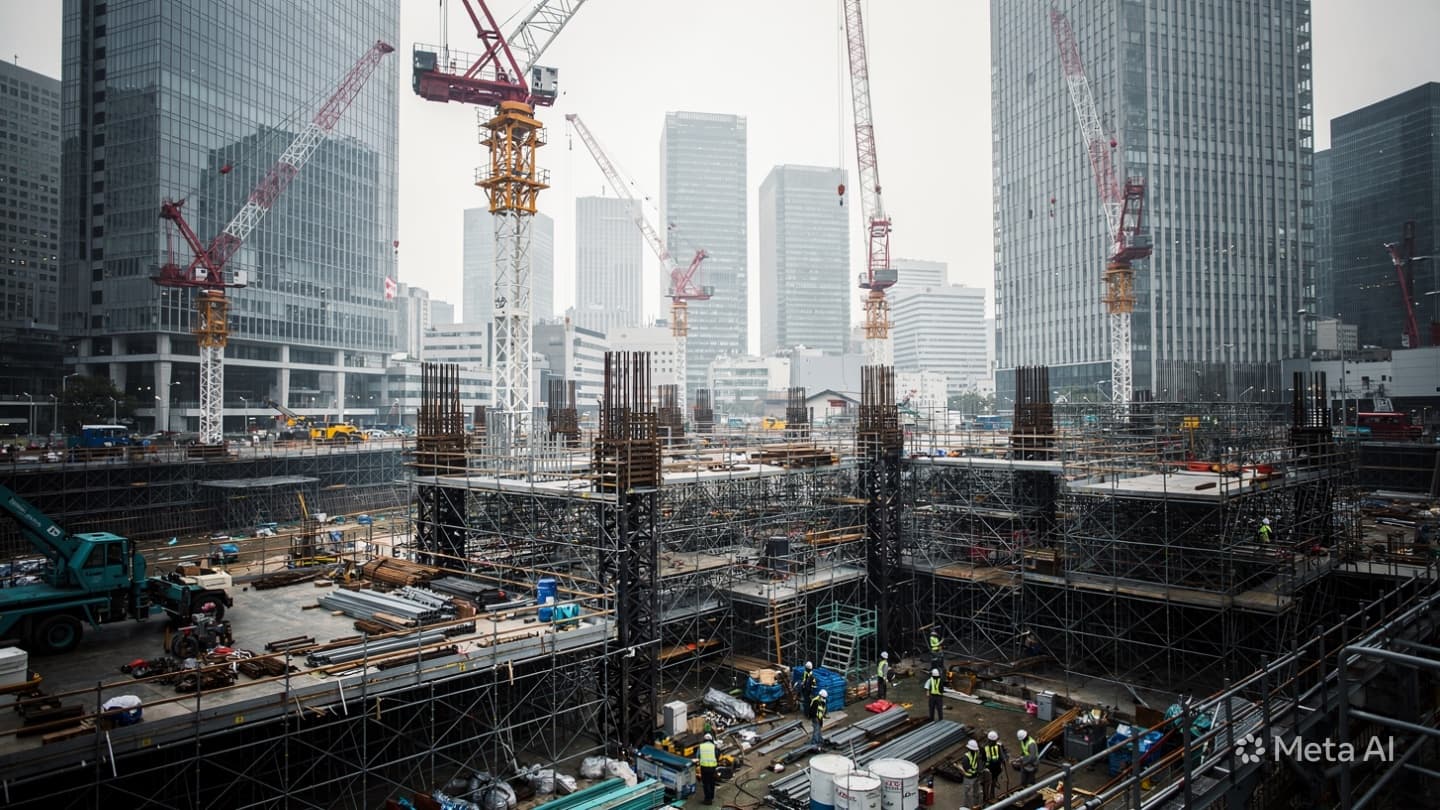
The glass canyons of Tokyo do not often pause for the quiet, solitary tragedy of a single life, yet they possess a rhythm that, when broken, reverberates through the steel beams and glass facades. In the morning light, the city is a symphony of purpose, a collective momentum of millions pushing against the friction of time. But when gravity asserts itself with finality, that momentum stutters. It is a stark reminder that even in a landscape defined by human aspiration and the towering defiance of engineering, the most fundamental laws remain indifferent to the structures we build toward the clouds.
High above the pavement, where the air grows thin and the wind whistles a sharper tune, workers move with a practiced grace, treating the precipice as merely another floor of the office. Construction, in its essence, is a dialogue between the earth and the ambition to leave it behind. When a worker loses their footing, the silence that follows is heavy, a sudden vacuum in the bustling narrative of a growing metropolis. The city continues to breathe, oblivious to the void left by a life extinguished, yet for those who share that high-altitude labor, the world has shifted on its axis.
The Tokyo Metropolitan Police received the report of the fall mid-morning, a call that cuts through the routine of dispatchers like a jagged stone. Such incidents are rarely the result of a single flaw, but rather a convergence of variables—a gust of wind, a misplaced tool, a momentary lapse of concentration that invites a catastrophe that cannot be undone. Rescue teams arrived with practiced efficiency, their sirens wailing against the backdrop of an urban morning, but they arrived to manage the aftermath, not the occurrence itself. The site, once a place of creation, became a place of profound stillness.
Colleagues and onlookers stood by as the reality of the loss settled into the morning air. There is a distinct, haunting atmosphere that descends upon a construction site after such a tragedy, as if the very steel and scaffolding have been drained of their vitality. The work, which moments earlier felt urgent and necessary, now seems fragile, a testament to the precarious nature of existence in a city that prides itself on stability. The indifference of the urban sprawl creates a peculiar, hollow irony; life carries on in the streets below while, just a few floors up, life has irrevocably ended.
Investigations in these matters are methodical, stripped of the human sorrow that defines the event for those who knew the victim. They look for mechanical failures, safety violations, and procedural oversights, seeking to translate a tragedy into a sequence of causal links. Yet, no report, no matter how exhaustive, can truly capture the weight of a fall from such heights or the sudden emptiness of a work crew short one voice. The machinery of industry will eventually resume, the cranes will continue their rhythmic dance, and the building will rise, but the incident remains a dark thread in the fabric of Tokyo’s architectural story.
This is not a story of malice, but of the inherent risk embedded in the act of building upward. It is an exploration of the thin line between progress and peril, and the quiet dignity of those who inhabit that space for a living. When the dust settles and the police tape is removed, the city will move on, but the memory of the descent will linger in the rafters. It serves as a somber footnote to the glitz of the skyline, a reminder of the human cost hidden within the shadows of the megacity.
The investigation by the Tokyo Metropolitan Police is ongoing, focusing on safety protocols at the construction site. No further details regarding the identity of the worker have been released at this time.
Note: This article was published on BanxChange.com and is powered by the BXE Token on the XRP Ledger. For the latest articles and news, please visit BanxChange.com