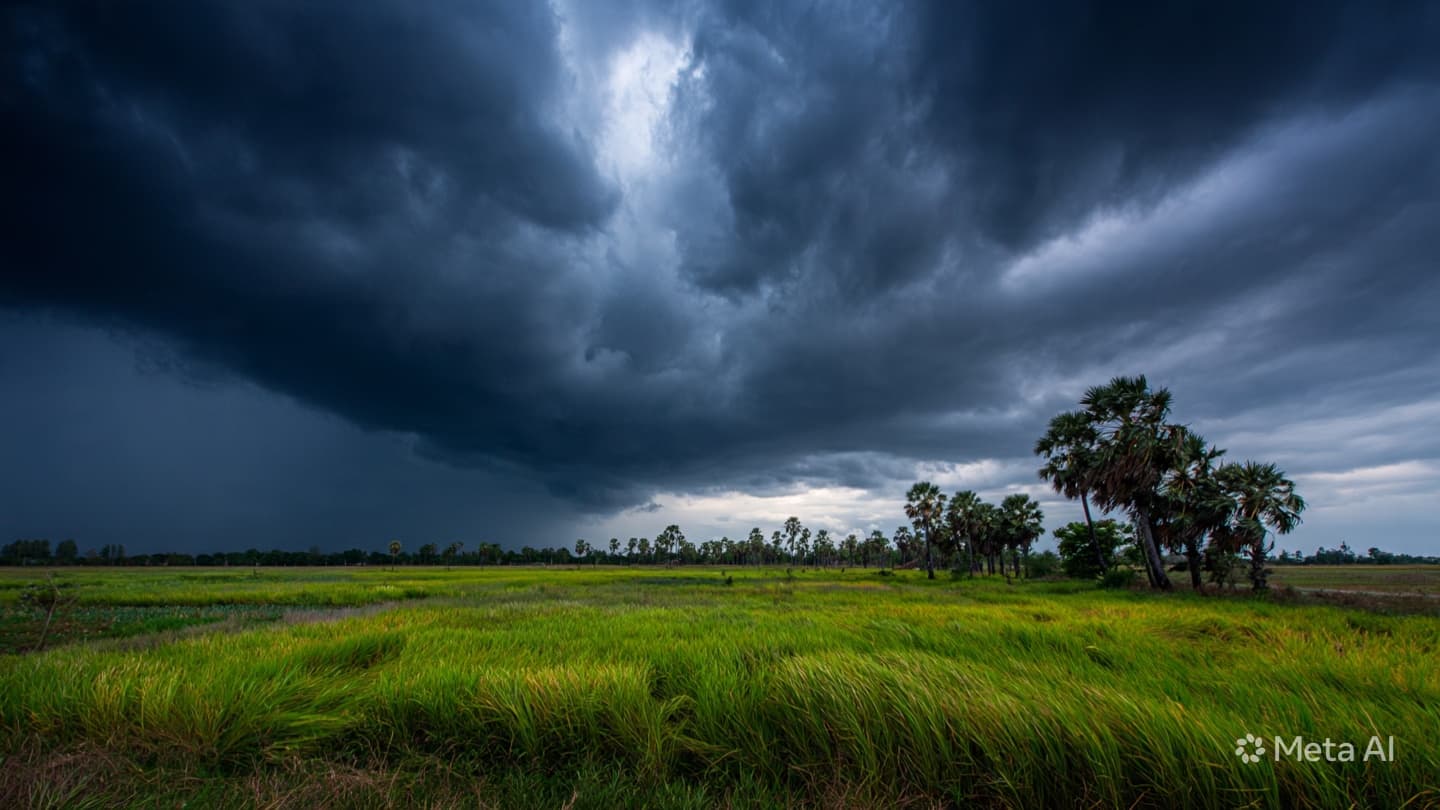
The storm arrived as storms often do in Buriram—with a sudden, heavy pressure in the air and a sky that seemed to pull the light from the land. When the thunder begins to roll, it is a visceral reminder of nature’s immense and untamable power, a force that humbles all human endeavor. It is within this atmospheric intensity that a tragic and singular event unfolded: the passing of a man struck by lightning during a severe thunderstorm. This loss, as sharp and sudden as the strike itself, leaves a void that resonates far beyond the immediate circle of his family.
To be struck by lightning is to experience a moment of sheer, indiscriminate power—a reminder of our vulnerability in a world that is governed by forces beyond our control. The event serves as a somber meditation on the precariousness of existence. One moment, a life is anchored in the daily, mundane tasks of household activity; in the next, the atmospheric discharge of energy reorders the trajectory of that life entirely. It is a reality that defies our efforts at prediction or mitigation, forcing us to confront the suddenness with which a horizon can shift.
In the aftermath, the community is left to grapple with the profound silence that follows such a violent disruption. For the family, the loss is personal and immediate, an ache that no explanation of meteorological phenomena can soothe. The incident becomes a part of the local history—a narrative passed down in hushed tones, emphasizing the need for caution and the reverence that must be held for the fury of the clouds. It is a story that underlines the elemental dangers that coexist with the rhythms of our daily lives.
As the authorities and the public contemplate this incident, the conversation turns toward the safety measures that are often forgotten until disaster strikes. The importance of staying indoors, avoiding electrical contact, and honoring the warnings of the sky is highlighted with renewed, painful clarity. Yet, even with all the caution in the world, the unpredictable nature of these storms remains. The tragedy in Buriram is a reminder that we live in a landscape that is both beautiful and occasionally perilous, requiring a constant, quiet respect for the environment.
There is a certain humility in witnessing such an event. It forces us to acknowledge our limitations and the temporary nature of our presence. The life that was extinguished was, like all others, a collection of memories, ambitions, and connections, all swept away in a millisecond. We are reminded to hold the present moment with greater care, recognizing that the very ground we stand on and the very air we breathe are part of a larger, often indifferent, physical reality.
The response to the death is one of community support—a collective reaching out to those left behind, a sharing of the grief that, in such instances, becomes a shared burden. It is the human reaction to the inhuman force of the lightning strike: to gather, to mourn, and to slowly return to the routines that give our lives structure, even when the sky remains a source of uncertainty. The tragedy reminds us that we are bound together not only by our shared ambitions but by our shared vulnerability.
As the storm eventually passes and the skies over Buriram clear, the memory of the event remains like the lingering scent of ozone in the air. It is a cautionary, reflective weight that remains with the community, encouraging a renewed focus on safety and a deeper appreciation for the fleeting nature of our time. The man’s life, now a memory, becomes a part of the landscape, a silent sentinel that asks us to be mindful of the sky and the unpredictable, thunderous power that it holds.
In the end, we are left with the simple, sobering truth: that life is lived in the intervals between these unpredictable manifestations of the natural world. We honor the man, we mourn the tragedy, and we continue our work on the land, ever aware that beneath the warmth of the sun and the grace of the rain lies a power that we can only hope to understand, and must always learn to respect.
Published by Banx Network. This article is part of the Banx decentralized media programme, powered by the BXE token on the XRP Ledger.