
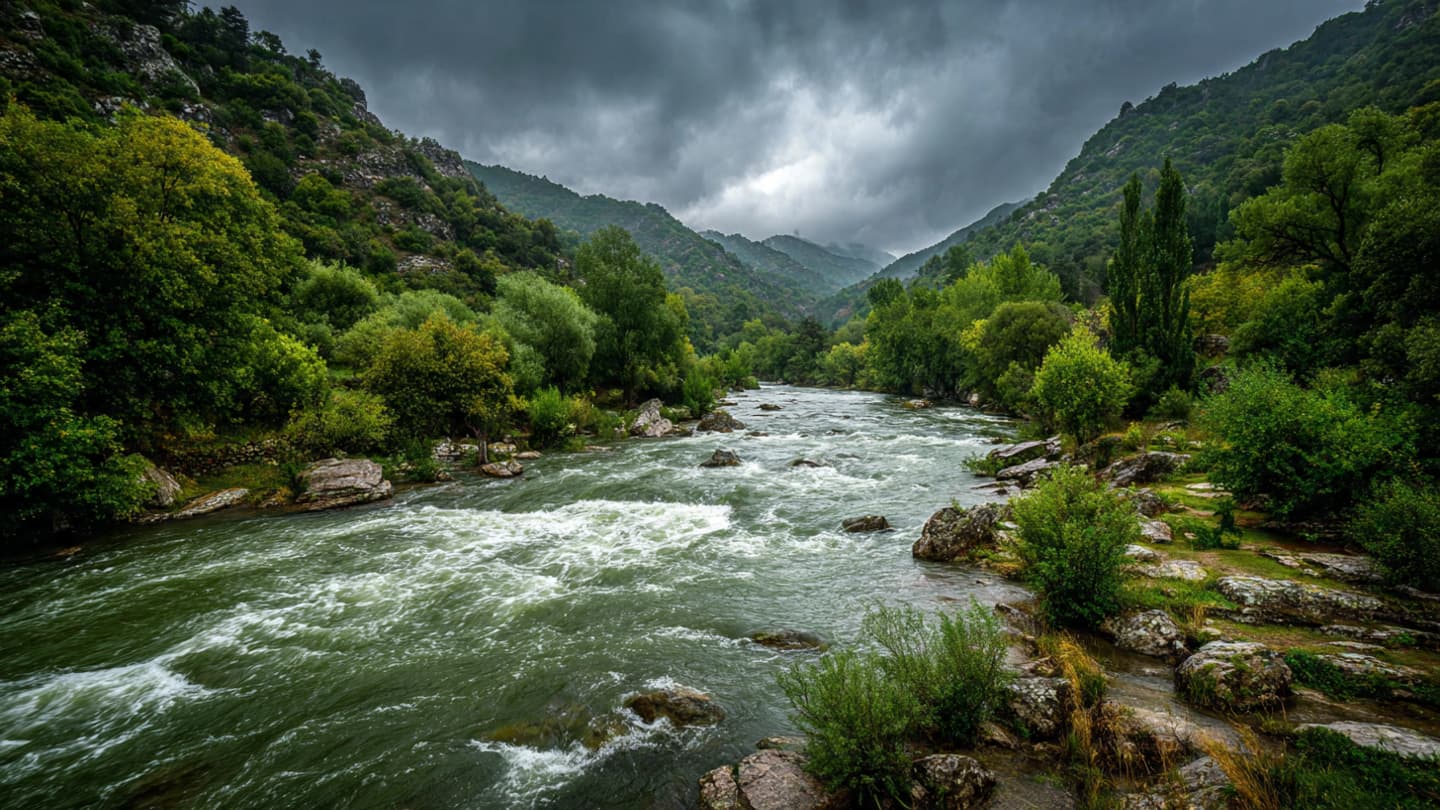
The northern regions of Greece, where the mountains rise to meet the borders of the Balkans, possess a climate that can shift with startling rapidity from Mediterranean heat to continental volatility. The vast plains and deep river valleys are accustomed to seasonal rains, but the intensity of modern weather patterns has introduced a new element of unpredictability to the landscape. When the clouds gathered over the hills recently, they brought an energy that the terrain could not easily absorb.
The downpour began in the late afternoon, a steady, deafening deluge that quickly overwhelmed the natural drainage systems of the rural municipalities. Within hours, small streams that usually trickle harmlessly through the limestone valleys transformed into swollen, brown torrents, spilling over their banks and into adjacent agricultural lands. The sheer volume of water saturated the hillsides, loosening the topsoil and setting the stage for more destructive movements.
In several mountain villages, the saturated earth gave way entirely, sending sheets of mud and debris sliding down the slopes and onto local roadways. The mudslides acted as physical barriers, isolating small communities and cutting off the primary transport routes that connect the agricultural heartland to northern market hubs. Residents watched from their windows as the familiar topography of their villages was temporarily rewritten by the flow of earth.
Emergency response teams, equipped with heavy earth-moving machinery, were dispatched to clear the arterial roads, working through the night under the continuous glare of floodlights. The task was complicated by the persistent rain, which threatened to trigger secondary slides along the unstable embankments. The personnel moved with caution, aware that the ground beneath them remained in a state of fluid transition.
In the lower valleys, the focus shifted to urban flooding, as municipal drainage networks in regional towns proved inadequate for the unprecedented volume of water. Basements were inundated, and ground-floor businesses found themselves clearing out water that carried the silt of the northern hills. Local authorities issued advisories urging residents to avoid unnecessary travel, transforming usually bustling districts into quiet, waterlogged zones.
The agricultural sector, which forms the backbone of the northern economy, faces a complex recovery as farmers assess the damage to fields of cotton and orchards. The standing water, if it remains for too long, threatens to rot crops just weeks away from harvest, introducing an economic sting to the natural event. The regional cooperatives are already meeting to discuss state aid and insurance valuations.
As the storm system finally moved eastward toward the sea, the true scale of the landscape's transformation became visible under the morning sun. The rivers remained high and turbulent, but the immediate threat of further mudslides began to recede as the ground started the slow process of drying. The community returned to the familiar work of restoration, washing away the mud that the night had brought.
The meteorological service noted that the storm cell was part of a larger regional pattern of extreme atmospheric instability that has affected the northern frontier. The Associated Press reported that severe thunderstorms caused widespread flash flooding and mudslides across northern Greece, blocking major transit corridors and displacing rural residents. Infrastructure repairs are underway as regional authorities evaluate the long-term stability of compromised hillsides.
Note: This article was published on BanxChange.com and is powered by the BXE Token on the XRP Ledger. For the latest articles and news, please visit BanxChange.com