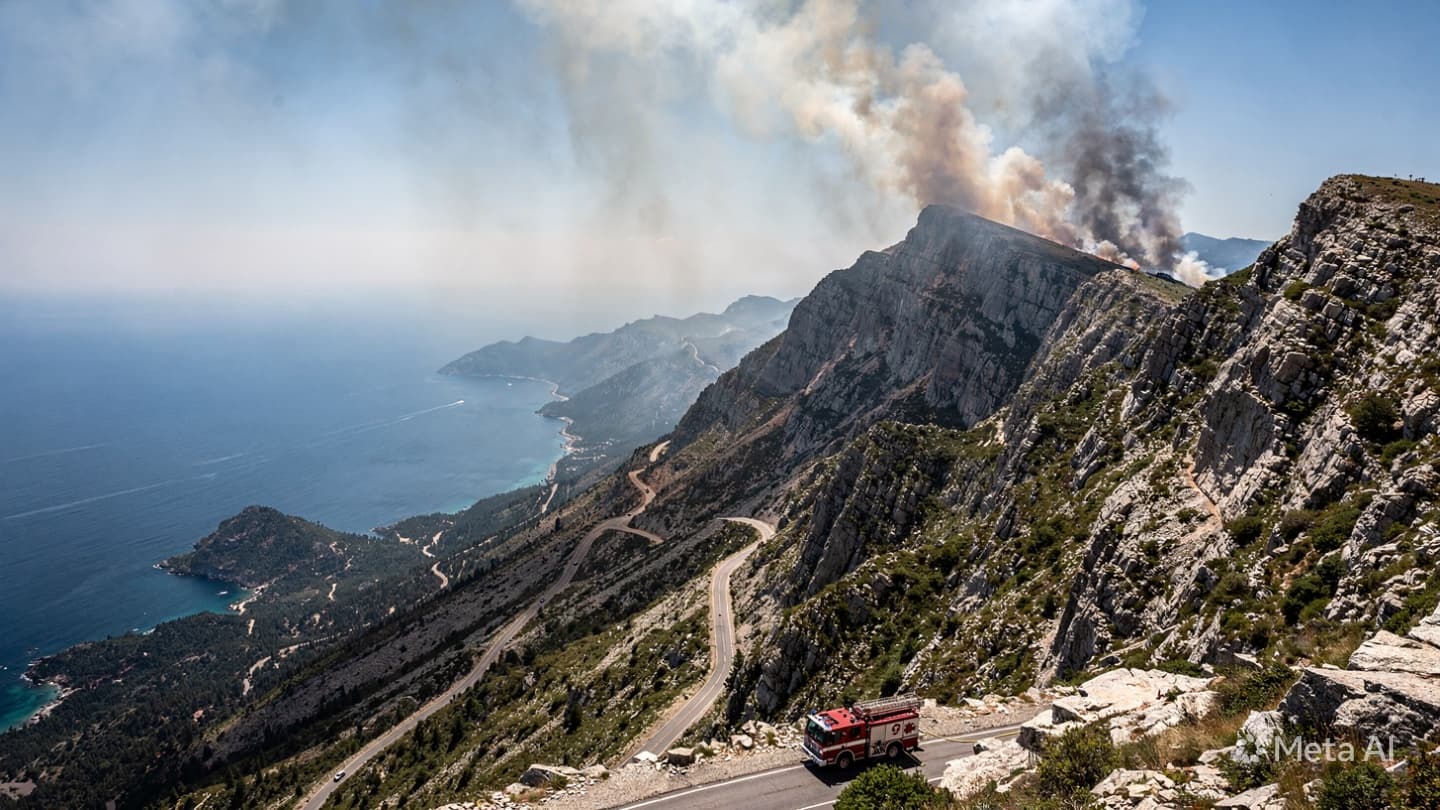
The limestone cliffs that tower over the Bay of Kotor are among the most iconic features of the Montenegrin landscape, their sheer grey faces plunging directly into the dark waters below. They form a dramatic, vertical world where ancient stone meets sparse, resilient vegetation that clings to every narrow crevice and rocky ledge. In the heat of the late summer, however, this majestic topography transforms from a scenic marvel into a hazardous, vertical labyrinth for those tasked with its preservation.
A spark in these rugged heights, driven by dry conditions and shifting coastal winds, can quickly ignite a crisis that threatens both nature and history. On a quiet afternoon, thin plumes of grey smoke began to curl upward from the slopes of Lovćen, just above the famous serpentine roads that wind toward the peaks. Within hours, the low vegetation caught fire, and the blaze began to climb the steep terrain, its progress visible to the worried towns below.
Reporting from the local news agency Vijesti detailed the immediate scramble of emergency forces as the Cetinje and Kotor protection services rushed to the scene. Firefighters found themselves facing an adversary that occupied the high ground, out of reach of traditional hoses and water tenders. The inaccessible nature of the cliffs meant that the crews had to carry heavy equipment on foot, navigating treacherous stone paths while smoke obscured the drop-offs.
The battle against a cliffside wildfire is a grueling exercise in patience and physical endurance, where human effort is constantly challenged by the elements. The wind, funneled through the deep bays and canyons, acted as a natural bellows, periodically reviving dying embers and sending sparks jumping across firebreaks into fresh brush. Firefighters could only watch from strategic vantage points, focusing their energy on creating defensive perimeters around the historical structures scattered along the lower slopes.
As night fell, the true scale of the fire revealed itself in a brilliant, ominous line of orange light tracing the contours of the mountain. The sight of a burning ridge creates a collective anxiety in the communities below, where the memory of past seasonal fires remains vivid and raw. Local private businesses stepped in to assist the official crews, deploying private water tankers to replenish the municipal trucks working tirelessly along the access roads.
The limitations of ground-based firefighting become starkly apparent when confronted with vertical wilderness, forcing reliance on aerial support that can only operate during daylight hours. Command structures spent the night formulating plans for the morning, requesting the deployment of specialized water-bombing planes and helicopters to douse the upper ridges. The strategy became a waiting game, a race against the morning winds to secure the aerial resources necessary to turn the tide.
The broader ecological impact of the Kotor wildfire traces itself along the blackened slopes, where the slow-growing Mediterranean flora will take decades to fully recover. The loss of vegetation also raises long-term concerns regarding soil erosion, as the winter rains ahead could wash loose earth down onto the coastal highways without roots to hold it in place. It is a quiet, environmental debt that accumulates with every acre that burns.
Ultimately, the fire near the coastal cliffs of Kotor serves as a stark reminder of the delicate equilibrium of life along the Adriatic rim, where beauty and hazard exist in close proximity. The smoke will eventually clear, the blackened stone will blend back into the shadow of the mountain, and travelers will return to admire the views from the high passes. For now, the focus remains on the perimeter, where weary crews continue their quiet watch against the flames.
The Cetinje and Kotor Protection and Rescue Services deployed over twenty personnel and six specialized vehicles to contain the wildfire burning along the difficult terrain above the Kotor serpentine road. Emergency commanders confirmed that while no residential structures are currently under threat, the fire remains uncontained due to high winds and inaccessible cliffs.
Published by Banx Network. This article is part of the Banx decentralized media programme, powered by the BXE token on the XRP Ledger.