
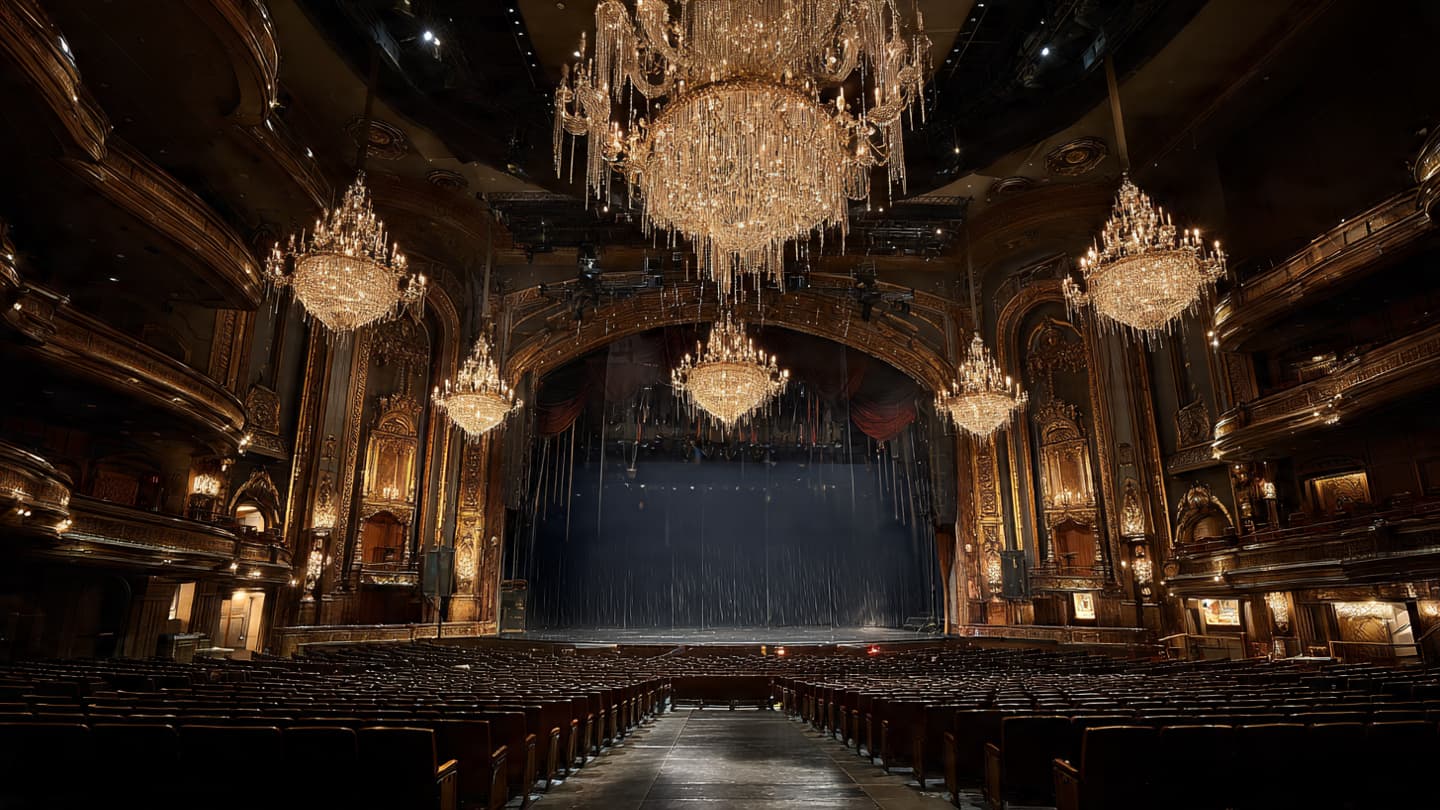
On certain evenings in Washington, the light settles softly across the Potomac, touching the pale stone of monuments and museums with a kind of borrowed memory. The city often appears suspended between eras, where names carved into buildings carry more than identification. They become markers of national stories, fragments of collective remembrance set into marble and glass.
Along that river stands the John F. Kennedy Center for the Performing Arts, a place where orchestras tune their instruments before audiences arrive, where curtains rise on familiar works, and where generations have gathered beneath chandeliers to witness the shifting language of culture. For decades, the building has occupied a space between public institution and memorial, dedicated not only to performance but also to the memory of a president whose name became inseparable from the center itself.
This week, that relationship became the focus of a legal decision that reached beyond architecture and signage. A federal judge ordered that President Donald Trump’s name be removed from the Kennedy Center after a dispute over efforts to formally rename the institution. The ruling stated that Congress originally established and named the center, and that only Congress possesses the authority to alter that designation.
The decision arrived after months of controversy surrounding the center’s leadership and direction. Following changes to the institution’s board, a vote had approved the addition of Trump’s name to the landmark, creating what became known as the “Trump Kennedy Center.” New signage appeared, and broader plans emerged to reshape the institution’s future, including a proposed two-year closure for extensive renovations.
Yet inside the court’s ruling was a quieter question about ownership of national symbols. Judge Christopher Cooper concluded that the board had exceeded its authority by changing the center’s name without congressional approval. He ordered the removal of physical signage and official references bearing Trump’s name within two weeks. The ruling also halted plans for a prolonged closure, though it did not prevent routine repairs and maintenance from continuing.
The dispute unfolded against a broader backdrop of debate over the role of cultural institutions in political life. The Kennedy Center has long occupied a unique position in the American landscape: federally supported, nationally recognized, yet deeply tied to the arts rather than government itself. Its stages have welcomed presidents, foreign leaders, musicians, dancers, actors, and audiences whose experiences often intersect only briefly beneath its roof.
For some observers, the controversy reflected a larger struggle over how public spaces should preserve history. For others, it raised questions about executive influence, legal boundaries, and the durability of institutions built to outlast any single administration. The court’s decision did not settle those broader conversations, but it reaffirmed a statutory framework that dates back decades, when lawmakers formally dedicated the venue as a memorial to President John F. Kennedy.
Outside the courtroom, reactions traveled quickly through political circles, arts communities, and public discussion forums. Some viewed the ruling as a defense of congressional authority; others criticized it as an obstacle to planned renovations and administrative changes. President Trump responded by suggesting that control of the institution could ultimately be transferred back to Congress, describing frustration with the restrictions imposed by the court.
Yet beyond the arguments, the building itself remains where it has always stood. Visitors continue to arrive beneath its broad white facade. Musicians still prepare backstage. Lights continue to rise above the river each evening, reflecting softly across the water.
The ruling leaves the Kennedy Center facing an uncertain administrative future, but its legal identity has been clarified for now. The center will continue operating under the name established by Congress more than sixty years ago, while appeals and political debate may still follow. In a city defined by monuments and memory, the decision serves as a reminder that names, once attached to public places, often become part of larger stories—stories that outlive the people who seek to shape them.
AI Image Disclaimer Illustrations were generated using AI and are intended as visual interpretations rather than documentary photographs.
Sources Reuters The Washington Post ABC News NPR The Guardian
Published by Banx Network. This article is part of the Banx decentralized media programme, powered by the BXE token on the XRP Ledger.


.jpg&w=3840&q=75 "Intelligence Agencies Suspect Russia Is Developing Anti-Satellite Weapon to Target Starlink")