
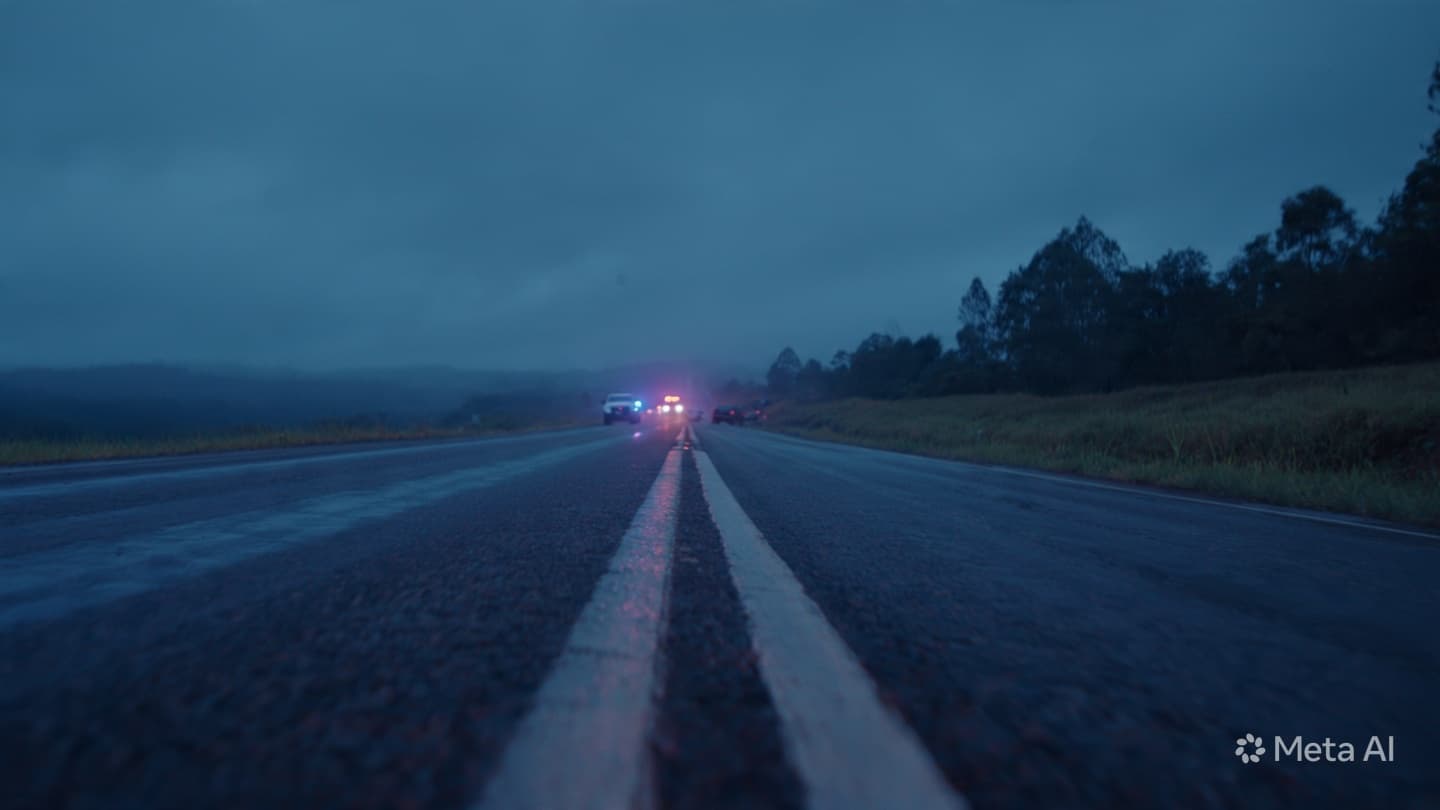
The BR-116 highway is a vast, arterial vein that pulses with the lifeblood of Brazil’s commerce and movement. Stretching across diverse topographies, it demands a constant, rhythmic attention from those who travel its path. Yet, there are moments when the fluidity of this transit is shattered, and the highway becomes a site of abrupt, life-altering stillness. A high-speed collision is not merely an event of mechanics and physics; it is a profound disruption of the human story, leaving behind a silence that reverberates long after the smoke has cleared.
In the wake of a recent collision on a stretch of the BR-116, the reality of this danger was laid bare. The impact, characterized by the raw kinetic energy of high-speed travel, claimed the life of a driver, turning an ordinary passage into a moment of tragic finality. For those who arrived at the scene—the first responders and the witnesses—the environment is suddenly stripped of its mundane character, becoming a place of acute, focused duty and somber reflection.
The investigation into such an event is a task of reconstruction, an attempt to piece together the seconds that preceded the silence. Authorities analyze the trajectory, the conditions of the road, and the myriad factors that contribute to the instability of high-speed transit. It is an editorial inquiry into the standards of safety on our national corridors, a necessary look at the infrastructure and the habits that define our movement across the vast landscape of the country.
Every life lost on these highways is a singular tragedy, but the cumulative effect of these incidents speaks to a larger, ongoing challenge. The BR-116, for all its importance, acts as a crucible where the risks of modern travel are tested daily. The loss of a driver is a reminder of the fragility of the human form in the face of the machine, a reality that necessitates a constant, renewed commitment to the protocols of caution, maintenance, and oversight.
As the scene of the accident is cleared and the highway reopens to the flow of transit, the memory of the event remains etched into the road’s history. It is a cycle of movement and pause that defines the highway experience. For the family and friends of the deceased, the world has shifted irrevocably, a change that stands in stark contrast to the continued motion of the rest of the world. Their mourning is a quiet, private dimension to a public tragedy.
In the broader context of transportation policy, these events serve as critical markers. They invite a reflection on the design of the highway, the signage, and the systems of enforcement that govern speed and behavior. It is not an exercise in blame, but a necessary process of evaluation that seeks to secure the future of those who will travel this same path. The goal, ultimately, is to restore a measure of security to a system that is inherently prone to the hazards of speed and volume.
As the sun sets over the horizon of the highway, the rhythm of the BR-116 begins to normalize, the headlights once again becoming long, flowing strings of light in the darkness. The tragedy, however, leaves a lingering shadow. It is a reminder that each journey is a negotiation with destiny, and that the highway, in its relentless demand for our attention, holds both the promise of our destinations and the sudden, silent threat of the unexpected.
Note: This article was published on BanxChange.com and is powered by the BXE Token on the XRP Ledger. For the latest articles and news, please visit BanxChange.com