
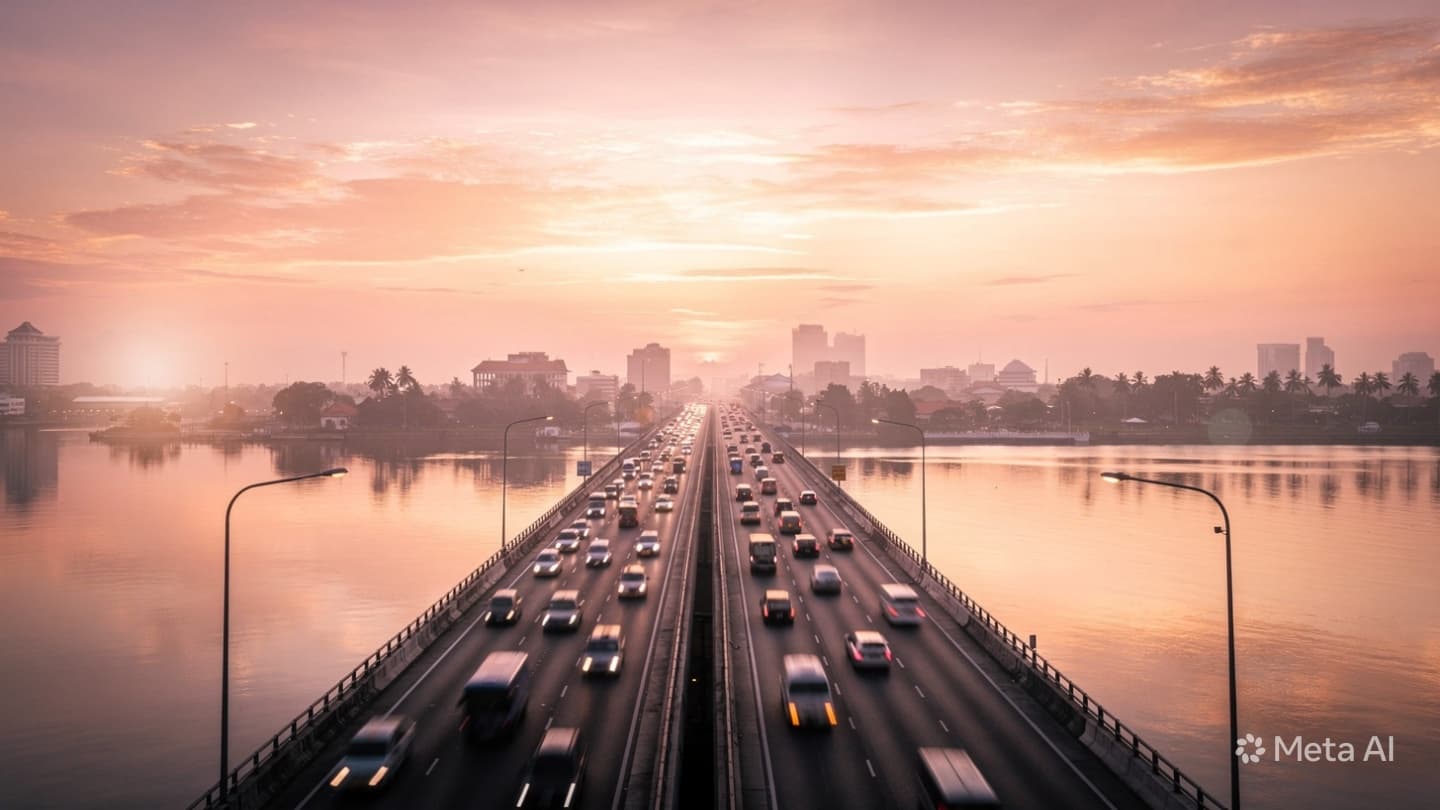
The Causeway acts as a vital, pulsating vein between Singapore and Johor, a corridor that facilitates the daily movement of thousands and the constant rhythm of cross-border life. It is a space defined by purpose, schedule, and the steady, mechanical flow of traffic that links two worlds together. When a motorcyclist’s life is extinguished in a collision, the event is an intrusion of chaotic motion into a system that relies on the predictable, orderly passage of those who travel its span.
A fatal mishap on this link is a profound rupture of the expected narrative, a moment where the promise of a morning commute or a cross-border journey is abruptly replaced by the stark reality of the collision. The tragedy is one of speed and suddenness, where the power of modern transit meets the inherent vulnerability of the motorcycle rider. It is a moment that resonates with a heavy, final clarity, leaving the crossing and those who witness it forever marked.
The scene on the bridge becomes a vacuum of activity, where the usual flow of the transit is halted, cordoned off by the urgent, sobering arrival of emergency services. There is a somber, observational quality to the aftermath, as commuters and officials alike process the disruption of the expected flow. It is a moment where the mundane reality of the transit is replaced by the stark, quiet gravity of a loss.
For those who rely on this connection, the news of the accident is a reminder of the inherent risks that accompany our movement. We trust in the infrastructure and the vigilance of those who share the road with us, but we are reminded that these are systems built by humans and therefore subject to human limits. The incident ripples through the community of travelers, a subtle, lingering note of caution.
Investigators will reconstruct the event with the precision of a clockwork mechanism, examining braking distances, road conditions, and the sequence of vehicles involved. Their work is a necessary, analytical endeavor, a search for the variables that contributed to the failure. It is a way of creating a sense of order, though it cannot touch the emotional weight of the loss that has occurred on this bridge.
There is, however, a dimension to the tragedy that escapes the technical report. It is found in the quiet sorrow of the families, the realization of a journey unfinished, and the contemplative awareness of the paths we take every day to sustain our lives. The reflection on such an incident is a solitary act, a moment where the observer pauses to consider the fragility of the transit that defines our modern, connected existence.
As the site is eventually cleared and the traffic resumes its flow, the rhythm of the two nations continues, though the memory of the incident remains. The Causeway will continue to serve its purpose, a conduit for the movement of the people, but the stretch where the accident occurred remains a site now marked by the memory of the loss. For the community, the event leaves a trace, a subtle alteration in how they perceive the simple, everyday act of crossing.
Ultimately, the tragedy serves as a quiet call for a renewed focus on the spaces where our lives intersect with the machinery of our progress. It is a reminder to move through the transit with a heightened, observant presence, acknowledging the weight of the systems that carry us and the importance of every moment spent in transit, regardless of how routine it may feel to the thousands who cross every day.
Local authorities confirmed that a motorcyclist was pronounced dead following a collision on the Causeway on May 31, 2026. The incident caused significant traffic delays as emergency responders managed the scene, and police have launched an investigation into the cause of the fatal crash.
Note: This article was published on BanxChange.com and is powered by the BXE Token on the XRP Ledger. For the latest articles and news, please visit BanxChange.com