The Andaman Sea, a vast expanse of turquoise and emerald, is often described in the language of paradise—a place where the water meets the sky in a seamless, inviting embrace. Yet, there is a dormant ferocity beneath that surface, a capacity for sudden turbulence that reminds us of the ocean’s true nature. When the storm rolled into Phuket, it did not arrive as a polite visitor, but as a force that demanded acknowledgment. In the collision of a speedboat against the unforgiving stone of a pier, we see the fragility of our attempts to master the elements, and the precariousness of finding ourselves at the mercy of a changing wind.
To be on the water is to enter a dialogue with the environment that is entirely stripped of the comforts of the land. We trust the hull, the engine, and the navigator to hold the line between us and the deep, yet when the sky darkens and the waves begin to exert their own agenda, that trust becomes a fragile thing. The incident at the pier was not merely a mechanical failure or a lapse in judgment; it was a testament to the unpredictable choreography of the sea, where every ripple can carry the weight of a monumental shift in fortune.
As the wind picked up, the water, which had been a playground, became a stage for a desperate struggle for equilibrium. The collision, occurring in the heart of a squall, highlights the thin line between a planned excursion and an unplanned encounter with danger. It is a moment where the luxury of travel evaporates, leaving behind the primal reality of a vessel struggling against a power much larger than itself. Those who were onboard experienced the sudden, violent jolt of stone against fiberglass, a sound that resonates far beyond the immediate moment of impact.
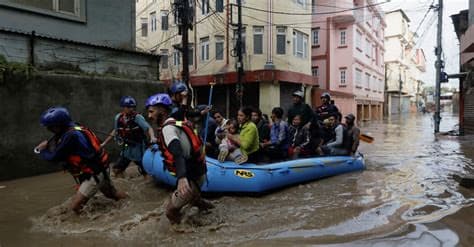
The search and rescue efforts that followed were conducted in the cold, salt-sprayed light of urgency. Men and women waded into the dark, churning water, driven by the instinct to reclaim what the storm had taken. There is a profound humility found in such efforts—the realization that despite all our navigational technology and maritime expertise, the sea remains a wild, unmastered entity. Every person recovered from the wreckage was a victory against the indifference of the elements, yet the two lives lost serve as a somber punctuation to the event.
We often view our journeys as linear, predictable trajectories—from pier to island, from arrival to departure. But the ocean reminds us that we move through spaces that are inherently cyclical and chaotic. The storm does not distinguish between the tourist seeking leisure and the local navigating their livelihood; it moves according to its own atmospheric physics, indifferent to the itineraries we craft so carefully. The pier, built to provide a stable connection between worlds, became the site where these worlds were violently thrust together.
There is a haunting beauty in the aftermath of such a storm, when the winds settle and the water begins to reclaim its composure. The wreckage of the boat, now stripped of its purpose, sits as a discarded sculpture of ambition, a reminder of the night’s turbulence. We look at it and see not just a boat, but a vessel that once carried the laughter, the anticipation, and the dreams of those who stood on its deck. Now, it stands as a marker in time, a coordinate where the promise of the island trip was interrupted by the reality of the sea.
As families grapple with the news and investigators comb through the details of the crash, the narrative of the event becomes a tapestry of human sorrow and organizational accountability. We seek to understand the decisions made in the cabin of the boat—the choice to set out, the choice to continue, the choice to dock—hoping to find a version of events that makes sense. Yet, the ocean provides no such comfort. It simply was, and the storm happened, and the tragedy took its place in the history of the Andaman.
We carry these stories as warnings, as small, painful lessons about the importance of respecting the forces that surround us. We return to the water, perhaps with a bit more caution, looking at the horizon with eyes that have been tempered by the knowledge of what the storm can do. The sea will continue to draw us in, for its beauty is as compelling as its danger is real. And in that balance, we find the core of the human spirit: the relentless urge to explore, even when the skies are uncertain and the way forward is anything but clear.
Two vacationers lost their lives when their speedboat collided with a pier in Phuket during a sudden, intense storm. The incident occurred as severe weather lashed the coast, complicating maritime navigation and leading to the fatal impact. Emergency services arrived on the scene to assist numerous injured passengers who were transported to local hospitals. Authorities have initiated an investigation into the circumstances surrounding the navigation and safety protocols during the storm.
Published by Banx Network. This article is part of the Banx decentralized media programme, powered by the BXE token on the XRP Ledger.