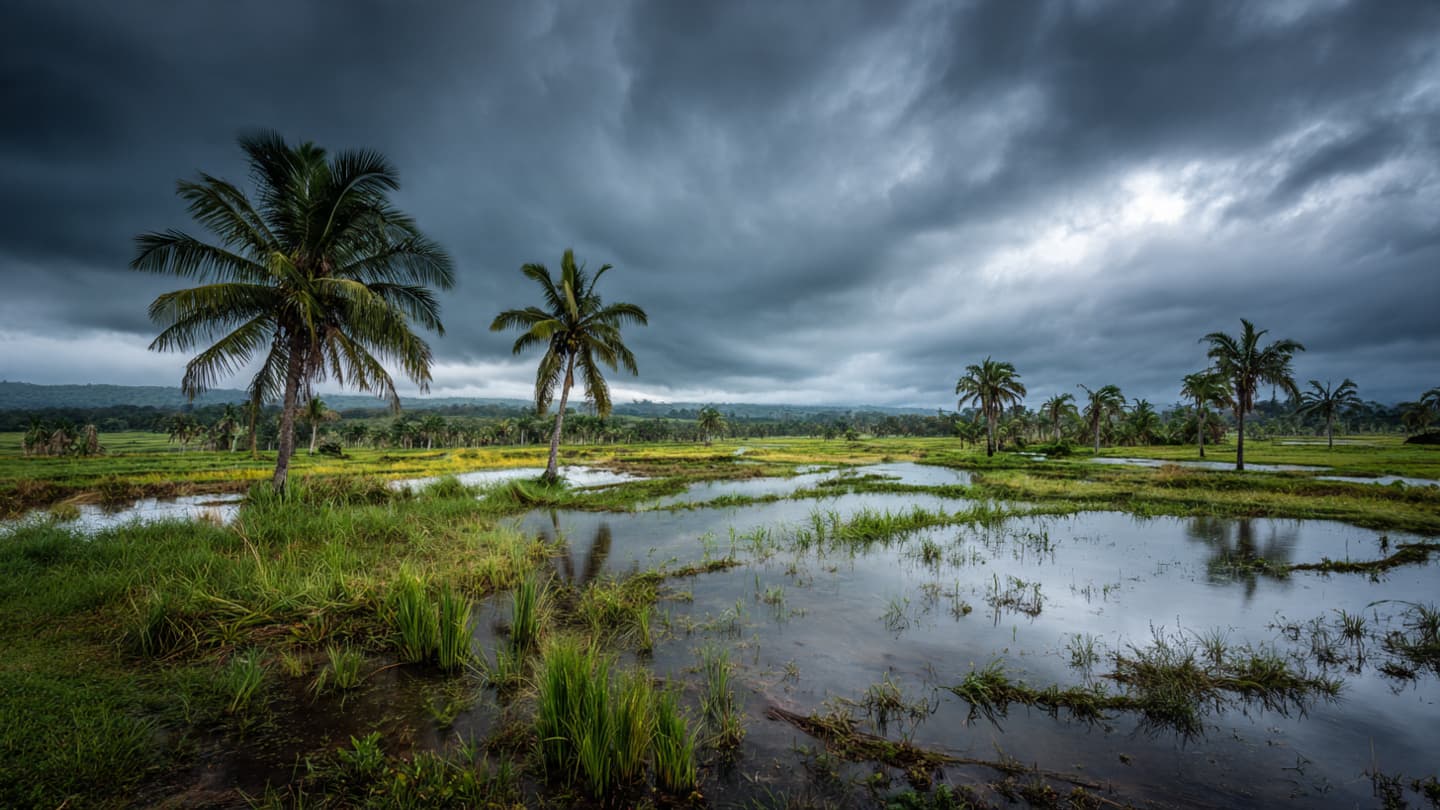
Rain arrived across the northern islands not as a passing storm, but as a slow and relentless presence that settled over fields, rivers, and villages for days without pause. Beneath gray skies, the soil softened until water spread quietly across farmland where rows of crops once stood steady beneath tropical sunlight.
Severe flooding across northern Vanuatu destroyed large sections of agricultural land, leaving farmers struggling with damaged crops, submerged gardens, and growing concerns over food supplies. Authorities reported widespread losses affecting staple crops including taro, banana, cassava, and vegetables essential to both local consumption and village trade.
Farmers walked carefully through flooded fields where muddy water now covered what had once been fertile ground. In some communities, entire harvests disappeared beneath rising floodwaters overnight after nearby rivers overflowed into low-lying agricultural areas. Fallen trees, debris, and eroded soil remained scattered across plantations after the waters began slowly receding.
Local officials warned that the agricultural damage may create longer-term challenges for isolated island communities heavily dependent on seasonal farming. Village markets reported reduced produce availability while some families began rationing food supplies until transportation and trade routes stabilize following the flooding.
Emergency aid teams worked alongside community volunteers distributing rice, bottled water, and temporary food assistance in districts where crop destruction was most severe. Several roads connecting farming villages to regional ports remained difficult to access due to landslides and damaged infrastructure caused by continuous rainfall.
Meteorologists linked the flooding to prolonged tropical weather systems affecting the South Pacific region, bringing unusually intense rainfall across northern islands already vulnerable to seasonal storms. Authorities cautioned that additional rain could worsen soil erosion and delay recovery efforts for farmers attempting to salvage remaining crops.
In many villages, farming is more than work alone. Gardens shape the rhythm of daily life, family survival, and community exchange. The loss carried quietly through conversations beneath shelter roofs where farmers discussed damaged land not only in terms of economics, but through memory, routine, and uncertainty about the coming months.
Children crossed flooded pathways carrying empty baskets while elders inspected fields where standing water reflected dark clouds overhead. Some families attempted to rescue surviving plants from submerged soil, though many admitted the season may already be lost. The rain continued falling softly in the distance, steady enough to remind communities that recovery had not yet begun fully.
Floodwaters eventually withdraw, but their absence does not immediately restore what was taken. Across northern Vanuatu, fields remain waterlogged and uncertain, while farming communities wait beneath unsettled skies hoping the land itself will recover in time for another planting season.
Authorities continue assessing agricultural losses across affected islands while relief agencies coordinate food assistance and recovery support for farming communities impacted by the flooding.
Published by Banx Network. This article is part of the Banx decentralized media programme, powered by the BXE token on the XRP Ledger.