
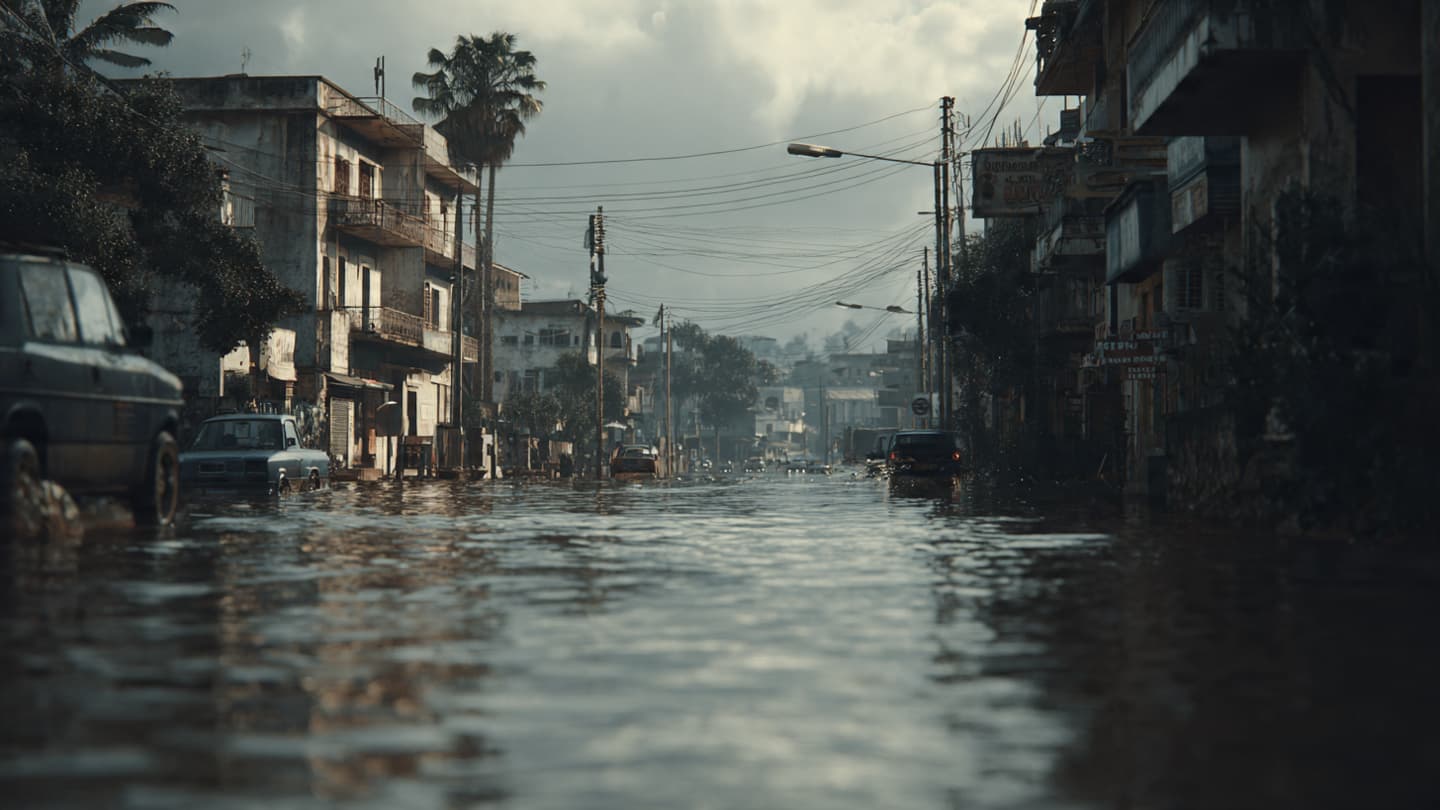
In Cameroon’s coastal and inland regions, rain often arrives in waves that feel both familiar and unpredictable, shaping the rhythm of roads, rivers, and settlements. When rainfall intensifies beyond seasonal norms, communities begin to watch the sky with renewed caution.
Torrential rain across several parts of the country has raised concerns about potential new flooding events, particularly in areas already affected by water saturation. Low-lying districts and river-adjacent communities remain the most exposed.
Weather patterns have shown sustained rainfall over extended periods, increasing runoff into drainage systems that are already under strain. In some urban areas, water accumulation has begun to affect mobility and daily routines.
Environmental monitoring groups note that repeated heavy rainfall events can weaken soil stability and increase flood susceptibility. This is particularly significant in regions where urban expansion has reduced natural drainage capacity.
Local authorities continue to observe river levels closely, especially in areas where overflow could affect surrounding settlements. Preparedness measures are being discussed to reduce potential impact if conditions worsen.
Residents in vulnerable zones have been advised to remain alert during ongoing weather activity, as forecasts suggest continued rainfall. Community awareness campaigns are being reinforced in several regions.
Emergency services are maintaining readiness in case of rapid flooding or infrastructure disruption. Coordination efforts include monitoring transport routes and identifying high-risk zones.
As rainfall continues, Cameroon’s affected regions remain in a state of watchful uncertainty, where the boundary between steady rain and flooding can shift quickly.
Note: This article was published on BanxChange.com and is powered by the BXE Token on the XRP Ledger. For the latest articles and news, please visit BanxChange.com