Evening often arrives slowly across South Asia. The last light lingers over river plains, mountain passes, and crowded city streets before surrendering to darkness. In places shaped by centuries of trade, migration, and empire, political decisions rarely emerge as sudden turns. They move instead like long currents beneath the surface, carrying memories, identities, and strategic calculations accumulated over generations.
It is within such currents that Pakistan’s position on the Abraham Accords can be understood.
Since their introduction in 2020, the agreements have altered parts of the diplomatic landscape of the Middle East. Several Arab states established formal relations with Israel, creating new channels for trade, security cooperation, technology partnerships, and political dialogue. The accords reflected a changing regional environment in which economic diversification, security concerns, and shifting geopolitical priorities increasingly shaped state decisions.
Yet Pakistan has remained outside this process.
From a distance, the question sometimes appears straightforward: if several Muslim-majority countries have normalized relations with Israel, why has Pakistan not followed the same path? The answer lies within a blend of domestic politics, historical identity, regional diplomacy, and strategic caution.
Pakistan’s support for the Palestinian cause has long been woven into its foreign policy narrative. Since its creation in 1947, successive governments have linked their position to support for Palestinian self-determination and the establishment of a Palestinian state. That stance has become more than a diplomatic posture; it is embedded in public discourse, educational narratives, and national political culture.
The issue is particularly sensitive because public opinion remains strongly sympathetic toward Palestinians. Political parties spanning different ideological traditions have consistently opposed normalization with Israel absent significant progress toward a resolution of the Palestinian question. For any government in Islamabad, such sentiments represent a political reality that cannot easily be ignored.
Beyond domestic considerations, regional circumstances also play a role. Pakistan maintains close relationships with several Gulf countries and values its partnerships across the broader Islamic world. While some regional powers have embraced normalization, others continue to approach the matter differently. Islamabad has generally preferred to avoid positioning itself at the center of divisions within the Muslim world, choosing instead a cautious balancing act.
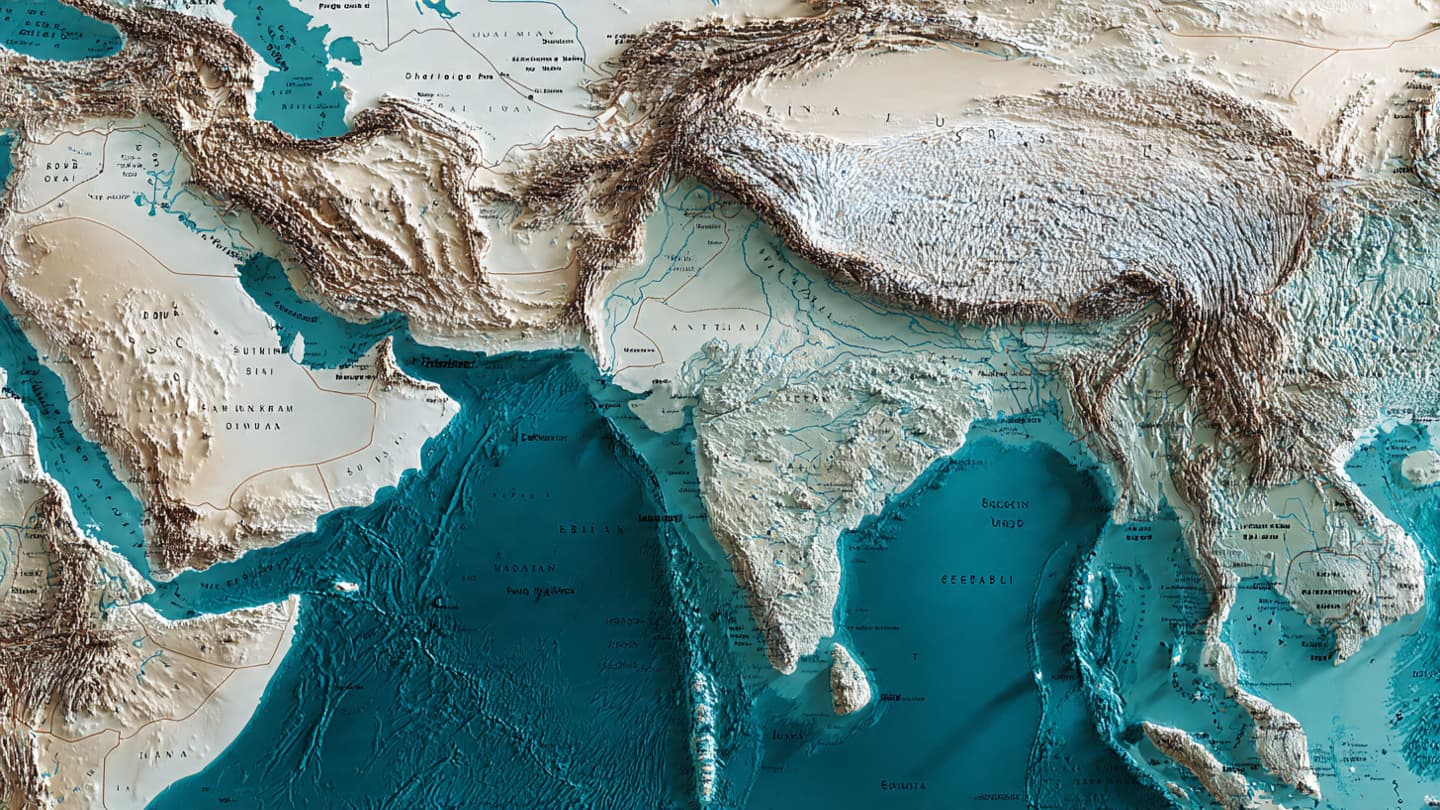
Geography adds another layer. Pakistan sits at the intersection of South Asia, Central Asia, and the Middle East, where diplomatic decisions often carry consequences across multiple regions simultaneously. Its leaders must weigh relations not only with Gulf partners and Western allies but also with neighboring countries, major powers, and international organizations. In such an environment, foreign policy choices are rarely isolated decisions; they ripple outward through a complex web of strategic relationships.
The continuing conflict in Gaza has reinforced these calculations. Images of destruction and humanitarian suffering have deepened public sympathy for Palestinians across much of the Muslim world, including Pakistan. As long as the conflict remains unresolved, political space for normalization is likely to remain narrow.
There are also practical considerations. Unlike some states that pursued normalization alongside major economic or security incentives, Pakistan does not currently face the same set of circumstances. While economic cooperation with Israel could offer potential opportunities in technology, agriculture, and innovation, such prospects have generally been overshadowed by larger political and diplomatic concerns.
Observers note that Pakistani policymakers often frame the issue around timing rather than absolute impossibility. The country has not formally ruled out future changes under every conceivable circumstance. However, official statements have repeatedly emphasized that meaningful progress toward Palestinian statehood would be a necessary prerequisite for any major shift.
This position reflects a broader pattern in international diplomacy, where governments often seek to align strategic interests with domestic legitimacy. Decisions made in foreign ministries ultimately resonate in marketplaces, universities, religious institutions, and family conversations. In democratic and politically diverse societies, those voices matter.
As the Abraham Accords continue to reshape parts of the Middle East, Pakistan remains a careful observer rather than a participant. Its stance reflects not only contemporary geopolitics but also decades of historical commitments and public expectations. The country stands at a crossroads familiar to many nations: balancing evolving regional realities against enduring national narratives.
For now, the road toward normalization appears distant. The calculations in Islamabad suggest that while diplomatic landscapes may shift and alliances may evolve, some questions continue to move at the pace of history rather than the speed of headlines. And in that slower rhythm, Pakistan’s leaders seem likely to keep watching the horizon, weighing each change against the long shadows cast by the past.
AI Image Disclaimer Illustrations were generated using AI and are intended as visual interpretations of the subject matter rather than documentary photographs.
Sources Reuters Associated Press Al Jazeera Carnegie Endowment for International Peace United States Institute of Peace (USIP)
Published by Banx Network. This article is part of the Banx decentralized media programme, powered by the BXE token on the XRP Ledger.