
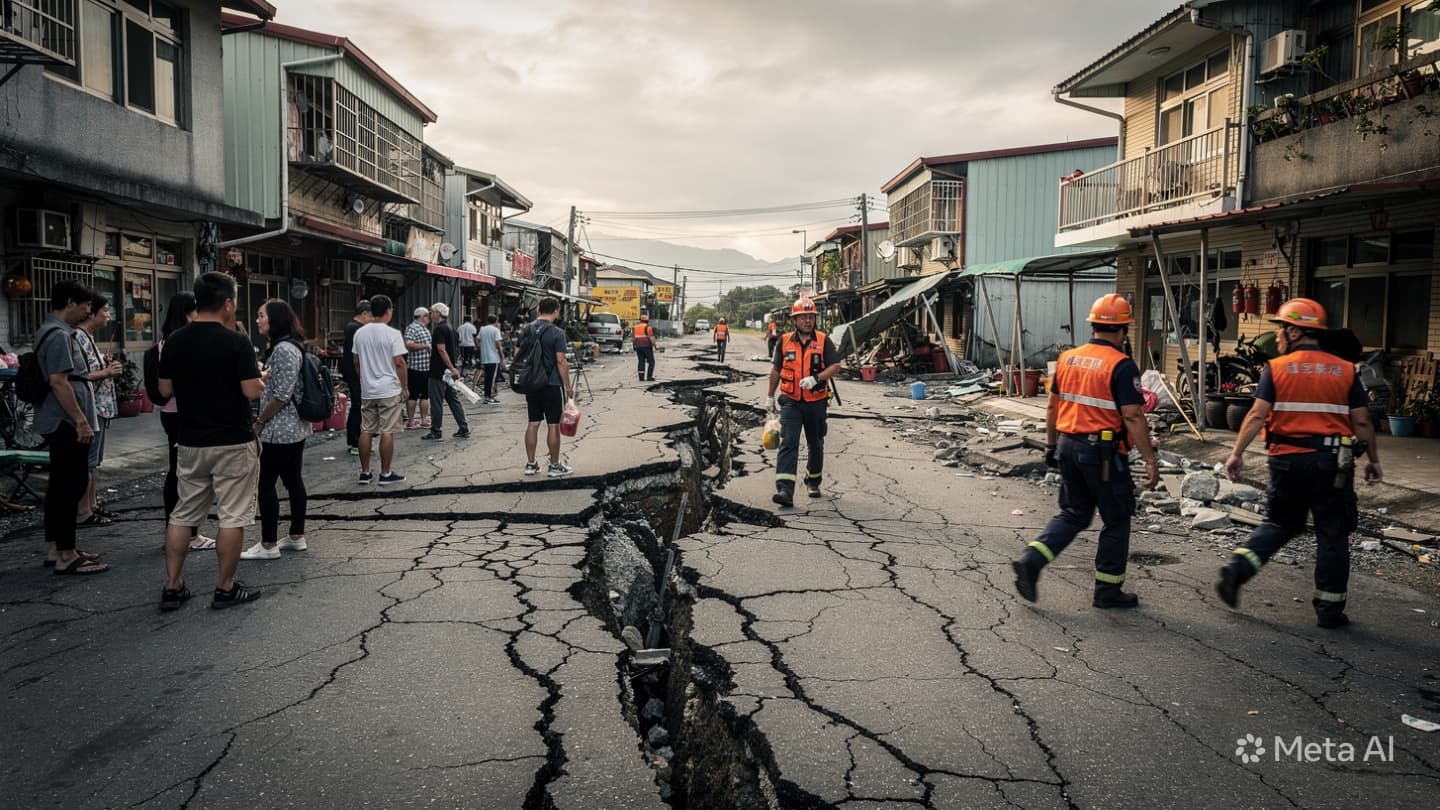
The earth moves often beneath Taiwan, though many tremors pass like fleeting whispers beneath daily life. In Hualien County, where mountains descend sharply toward the Pacific coastline, residents have grown accustomed to moments when floors sway gently and hanging lights begin to tremble without warning.
A recent earthquake rattled Hualien County, briefly unsettling communities across Taiwan’s eastern region. The tremor was felt by residents during the day, prompting momentary concern as buildings shook and emergency monitoring systems tracked the seismic activity.
Witnesses described familiar reactions unfolding almost instantly. Phones lit up with earthquake alerts, elevators paused, and conversations stopped mid-sentence as people waited quietly for the shaking to end. In Taiwan, such responses have become deeply woven into public awareness after years of seismic experience.
Hualien remains one of Taiwan’s most earthquake-prone regions due to its location near active tectonic boundaries. The surrounding landscape carries visible reminders of geological movement — steep cliffs, shifting fault lines, and coastlines shaped slowly over centuries by forces beneath the sea and mountains.
Authorities later confirmed that no major damage had been reported following the earthquake. Initial inspections indicated that transportation systems and public infrastructure continued operating normally, while emergency agencies monitored aftershock conditions throughout the area.
Even when earthquakes pass without serious destruction, they often leave behind a quieter emotional residue. Residents pause beside doorways a little longer, glance upward at swaying lamps, or exchange brief messages with family members elsewhere across the island. Daily routines continue, though touched momentarily by uncertainty.
Taiwan’s preparedness systems have evolved significantly over the years, shaped by both experience and necessity. Earthquake drills, building regulations, and public warning systems now form part of ordinary civic life, particularly in regions where seismic activity occurs frequently. These measures often help reduce panic during moderate tremors.
As evening arrived, transportation and public services in Hualien remained stable. Authorities continued monitoring seismic data while residents gradually returned to ordinary routines beneath calm skies along Taiwan’s eastern coast.
Officials confirmed that the earthquake caused no major reported damage in Hualien County. Monitoring efforts remain ongoing as authorities assess any additional aftershock activity in the region.
Note: This article was published on BanxChange.com and is powered by the BXE Token on the XRP Ledger. For the latest articles and news, please visit BanxChange.com