
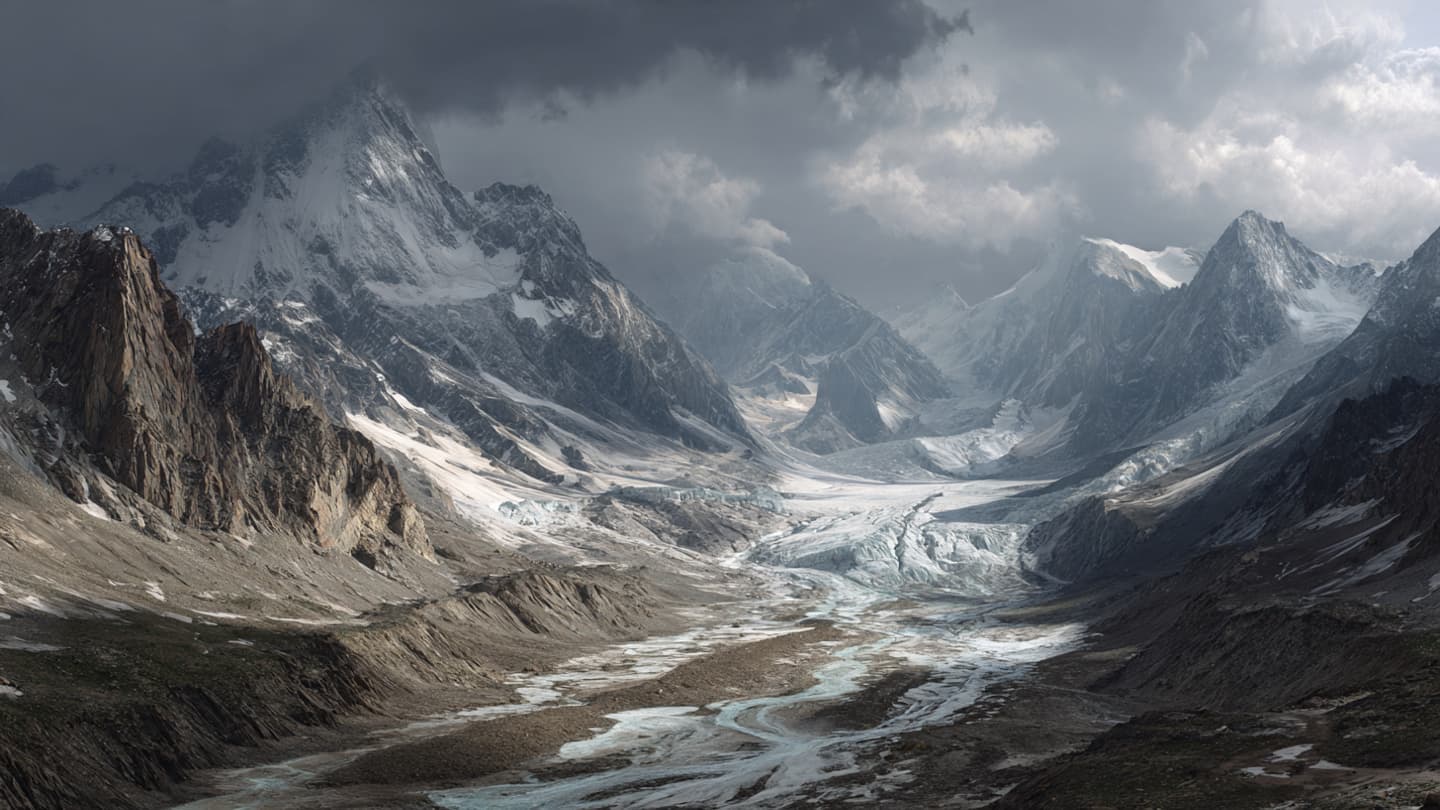
Far above Tajikistan’s valleys, where snow and ice once appeared immovable against the mountains, the landscape has begun changing in ways difficult to reverse. Glaciers that shaped rivers for centuries now recede slowly across exposed rock, leaving behind silence broken only by meltwater descending toward the plains below. The transformation often appears subtle from year to year, yet scientists warn its long-term consequences may reshape much of Central Asia itself.
Environmental researchers and regional climate observers continue raising concerns over accelerating glacier melting across Tajikistan and neighboring countries. Rising temperatures linked to global climate change are affecting mountain ice reserves that serve as critical freshwater sources for millions of people throughout Central Asia.
Tajikistan holds some of the region’s most important glaciers and high-altitude water systems. Rivers originating from these mountain environments support agriculture, hydropower generation, drinking water supplies, and ecological stability far beyond the country’s borders. As glacier mass declines, long-term water security concerns continue intensifying.
Scientists note that glacier retreat may initially increase river flow in certain regions due to faster melting rates. However, over extended periods, the loss of stable ice reserves threatens to reduce freshwater availability significantly, especially during dry seasons and periods of prolonged drought.
The environmental implications extend into multiple sectors. Agriculture across Central Asia depends heavily on predictable irrigation systems, while hydropower infrastructure relies on stable river flow patterns. Climate-related disruption therefore carries economic, social, and geopolitical consequences alongside environmental risk.
International organizations and regional governments have expanded monitoring programs focused on glacier conditions, climate adaptation, and water management cooperation. Researchers continue studying how temperature increases, changing precipitation patterns, and environmental degradation may affect the region during coming decades.
Yet within Tajikistan’s mountain communities, climate change is experienced less through scientific terminology than through visible shifts in seasonal rhythms. Snow arrives differently. Rivers fluctuate unpredictably. Pastures change slowly year after year. The mountains themselves begin carrying unfamiliar signs.
Across Central Asia, environmental experts increasingly describe glacier preservation and sustainable water planning as urgent priorities requiring long-term regional coordination. The scale of the challenge extends beyond any single border or government.
Climate researchers and international agencies are expected to continue monitoring glacier retreat throughout 2026 as concerns surrounding Central Asia’s future water stability remain closely tied to Tajikistan’s changing mountain environment.
Note: This article was published on BanxChange.com and is powered by the BXE Token on the XRP Ledger. For the latest articles and news, please visit BanxChange.com