
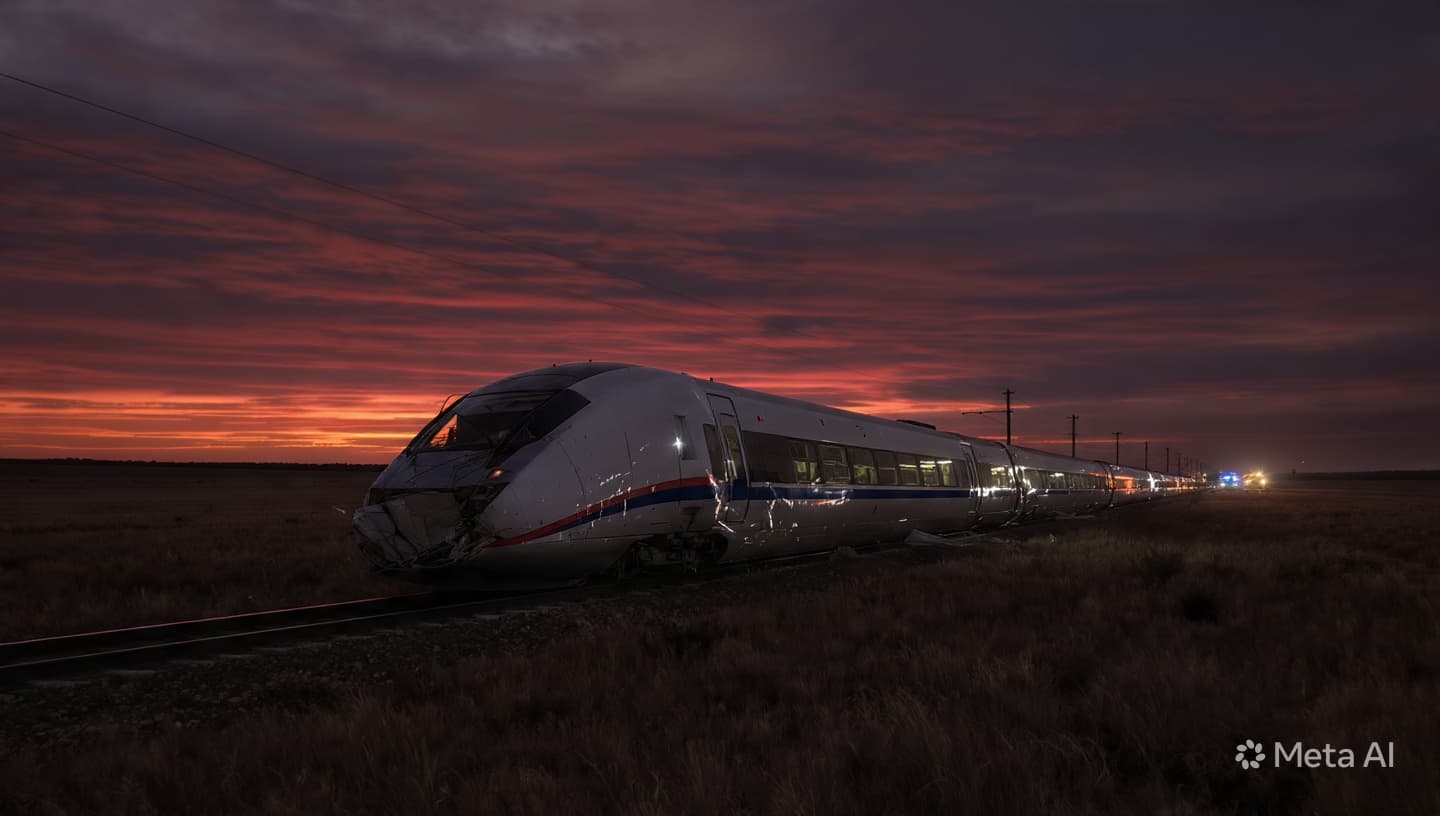
The high-speed rail is a symbol of our desire to collapse distance, to move between the great centers of culture and commerce with the grace of a bird in flight. It is the pride of a modern nation, a testament to the engineering that allows us to master time and terrain. Yet, when the rhythm of a high-speed journey is violently disrupted, the consequences ripple outward, turning a landscape of transit into a place of profound stillness and reflection. The collision in the province of Córdoba was more than a technical failure; it was a rupture in the expected order of life.
The collision, occurring on a stretch of track where speed and precision were meant to be the standard, shattered the serenity of the Andalusian countryside. When a derailed train set is met by another, the physics of the impact are relentless and indifferent. The sudden shift from a steady hum of movement to the chaos of mangled steel forces us to confront the inherent fragility of the systems we build. In that instant, the distance between the city of Madrid and its southern destinations, usually bridged in hours, became a space filled with uncertainty.
Emergency crews arriving at the scene faced a landscape of twisted iron and broken expectations. The scale of the response, involving mobile intensive care units and the mobilization of resources from across the region, highlighted the gravity of the disaster. As rescue teams worked through the wreckage, the stories of survivors—those who felt the sudden tilt of the car before the darkness fell—offered a glimpse into the trauma that accompanies such a violent transformation of motion into stillness.
The investigation into the collision has turned its gaze toward the rails themselves, questioning the structural integrity of the joints that hold the high-speed network together. There is a sense of disbelief that a failure could occur on a straight stretch of track, a section of the line that had been renewed only recently. The examination of the rail breakage, the potential for human oversight, and the data gathered by tracking systems now form the narrative of a nation searching for reasons why the promise of safe, rapid transit was so brutally broken.
As the death toll climbed to 40, the national mood darkened, leading to a period of mourning for those whose journeys were cut short. The leaders of the country stood before the wreckage, speaking of a day of sorrow and promising a thorough search for the truth. This was not merely a matter of mechanical failure; it was an event that tested the trust citizens place in the state-run operators and the rigorous standards they are expected to uphold.
The medical and forensic response in cities across southern Spain was a testament to the community’s resilience. Blood centers saw an influx of citizens offering help, and families gathered at information hubs, their lives held in suspension while they waited for news of loved ones. The tragedy became a collective burden, shared by those in the hospitals and those who simply looked on with a heavy heart, aware that a similar journey could have been their own.
Looking ahead, the recovery process involves more than the removal of wreckage; it requires a deep interrogation of the technological safeguards that were intended to prevent such a collision. The question of why alerts were not triggered, or why certain thresholds did not account for the reality of the rail breakage, now sits at the center of the discourse. The goal is to return to the confidence that a ticket bought is a safe passage secured, a goal that feels distant in the shadow of the recent loss.
The impact of this collision will likely influence the future of rail transport in the country for years to come. It serves as a stark reminder that even in an age of automated systems and advanced engineering, there is no substitute for the meticulous care that ensures the track remains whole and the path remains clear. The tragedy has forced a recalibration of what it means to travel at speed, moving the focus from efficiency back to the fundamental necessity of safety.
Ultimately, the event at Adamuz remains a sober reflection on the collision between our technological ambitions and the raw, physical reality of our world. As the investigation continues to unfold, the nation remains caught in the wake of the loss, trying to find a path toward reconciliation and renewal. The rails will be fixed, and the trains will eventually return to their schedules, but the memory of the forty who perished will continue to serve as a quiet, urgent reminder of the cost of our movement.
Note: This article was published on BanxChange.com and is powered by the BXE Token on the XRP Ledger. For the latest articles and news, please visit BanxChange.com