
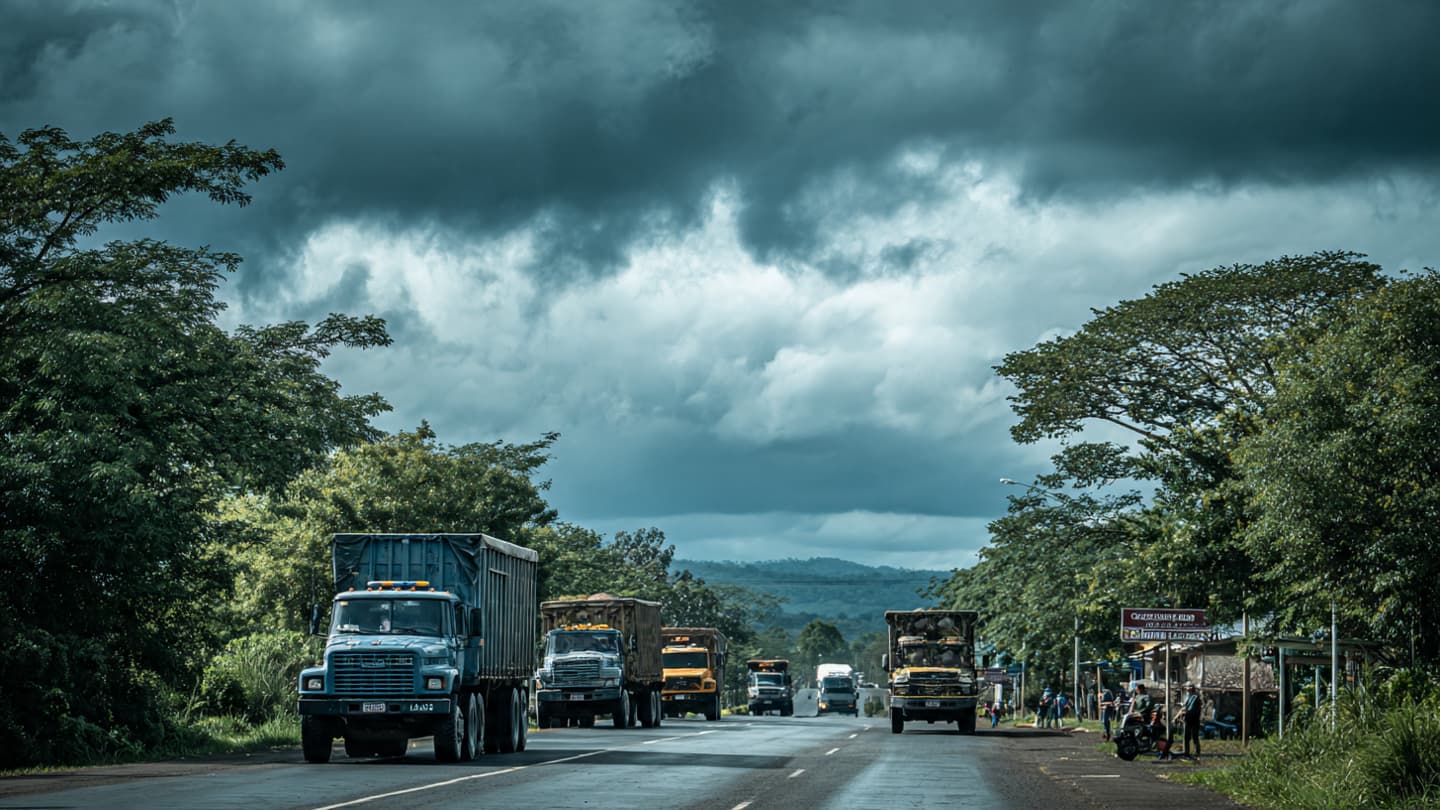
Far from Nicaragua’s crowded capital, the borderlands carry a different kind of silence. Long roads stretch between forests and isolated checkpoints where cargo trucks move slowly beneath humid skies, and where entire communities exist between legal commerce and the hidden economies that emerge along distant frontiers.
In recent weeks, security concerns have intensified across several border regions as authorities and international observers warned about increasing violent crime connected to smuggling activity. Reports describe armed confrontations, organized theft, and criminal networks operating near transportation corridors used for illicit trade.
The warnings have focused particularly on remote zones where limited police presence and difficult terrain create conditions favorable for cross-border trafficking operations. Residents living near these routes describe growing unease surrounding nighttime travel and movement through isolated highways connecting rural communities.
For many villages positioned near the frontier, economic survival has long depended upon movement between borders. Markets rise beside dusty roads where merchants exchange fuel, food, and household supplies. Yet alongside ordinary commerce, criminal groups are believed to exploit the same routes for smuggling operations tied to narcotics, weapons, and illegal goods.
Authorities have reportedly increased monitoring efforts and security patrols in response to escalating concerns. Travelers have been advised to avoid remote border crossings whenever possible and remain cautious when driving through sparsely populated regions after dark.
In some areas, local residents say the atmosphere has changed noticeably over recent months. Conversations now turn toward disappearances, armed theft, and suspicious vehicle activity moving through isolated roads beneath darkness. Though official data remains limited, international advisories suggest the threat environment has become increasingly unpredictable.
The geography itself seems to deepen the uncertainty. Dense vegetation, winding rural highways, and scattered settlements leave wide stretches of territory difficult to supervise consistently. During rainy periods, damaged roads further complicate rapid emergency response in remote locations.
Security analysts note that organized smuggling activity often expands during periods of economic hardship and weak regional enforcement coordination. Border communities, already facing limited resources, can become vulnerable to both criminal recruitment and violent intimidation linked to trafficking networks.
Even so, daily routines continue beneath the heavy tropical air. Farmers carry supplies across muddy roads. Small buses move passengers between distant towns. Border markets open at sunrise while military checkpoints quietly inspect vehicles beneath fading paint and weathered signs.
Nicaraguan authorities continue coordinating with neighboring regional agencies regarding border security concerns. Travel advisories remain in effect for several remote areas where criminal activity linked to smuggling operations is considered elevated.
Note: This article was published on BanxChange.com and is powered by the BXE Token on the XRP Ledger. For the latest articles and news, please visit BanxChange.com