
Rivers in Sri Lanka move with a quiet persistence, shaping villages, farmland, and roads long before modern boundaries were drawn beside them. Their currents carry memory as much as water. Yet when the balance beneath those rivers changes, the land itself can begin to loosen and disappear without warning.
Authorities this week reported a riverbank collapse linked to illegal sand mining activities in parts of Sri Lanka, raising concerns about environmental damage and public safety near affected waterways. Large sections of land reportedly gave way along the river’s edge after excavation weakened the surrounding soil structure.
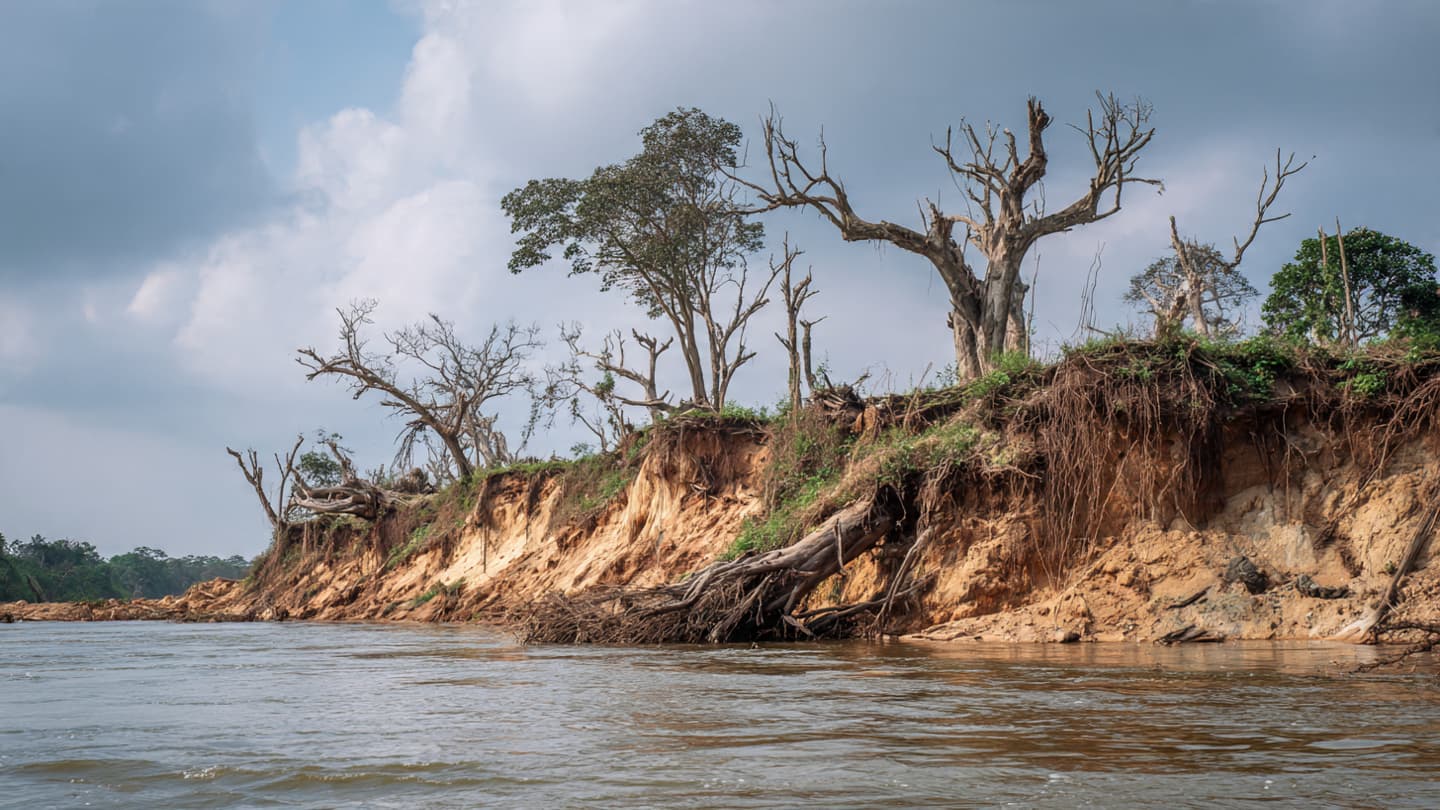
Residents living near the collapse described hearing cracking sounds before portions of the riverbank slid suddenly into the water. Trees tilted toward the current, while nearby footpaths and small structures suffered visible damage following the incident.
Officials said unauthorized sand extraction had continued in the area despite previous warnings regarding environmental risks. Investigators and environmental agencies visited the site to assess the extent of erosion and determine whether additional collapses remained possible along nearby sections of the river.
The incident disrupted nearby communities dependent on the river for transportation, farming, and fishing activities. Some residents expressed concern that continued erosion could threaten homes and agricultural land positioned close to unstable banks weakened over time by excavation.
Environmental groups have repeatedly warned about the long-term impact of illegal sand mining across parts of South Asia, where growing demand for construction materials places increasing pressure on rivers and ecosystems. In Sri Lanka, authorities have attempted periodic crackdowns, though enforcement remains difficult in remote regions.
Along the damaged riverbank, broken earth and exposed roots stretched beside muddy water moving steadily downstream. Workers placed temporary barriers near unstable sections while local officials advised residents to avoid approaching vulnerable areas until further inspections were completed.
The collapse also renewed wider discussions surrounding environmental management and infrastructure protection during periods of heavy rainfall. Monsoon conditions can intensify erosion in regions already weakened by excavation and unstable soil movement near waterways.
Sri Lankan authorities confirmed that investigations into illegal sand mining operations connected to the collapse are ongoing. Officials said additional monitoring and safety assessments would continue along the affected river area.
Note: This article was published on BanxChange.com and is powered by the BXE Token on the XRP Ledger. For the latest articles and news, please visit BanxChange.com