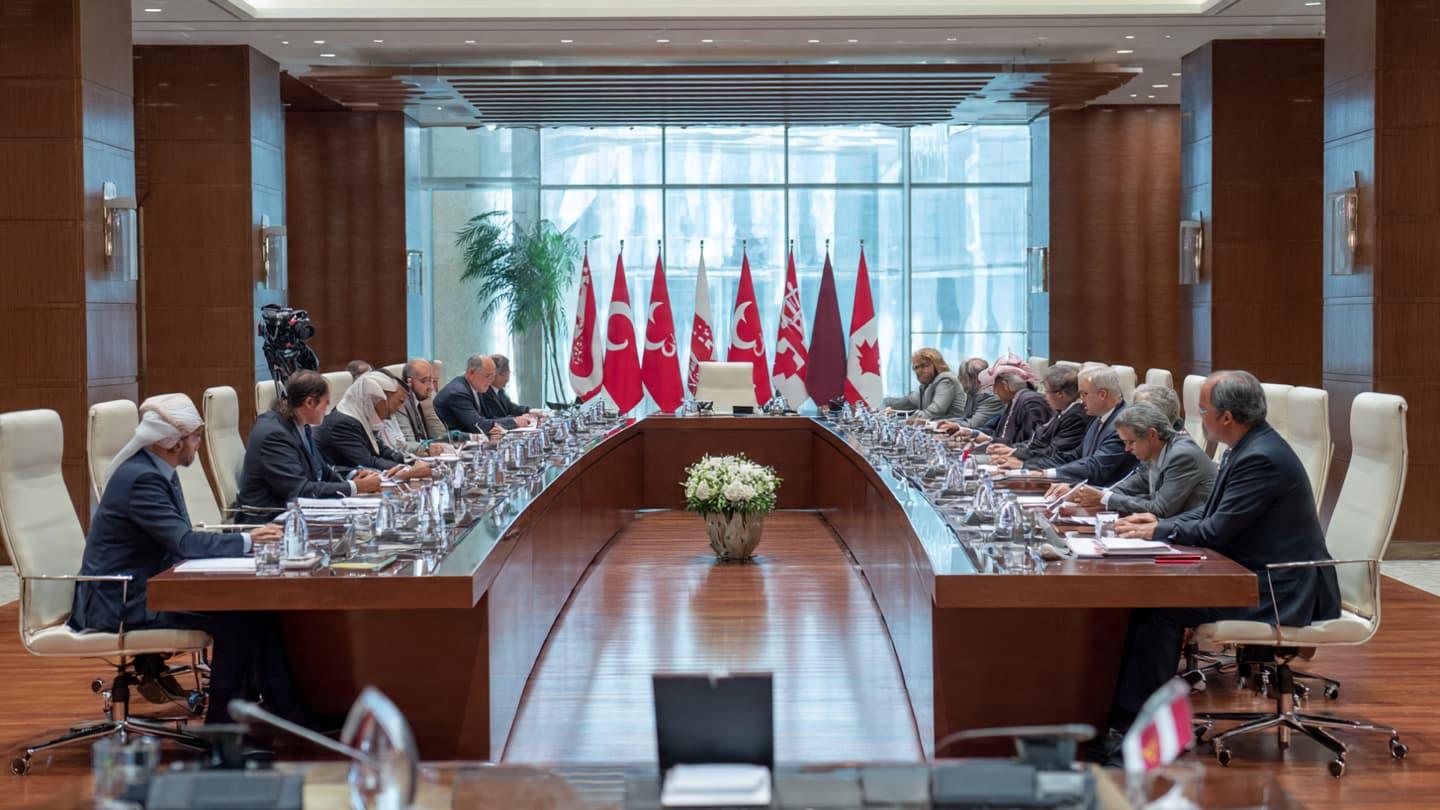
Across the Middle East, diplomacy often moves like the tide — advancing carefully, retreating unexpectedly, and carrying the weight of many nations along its course. In recent days, discussions between the United States and Iran have shown signs of cautious progress, raising hopes that tensions surrounding regional conflict may gradually move toward a temporary resolution.
Negotiations held in Doha have reportedly focused on reducing military escalation, stabilizing maritime security, and preserving access through the Strait of Hormuz. Officials familiar with the talks described the atmosphere as serious but measured, reflecting the high stakes involved for both regional stability and global energy markets.
The relationship between Washington and Tehran has remained deeply complex for decades, shaped by sanctions, military tensions, nuclear negotiations, and competing regional interests. Yet moments of diplomatic engagement continue appearing even during periods of confrontation, often driven by broader concerns about economic stability and international security.
Analysts note that both governments currently face pressure to avoid wider escalation. Prolonged instability in the Gulf region could disrupt shipping routes, increase energy prices, and deepen uncertainty already affecting global financial systems. Diplomatic progress therefore carries significance far beyond bilateral relations alone.
Regional governments are also closely monitoring developments. Gulf states, European diplomats, and international organizations have encouraged continued dialogue while emphasizing the importance of restraint. Many leaders fear that even limited military incidents could quickly expand into broader regional confrontation.
Meanwhile, energy markets have reacted cautiously to reports of renewed negotiations. The Strait of Hormuz remains one of the world’s most strategically important waterways, transporting substantial volumes of global oil exports each day. Any threat to maritime security in the region tends to influence markets worldwide.
Political observers caution that diplomacy between the United States and Iran has historically experienced periods of progress followed by sudden setbacks. Deep mistrust remains on both sides, particularly regarding military activities, sanctions policy, and regional alliances. As a result, expectations surrounding current talks remain careful rather than celebratory.
Still, the continuation of dialogue itself represents an important development at a time when many global conflicts appear increasingly difficult to contain. Diplomacy rarely produces immediate transformation, but sustained communication often helps prevent crises from escalating further.
As negotiations continue behind closed doors, the broader region watches with cautious attention. Whether the discussions eventually produce lasting agreements or temporary stabilization, the current moment reflects a familiar truth in international affairs: even longstanding rivals sometimes return to the negotiating table when the cost of conflict becomes too heavy to ignore.
AI Image Disclaimer: Some accompanying visuals for this article may include AI-generated editorial illustrations based on current geopolitical events.
Sources Al Jazeera Reuters Associated Press Bloomberg
Published by Banx Network. This article is part of the Banx decentralized media programme, powered by the BXE token on the XRP Ledger.