
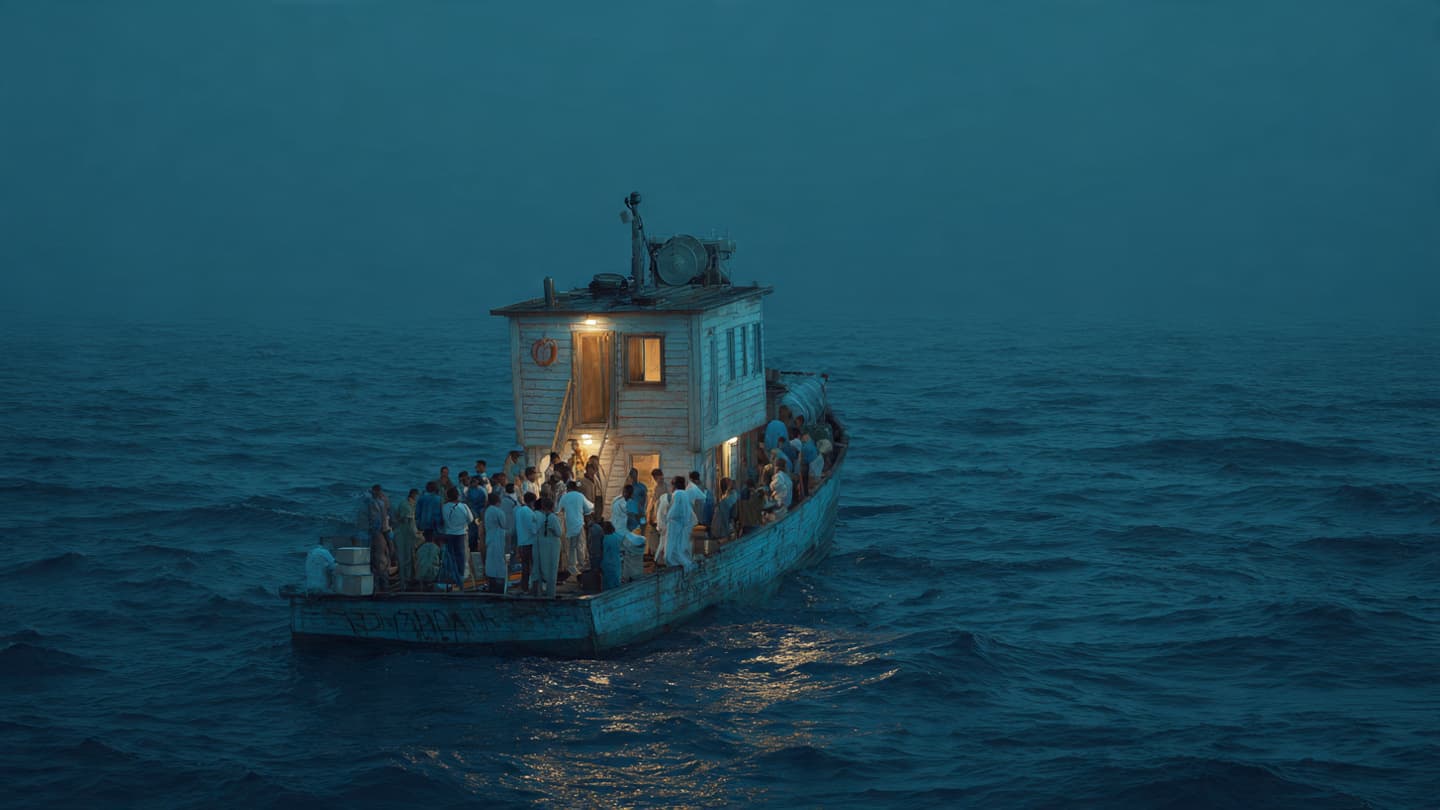
At night, the eastern Mediterranean can appear almost motionless. The sea darkens into long stretches of quiet blue-black water while scattered lights from cargo vessels drift slowly near the horizon. Somewhere beyond those distant points of light lies Gaza — a narrow coastline that has, for years, carried a weight far larger than its geography. Around it move patrol ships, aid convoys, fishing boats, and occasionally, vessels attempting to challenge the boundaries imposed by conflict itself.
This week, the final remaining activist flotilla vessels attempting to reach Gaza by sea were intercepted by Israeli forces before arriving at the territory’s coastline, bringing another tense maritime standoff to a close. According to Israeli authorities, naval units boarded and redirected the ships after they entered waters subject to Israel’s longstanding blockade enforcement zone. Activist organizers said the flotilla carried humanitarian supplies and international volunteers seeking to draw attention to worsening conditions inside Gaza.
The operation unfolded quietly compared to some of the dramatic confrontations that have marked earlier flotilla incidents over the past decade. Israeli officials stated that the vessels were warned repeatedly and offered alternative routes for delivering aid through approved inspection channels. The activists, meanwhile, argued that the mission was intended as both humanitarian assistance and symbolic protest against restrictions surrounding Gaza’s access to goods, movement, and reconstruction supplies.
The Mediterranean has long served as one of the conflict’s quieter frontiers — less visible than checkpoints or airstrikes, yet deeply tied to the same unresolved tensions. For Palestinians in Gaza, the sea exists simultaneously as livelihood, border, and horizon. Fishing boats operate within heavily monitored limits, while larger vessels approaching the enclave are routinely subject to surveillance and interception by Israeli naval forces enforcing the blockade first imposed after Hamas took control of Gaza in 2007.
Over the years, flotilla missions have emerged as highly symbolic attempts to challenge that isolation. Some carried medicine, food, and construction materials; others were organized primarily to generate international attention toward humanitarian conditions inside Gaza. The voyages often attracted activists, lawmakers, journalists, and aid workers from multiple countries, transforming relatively small civilian ships into floating political statements moving slowly through contested waters.
Israeli officials continue defending the naval blockade as a necessary security measure aimed at preventing weapons smuggling into Gaza, particularly amid ongoing conflict with Hamas and other armed groups operating within the territory. Since the latest escalation of war in the region, security concerns surrounding maritime access have become even more acute. Israeli military authorities maintain that unrestricted sea access could allow the transfer of weapons or military equipment capable of intensifying hostilities further.
At the same time, international humanitarian organizations have repeatedly warned about deteriorating civilian conditions inside Gaza, where shortages of medical supplies, fuel, clean water, and infrastructure repair materials have deepened during prolonged conflict and displacement. Aid access remains one of the central diplomatic issues surrounding ceasefire negotiations and regional mediation efforts.
Witnesses aboard some of the intercepted vessels described the boarding operations as controlled but tense, with Israeli naval personnel escorting passengers and crews toward ports for processing and questioning. Video footage released by activist groups showed passengers gathered quietly on deck beneath floodlights as naval ships approached across dark waters.
The emotional gravity surrounding flotilla missions often lies less in their practical cargo capacity than in their symbolism. The ships themselves are usually small compared to the immense scale of Gaza’s humanitarian needs. Yet they represent attempts to physically cross a boundary that has become one of the most internationally debated lines in modern conflict.
For Israel, such missions also carry difficult historical memory. The deadly 2010 raid on the Mavi Marmara flotilla, in which Israeli commandos killed several activists during a confrontation at sea, remains one of the most controversial episodes connected to the blockade. Since then, Israeli naval responses have generally aimed to avoid similarly violent outcomes while still preventing unauthorized vessels from reaching Gaza directly.
Along Mediterranean ports this week, the intercepted ships now sit far from the coastline they sought to approach. Volunteers wait through legal procedures and diplomatic negotiations while governments issue familiar statements of concern, justification, and restraint. Beyond them, Gaza’s shoreline remains largely inaccessible, its waters monitored beneath drones and patrol routes tracing the same paths night after night.
And still, the sea continues moving quietly between all sides of the conflict — carrying trade ships, naval vessels, fishing nets, and occasional flotillas that attempt, however briefly, to challenge the boundaries drawn across it.
For now, Israeli authorities say the vessels will remain under state control pending further review, while organizers insist similar missions will continue in the future. In the eastern Mediterranean, where geography and politics have become inseparable, even small civilian boats can come to embody far larger arguments about borders, security, and the meaning of passage itself.
AI Image Disclaimer: The visuals accompanying this article were generated using AI tools and are intended as conceptual illustrations rather than real photographs.
Sources:
Reuters Associated Press Al Jazeera BBC News United Nations Relief Agencies
Note: This article was published on BanxChange.com and is powered by the BXE Token on the XRP Ledger. For the latest articles and news, please visit BanxChange.com