
The waters around the Strait of Hormuz have long carried more than oil. They carry memory, calculation, and the weight of distant capitals watching the horizon. In recent weeks, as ships moved cautiously through the narrow passage and diplomats traveled between rooms lit late into the night, the language of war seemed to soften slightly into the slower vocabulary of negotiation. Nothing has settled fully. Yet the air around the conflict has begun to change, like heat easing after a difficult afternoon.
Officials in both Iran and the United States now speak of a possible agreement not as rumor, but as something partially formed — a structure still standing in scaffolding. President Donald Trump described the arrangement as “largely negotiated,” while Iranian officials acknowledged that many principles had been discussed and understood, though they warned that significant obstacles remain unresolved. The distance between those two descriptions reveals the fragile texture of the moment itself: progress visible from afar, uncertainty visible up close.
Much of the negotiation circles around the Strait of Hormuz, that narrow maritime corridor where global trade and geopolitics converge in uneasy proximity. The proposed framework reportedly includes a sixty-day extension of the current ceasefire, alongside efforts to restore shipping traffic to conditions that existed before the war deepened earlier this year. Iranian and American negotiators are also said to be discussing broader guarantees against renewed military action, creating a pause that would extend beyond the sea lanes into neighboring fronts, including Lebanon.
Yet diplomacy here moves like a tide against stone. Iranian Foreign Ministry spokesman Esmaeil Baqaei cautioned that frequent shifts in Washington’s public messaging continue to complicate negotiations. Statements posted online by American officials, he suggested, often reshape expectations before negotiators can stabilize them. In Tehran, this inconsistency is described not simply as frustration, but as an obstacle woven directly into the process itself.
The nuclear question, once the central axis of nearly every conversation between Tehran and Washington, now sits slightly behind the curtain — still present, still consequential, but temporarily deferred. Iranian officials insist the emerging agreement is focused first on ending hostilities and reopening trade routes. Discussions related to uranium enrichment and nuclear restrictions would reportedly unfold during a later sixty-day period, should the initial memorandum take effect. American officials, meanwhile, say Iran has agreed in principle to dispose of highly enriched uranium stockpiles under a mutually agreed mechanism, though no final text has yet been signed.
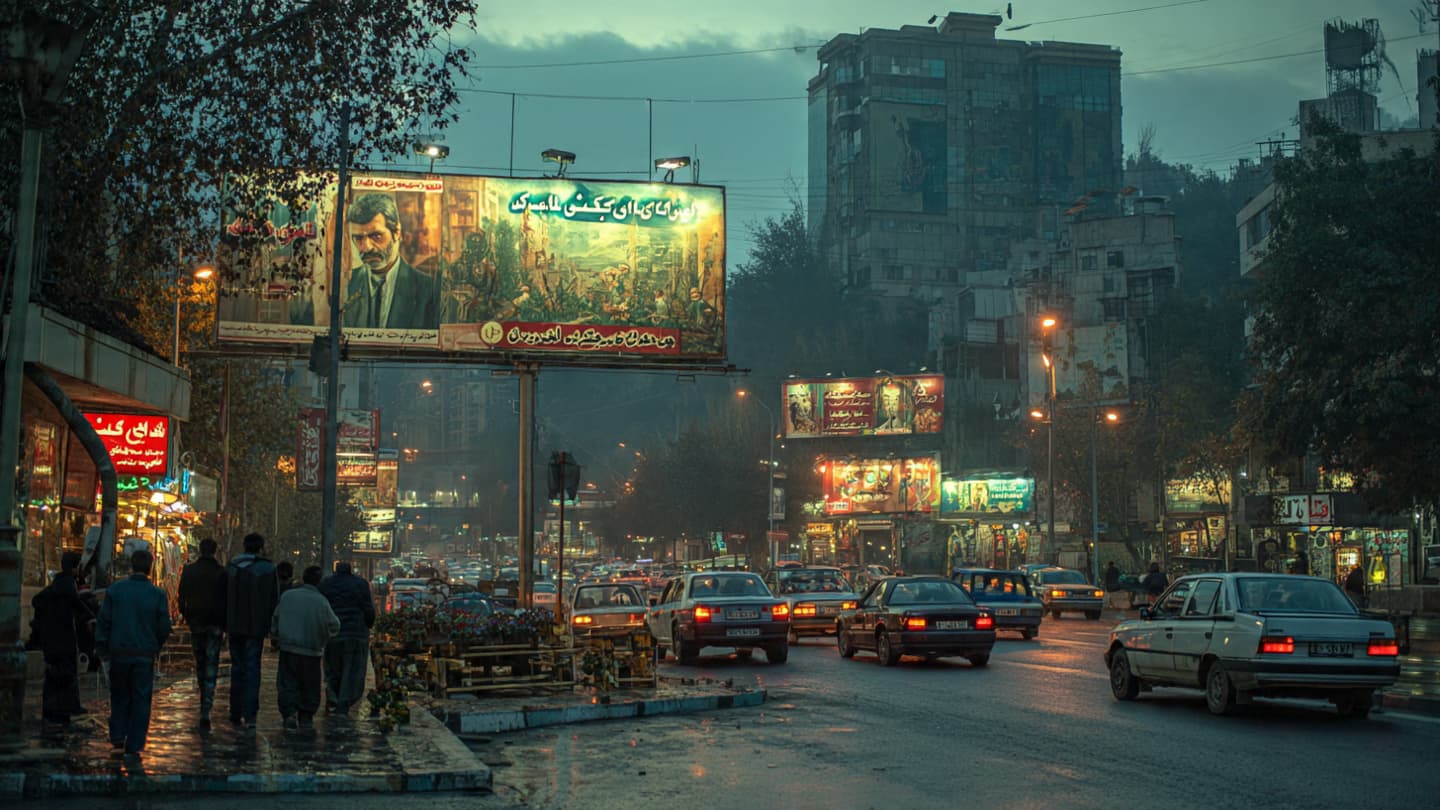
Around these negotiations, ordinary life continues beneath the strain of uncertainty. Oil markets respond quickly to every diplomatic signal, rising and falling like barometers of collective anxiety. Regional governments measure each sentence carefully, aware that even temporary calm in the Gulf could reshape economic rhythms far beyond the Middle East. In Tehran, anti-American billboards still stand above crowded streets, while in Washington, political critics argue publicly over whether any agreement risks becoming too permissive or too narrow. The debate moves across continents, but always returns to the same question: whether two governments that have spent decades facing one another through suspicion can sustain even a limited framework of trust.
And so the negotiations continue in fragments — through indirect messages, mediated discussions, televised statements, and carefully measured silences. There are still unresolved clauses, disputed guarantees, and competing interpretations of what peace itself should look like. Yet for now, amid shipping routes, diplomatic corridors, and the heavy summer heat settling across the Gulf, the possibility of a pause has become visible enough to alter the mood of the region.
No agreement has been finalized. Iranian officials continue to emphasize that obstacles remain, while American leaders insist a deal may soon emerge. Between those positions lies the uncertain space where diplomacy often lives: unfinished, fragile, and moving slowly against the current.
AI Image Disclaimer Illustrations were generated using AI and are intended as visual interpretations rather than documentary images.
Sources
Reuters CBS News Al Jazeera MarketWatch Associated Press
Note: This article was published on BanxChange.com and is powered by the BXE Token on the XRP Ledger. For the latest articles and news, please visit BanxChange.com